
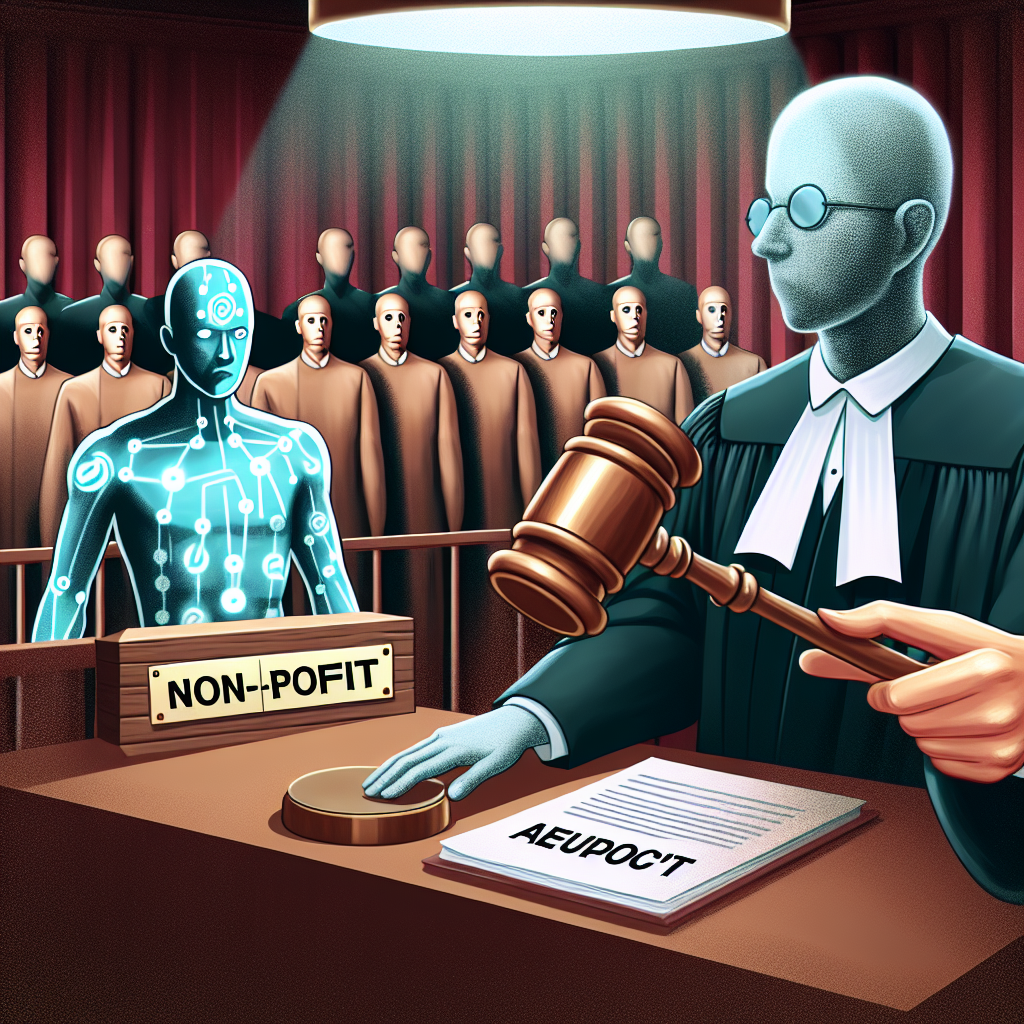
Judge Rejects Musk’s Attempt to Block OpenAI’s For-Profit Transition: What It Means for AI’s Future
In a world where artificial intelligence is rapidly shaping the future, the dynamics between innovation and ethics often lead to dramatic headlines. Recently, one such story has caught the public’s eye: a judge has rebuffed Elon Musk’s efforts to challenge OpenAI’s decision to transform into a for-profit entity. This development not only brings to light the tensions surrounding AI ethics but also the complexities of business decisions in the tech world. This article delves into the details of this legal tussle, its implications for the AI landscape, and what it tells us about the future of artificial intelligence.
The Background: OpenAI’s Transition to a For-Profit Model
What is OpenAI?
OpenAI began as a non-profit organization with a mission to ensure that artificial general intelligence (AGI) benefits all of humanity. Founded in December 2015 by Elon Musk, Sam Altman, and several other prominent tech figures, OpenAI promised to share its research and collaborate with other institutions to foster transparency and safety in AI development.
The Transition to a For-Profit Corporation
In 2019, OpenAI made headlines by transitioning to a “capped-profit” model, termed an “OpenAI LP.” This structure allows it to tap into significant venture capital funding by providing financial returns to investors, while still adhering to its initial goal of benefiting humanity. The model is capped to ensure that the mission remains central to its operations, but it did raise eyebrows and concerns among stakeholders and the public alike.
Elon Musk’s Concerns
Musk’s Initial Involvement
Elon Musk was one of the early supporters and benefactors of OpenAI. Known for his cautionary stance on the risks of unchecked AI development, Musk’s support stemmed from a desire to steer AI research positively.
Why Did Musk Oppose the Transition?
Musk’s opposition to OpenAI’s for-profit shift primarily stems from concerns about transparency and control. He fears that shareholder interests might compromise the initial altruistic mission, potentially leading to scenarios where AI technology could be misused or shared improperly. Musk vocalized that this shift contradicts the organization’s founding principles and might lead to undue control by a few individuals.
The Legal Battle
Musk’s Attempt to Block the Transition
Elon Musk pursued legal action to try to halt OpenAI’s transition to the for-profit model. His legal team argued that this move was not in line with the original mandate of the organization and posed risks to both the public and the future of AI development.
The Judge’s Decision
The presiding judge rejected Musk’s attempt, stating that the transition to a capped-profit model was a legally sound decision made by OpenAI’s board. The decision emphasized the flexibility that OpenAI sought to maintain its competitive edge while still working towards positive outcomes in AI development.
- Impact of the Decision: The ruling means that OpenAI can continue to operate under its new model, potentially attracting more funding and partnerships aimed at advancing AI technology.
Implications for the AI Industry
Balancing Profit and Ethics
OpenAI’s move to a for-profit model highlights a significant challenge in the tech industry: balancing ethical considerations with the need for substantial investments in technology development. The decision raises questions about how these motivations can coexist without leading to potential conflicts of interest.
- Transparency: There must be rigorous frameworks and accountability measures in place to ensure transparency in operations.
- Collaboration: Continuous cooperation with external groups can mitigate risks of misuse and foster confidence in AI endeavors.
The Role of Venture Capital
The evolution of OpenAI’s business model points to the crucial role of venture capital in AI research. With substantial funding needs, organizations might be compelled to transition towards models that aren’t strictly non-profit, raising debates on how to best balance financial incentives with ethical considerations.
What Does the Future Hold?
Opportunities for Innovation
OpenAI’s shift to a for-profit model offers several opportunities for the AI space:
- Increased funding and resources
- Capacity for larger-scale projects and innovations
- Potential for attracting top talent motivated by the promise of both financial and societal impact
Ethical AI Development
Moving forward, there’s a growing call for stakeholders to establish clear guidelines governing ethical AI development — ensuring AI systems’ benefits are widespread and risk-managed.
Public Perception
Trust in AI organizations remains pivotal. OpenAI must manage its public image to ensure continued support from the scientific community and the general public by demonstrating a commitment to ethical standards despite the profit-oriented model.
Conclusion: Navigating the Complexity of AI’s Future
The legal rejection of Elon Musk’s attempt to block OpenAI’s transition underscores the evolving landscape of AI innovation. As OpenAI continues its work as a capped-profit entity, the broader implications for transparency, ethics, and collaboration become ever more significant. By maintaining an open dialogue and reinforcing its mission, OpenAI and similar organizations can walk the tightrope between profitability and altruism, steering AI towards a future that is both innovative and responsibly managed. The path forward for AI is undoubtedly complex, but with careful stewardship, it offers transformative possibilities for society.