
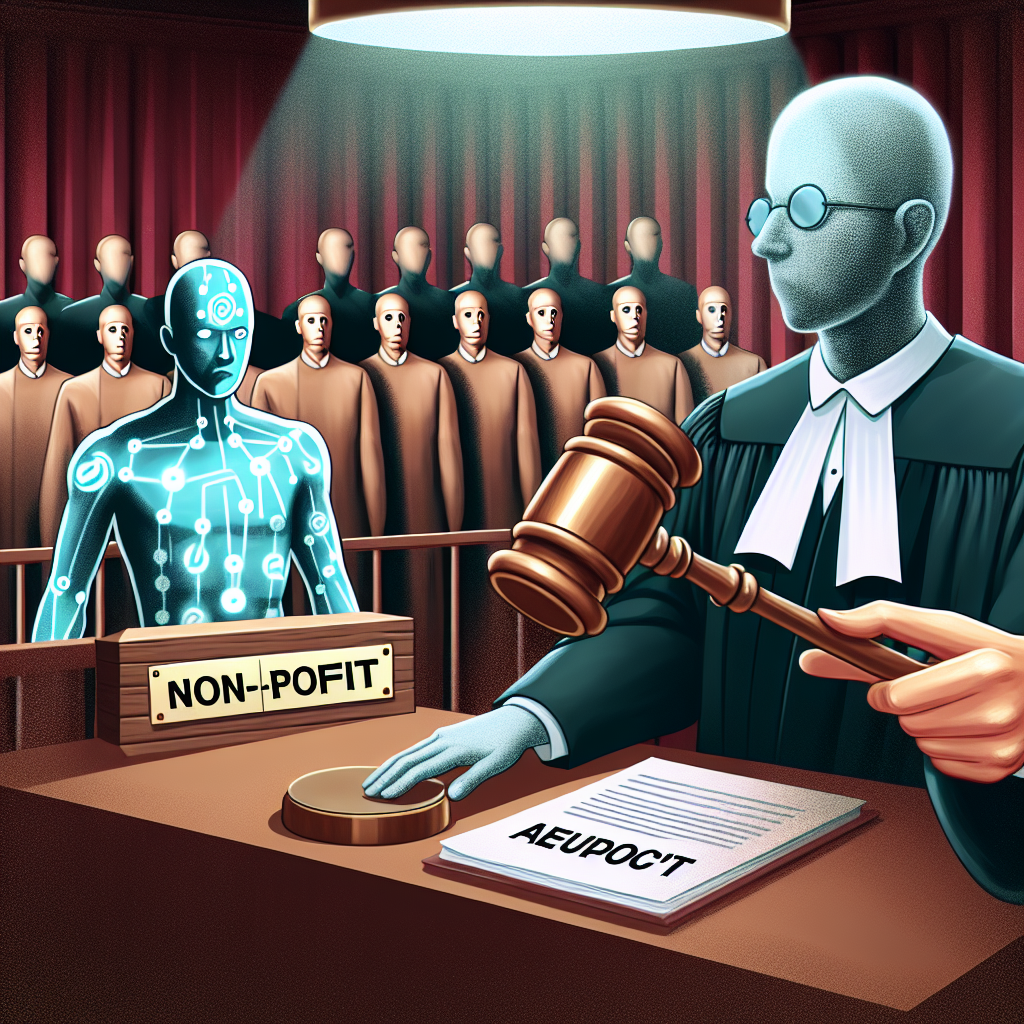
Elon Musk’s Legal Setback: A Deep Dive into the Judge’s Rejection of His Bid to Block OpenAI’s For-Profit Transition
In a stirring turn of events, the tech world recently witnessed a courtroom drama involving none other than Elon Musk and OpenAI. A judge has rejected Musk’s attempt to stop OpenAI from transitioning to a for-profit model, raising eyebrows and questions across the globe. What does this decision mean for the future of artificial intelligence, and what are the implications for stakeholders involved? Here’s an in-depth look at the ruling, the motivations behind the lawsuit, and its broader impacts.
The Background: Understanding OpenAI and Its Mission
Before delving into the legal case, it’s crucial to understand what OpenAI is and why its transition caught the eyes of a maverick like Elon Musk.
What is OpenAI?
Founded in 2015, OpenAI is an artificial intelligence research organization that was initially launched with the mission to ensure that artificial general intelligence (AGI) benefits all of humanity. OpenAI began as a non-profit entity, relying heavily on donations and support from individuals like Elon Musk.
The For-Profit Transition: Why and How?
In 2019, OpenAI announced the creation of OpenAI LP, a “capped-profit” company, as a way to attract more investment by promising limited equity returns. This change was deemed necessary by OpenAI executives to gather the immense funds required to compete in the intensely competitive AI industry. But why did this move spark contention, especially from Musk?
The Legal Drama: Musk’s Challenge and the Court’s Decision
Elon Musk’s Stance
Elon Musk, one of the co-founders and major donors of OpenAI, filed a lawsuit against the organization, arguing that the shift to a for-profit structure was not in alignment with the original mission. Musk’s concerns stem from:
- Transparency and Trust: The shift potentially endangers the transparency that a non-profit typically upholds.
- Public Benefit Objective: There is fear that profit motives may compromise the public benefit goal.
- Ethical Governance: Concerns on whether the profit-driven entity could adequately govern AGI’s ethical implications.
The Judge’s Ruling
The court ruled against Musk’s petition, allowing OpenAI to proceed with its for-profit model. The judge emphasized:
- Legal Framework: OpenAI operated within its rights, as the transition adhered to the original founding documents.
- Innovation Necessity: The move to a capped-profit entity could be crucial for innovation and competitive advantage.
- Public Interest Consideration: The public interest was considered balanced by the organization’s capped profit model, intending to limit potential impact divergence from its mission.
Implications of the Ruling
What does this ruling mean for the key parties involved and the broader AI landscape?
The Impact: What This Means for OpenAI, Musk, and the Tech Industry
OpenAI’s Next Steps
With the ruling in its favor, OpenAI can continue its innovative work without the legal distraction. The move to a capped-profit structure opens doors to:
- Increased Funding: Attracting bigger investments to scale AI research and efforts.
- Enhanced Partnerships: Flexibility to engage with commercially-driven entities.
- Agility in Research: The ability to move swiftly in an ever-evolving tech landscape.
Elon Musk: Navigating Through the Setback
While Musk faced a legal defeat, his position illuminates critical dialogues within tech and AI sectors regarding ethical boundaries and the preservation of core missions in profit-driven transitions.
The Tech Industry: Precedents and Lessons
This case reflects broader sentiments in the tech world about balancing profit with purpose. The decision encourages tech firms to consider:
- Mission Alignment: Ensuring their for-profit transitions do not alter the core mission.
- Stakeholder Communication: Maintaining transparency with initial supporters and stakeholders.
- Ethical AI: Continuing dialogues on ethical responsibilities amidst technological advancements.
Why You Should Care: The Broader Implications on AI and Society
AI is not just a technological frontier; it is a paradigm shift that affects society at its core. Events like this underscore:
Balancing Innovation with Responsibility
As AI continues to integrate into daily life, ensuring responsible, ethical development becomes vital. The conversations started by this case can lead to better frameworks governing AI advancements.
Societal Trust and Transparency
Public trust in AI technologies can be bolstered through transparent communications about corporate decisions, agreements, and the balancing of profits with broader societal impacts.
Future of AI Development
Looking forward, this ruling could set a precedent for other tech companies considering similar transitions. It highlights the benefits and risks associated with scaling innovations within a corporate framework.
Conclusion: The Path Forward
In conclusion, the judge’s decision to reject Musk’s attempt marks a critical moment in AI’s evolution and governance. While the ruling upholds OpenAI’s for-profit move, it inspires further introspection and dialogue within the tech industry about ethical progress and mission integrity.
What will the future hold for OpenAI and other burgeoning tech firms? Let’s watch this space as AI continues to shape our world, reminding all stakeholders of the incredible power and responsibility that come with innovation.