
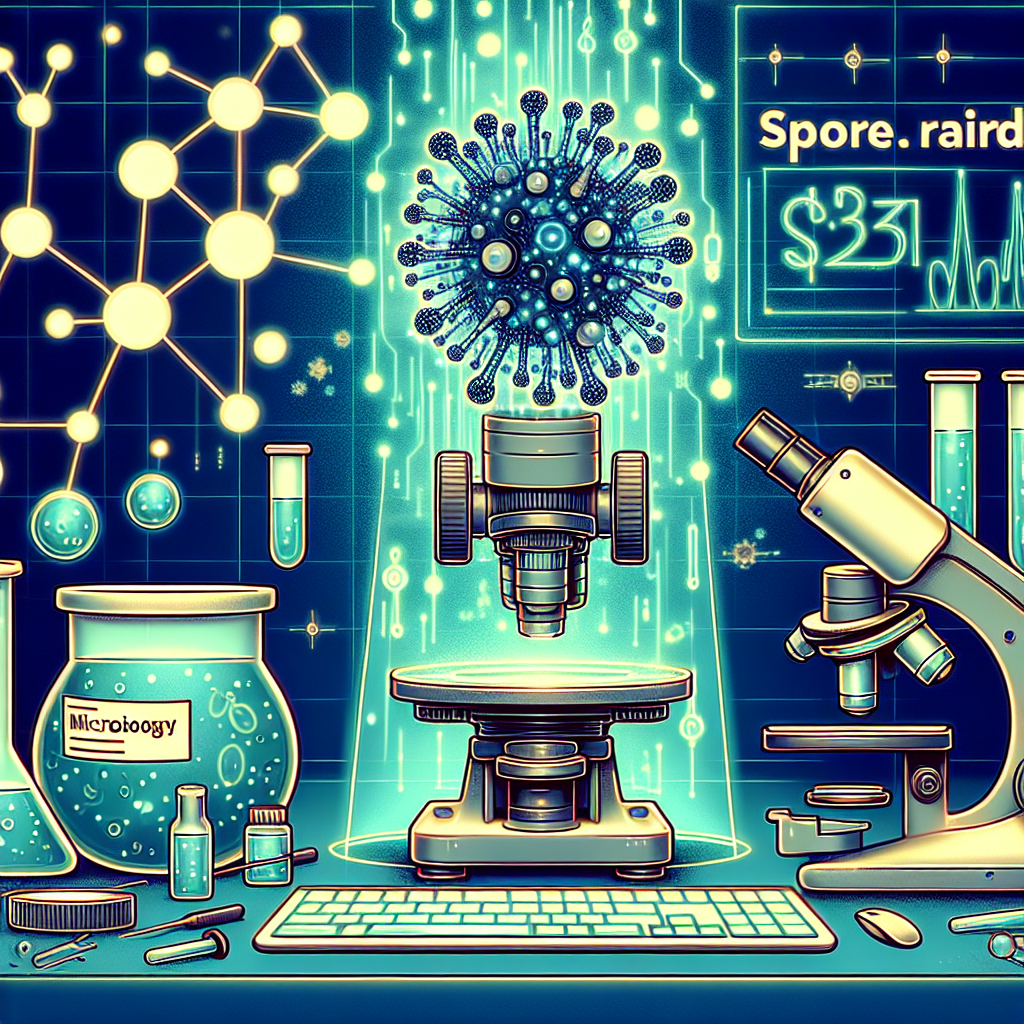
Spore.Bio’s $23 Million Milestone: Transforming Microbiology Testing with Machine Learning
In a groundbreaking development, Spore.Bio has successfully raised $23 million to revolutionize the field of microbiology testing through the application of machine learning technologies. As industries increasingly rely on fast, accurate, and efficient microbiological assessments, Spore.Bio emerges as a game-changer, serving various sectors ranging from healthcare to agriculture. This article delves into how Spore.Bio is reshaping microbiology, the potential impacts of this funding, and what this means for the future of the industry.
The Intersection of Machine Learning and Microbiology
Microbiology testing is crucial in numerous fields, including clinical diagnostics, environmental science, and food safety. Traditionally reliant on manual processes which can be slow and error-prone, the integration of machine learning (ML) offers promising improvements.
Machine Learning in Microbiology: An Overview
Machine learning, a subset of artificial intelligence (AI) that uses algorithms to identify patterns and make decisions, is poised to enhance the accuracy and speed of microbiology testing. Here’s how:
- Data Analysis: ML algorithms can quickly analyze vast amounts of data, identifying patterns and correlations that may not be apparent to human researchers.
- Predictive Capabilities: ML can anticipate microbial growth patterns and potential infection risks, allowing proactive measures.
- Efficiency: By automating data collection and analysis, ML speeds up the testing process, reducing the time needed for results.
Why is Microbiology Testing Important?
Microbiology testing is vital for:
- Healthcare: Detects pathogens and informs treatment strategies.
- Food Safety: Identifies contaminants, ensuring consumer safety.
- Environmental Monitoring: Detects pollutants affecting both natural and built environments.
Spore.Bio’s Vision and the Role of New Funding
With this $23 million infusion, Spore.Bio aims to enhance its ML-driven technologies, pushing the boundaries of what is possible in microbiology testing.
How Spore.Bio Plans to Use the Funding
- Research and Development: Investing in the ongoing development of cutting-edge algorithms and software solutions.
- Talent Acquisition: Hiring top-tier scientists and engineers to expand their innovation capabilities.
- Infrastructure Enhancement: Building state-of-the-art laboratories equipped with the latest technological advancements.
- Market Expansion: Broadening their reach in global markets, making advanced microbiology testing accessible worldwide.
Investors Behind Spore.Bio’s Fundraising
This $23 million round attracted several renowned investors. Each sees the enormous potential in Spore.Bio’s capabilities to disrupt traditional microbiology practices:
- Venture Capital Firms: Companies that specialize in cutting-edge technology investments.
- Angel Investors: Individuals with a keen interest in biotech and AI innovations.
Expected Impacts on the Industry
The integration of ML in microbiology testing could lead to:
- Greater Precision: Enhanced identification and classification of microorganisms.
- Faster Turnaround Times: Rapid processing for faster diagnostic and safety decisions.
- Cost Reductions: Lower operational costs due to efficient processing and resource allocation.
Challenges and Considerations
While the potential benefits are significant, integrating ML into microbiology testing presents challenges.
Technical Challenges
- Algorithm Accuracy: Ensuring ML algorithms can accurately interpret diverse and complex microbial data.
- Data Quality: High-quality, representative data is crucial for training ML models effectively.
Ethical and Regulatory Concerns
- Data Privacy: Handling sensitive health or personal data responsibly.
- Compliance: Meeting stringent industry regulations and standards, particularly in healthcare.
The Future of Microbiology Testing
The future looks promising with Spore.Bio leading the charge towards an ML-integrated microbiology testing landscape.
Potential Innovations
- Real-Time Monitoring: Continuous tracking and analysis of microbial environments.
- Personalized Healthcare: Tailoring treatments based on precise microbial profiles.
- Sustainable Practices: Leveraging insights for eco-friendly practices in industries like agriculture.
Collaborative Opportunities
Spore.Bio can collaborate with:
- Research Institutions: Joint projects to advance scientific knowledge.
- Healthcare Providers: Improved diagnostic capabilities and patient outcomes.
- Technology Firms: Integration with broader AI and data systems enhancing interoperability.
Conclusion: A Paradigm Shift in Microbiology
Spore.Bio’s impressive $23 million funding signifies a major paradigm shift in microbiology testing, driven by machine learning. As the world becomes increasingly data-driven, Spore.Bio’s advancements will likely pave the way for a new era in microbiological research and applications. With faster, more accurate, and cost-effective testing, industries worldwide are set to reap substantial benefits, marking the dawn of an exciting new chapter in scientific innovation.
Stay tuned as Spore.Bio continues to trailblaze a path at the convergence of AI and life sciences, creating ripples of transformation across global sectors.