
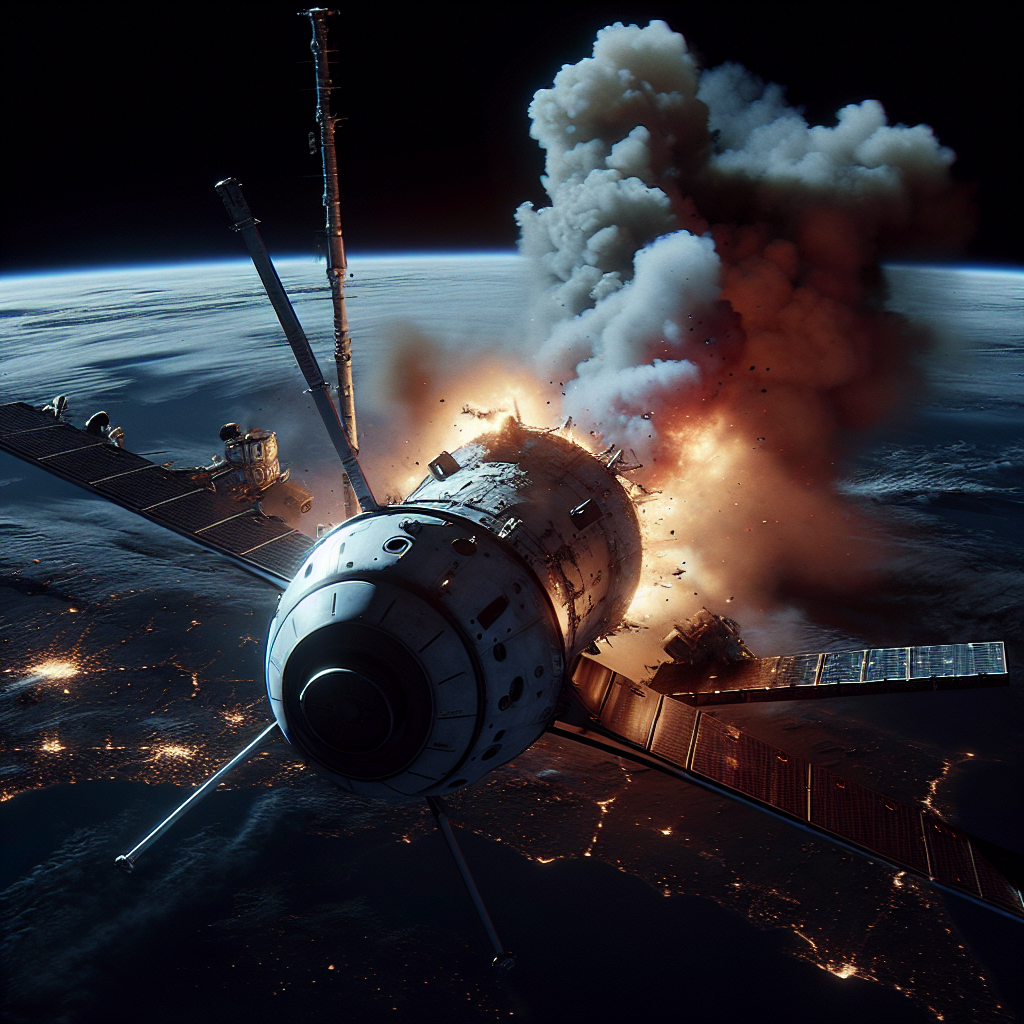
Decoding the SpaceX Starship Incident: Unpacking the Propellant Leak and Communication Blackout
SpaceX continues to push the boundaries of space exploration, captivating our imaginations with ambitious projects and groundbreaking technology. However, even the most phenomenal enterprises experience hurdles, as seen in the recent news where SpaceX announced that its Starship experienced a self-destruction event due to propellant leaks leading to fires and a communications blackout. This incident provides a unique opportunity to delve into the complexities of space technology and understand what happened, why, and what this means for the future of SpaceX.
The Starship: A Brief Overview
SpaceX’s Starship is more than just a spacecraft; it represents humanity’s aspirations to become a multiplanetary species. Conceived by visionary entrepreneur Elon Musk, the Starship is designed to carry both crew and cargo for missions to Mars and beyond.
Key Features of the Starship
- Massive Payload Capacity: Designed to carry over 100 metric tonnes to Earth’s orbit.
- Fully Reusable: Aimed at drastically cutting down the cost of space travel.
- Stainless Steel Structure: Developed for durability and heat resistance.
Mission Objectives
- Lunar Missions: Selected by NASA for the Artemis program.
- Mars Colonization: Long-term vision to establish a human settlement on Mars.
- Commercial Passenger Flights: Broadening space travel accessibility.
The recent incident, however, has thrown light on some of the challenges that still loom large in accomplishing these visionary goals.
Incident Analysis: What Went Wrong?
SpaceX acknowledged the self-destruction of the Starship due to propellant leaks that resulted in fires and ultimately led to a communication blackout. Unraveling this incident requires examining several critical components.
Understanding Propellant Leaks
Propellant is the lifeblood of rocket science, consisting mainly of fuel and oxidizers, necessary for propulsion. Here’s what potentially went wrong:
- Leak in Propellant Tanks: A leak can occur due to various reasons, such as material failure, manufacturing defects, or microstructural issues.
- Environmental Factors: External atmospheric conditions may also affect propellant systems, causing malfunctions.
Chain Reaction: From Leaks to Fires
Leaks are particularly dangerous due to the volatile nature of propellants. The chain of events is typically:
- Initial Leak: Escape of fuel or oxidizer from its containment.
- Ignition Source: Introduction of an ignition source could lead to combustion or explosion.
- Fire Outbreak: Spread could impact surrounding systems and components.
The Communications Blackout
The fire caused by the leak could have:
- Damaged critical communication equipment.
- Led to loss of telemetry data, crucial for ground control to assess the situation.
Consequences and Responses
Short-term Impacts
The immediate aftermath of the incident might include:
- Setbacks in Timelines: Delay in planned missions and testing schedules.
- Resource Allocation: Increased focus on investigating and preventing similar incidents.
Long-term Outlook
For a project as ambitious as Starship, every setback provides valuable lessons. SpaceX is likely to:
- Enhance Engineering Protocols: Overhaul safety checks and design reviews.
- Increase Collaboration: Work with industry experts to mitigate risks.
Community and Industry Reactions
Reactions from the aerospace community and stakeholders have been varied:
- Sympathetic Understanding: Recognizing the challenges inherent in pioneering technology.
- Criticism and Scrutiny: Demanding transparency and accountability.
Lessons Learned: Safety and Innovation
This incident draws attention to the fundamental principle of balancing innovation with safety. Sustainable progress in space exploration relies heavily on drawing insights from failures and improving upon them.
Safety Protocols Enhancement
- Redundancy Systems: Implementing fail-safes to counteract potential malfunctions.
- Comprehensive Testing: Stress-testing components under extreme conditions.
Continuous Innovation
The setback underscores the importance of innovation in solving complex problems:
- Material Science Breakthroughs: Developing materials resistant to leaks and combustion.
- Advanced Communication Systems: Ensuring robust and redundant communication channels.
Conclusion: Reaching for the Stars
SpaceX’s journey is emblematic of humanity’s quest to transcend earthly limitations and explore the cosmos. While the recent event highlights the intricate challenges faced in space travel, it also sets the stage for innovation and discovery. As SpaceX learns and grows from this incident, the dream of becoming a multiplanetary species remains steadfast, reminding us that every great leap begins with audacious steps into the unknown.
Stay tuned to our blog for more updates on SpaceX and other stories that shape our future in space exploration!