
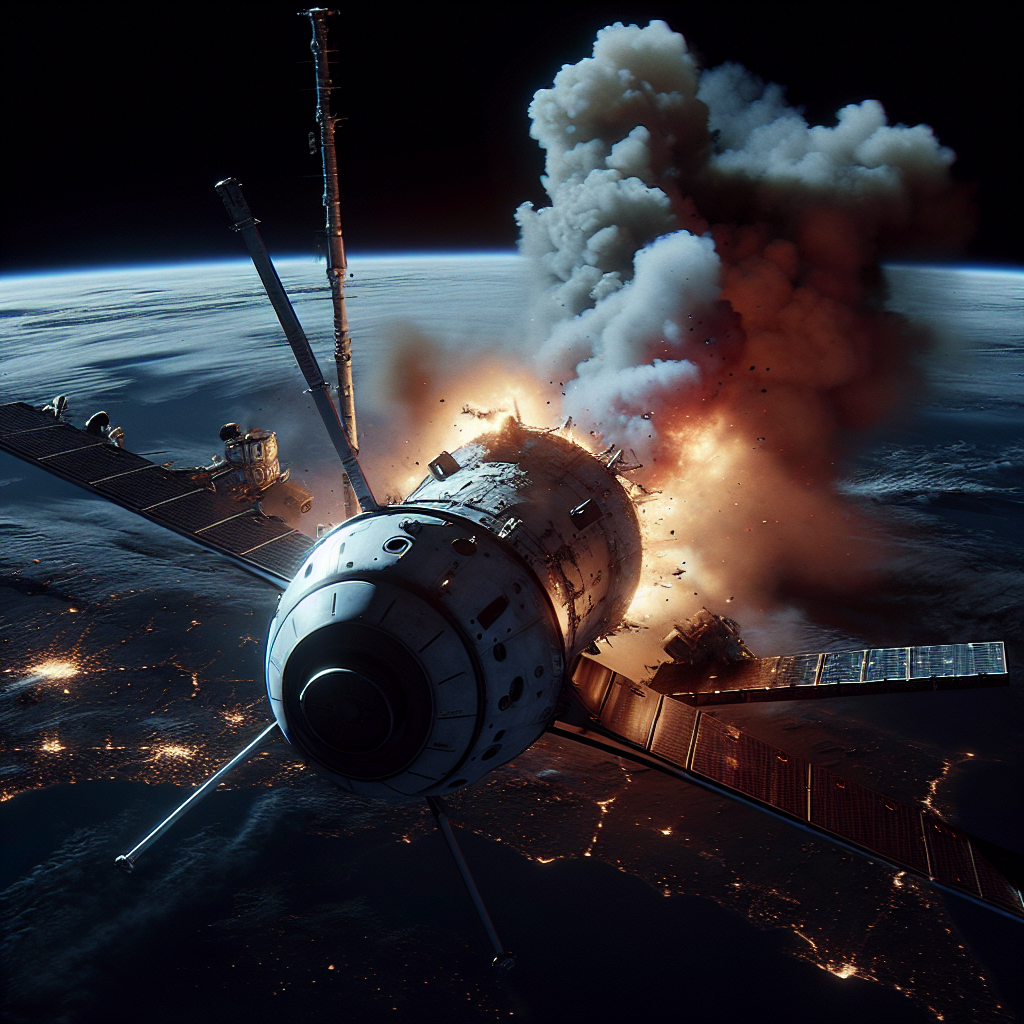
SpaceX Starship Incident: Understanding the Self-Destruct Trigger from Propellant Leaks and Communication Blackouts
Space enthusiasts and industry insiders have long been fascinated with SpaceX, a company consistently at the forefront of space technology. Recently, though, SpaceX’s flagship Starship experienced a significant incident where it self-destructed after propellant leaks caused fires and a communications blackout. This event has sparked wide-ranging discussions about aerospace engineering, safety protocols, and technological innovations. But what exactly happened, and what does it mean for the future of Starship? Let’s dive in.
The Starship Program: A Brief Overview
What is SpaceX’s Starship?
SpaceX’s Starship is envisioned as a fully reusable spacecraft for missions to Mars, the Moon, and beyond. It comprises two main components:
- Starship spacecraft: designed for payloads, crew, and missions beyond Earth.
- Super Heavy booster: provides the power needed to escape Earth’s gravitational pull.
The ultimate goal is to make space travel more accessible and enable humanity to be a multiplanetary species.
The Significance of Recent Test Flights
Test flights of Starship are crucial milestones. Each flight is an opportunity to validate designs, improve technologies, and move closer to operational readiness. However, not all flights go as planned, and learning from setbacks is part of the process.
The Self-Destruct Incident: What We Know
Initial Launch Details
The incident occurred during one of Starship’s uncrewed test flights. The launch started as scheduled from SpaceX’s facility, with initial parameters all appearing normal.
Propellant Leaks and Their Consequences
Propellant leaks were identified as the primary catalyst for what unfolded next. Here’s how things likely spiraled:
- Leaks Ignition: Leaked propellant ignited, causing fires.
- Systemic Fire Spread: Rapid fire spread affected critical systems.
The impact of these leaks underscores the need for vigilant system maintenance and innovative protective design.
Communication Blackout and Its Role
A major challenge during the incident was a communications blackout. When it occurred, operators lost critical data streams and control capabilities:
- Monitoring Loss: Telemetry and visual feeds were lost.
- Manual Intervention Difficulty: Without telemetry, intervening was challenging.
- Fire Safety Mechanism: Automated systems had to decide without human assistance.
Communication is the lifeline of modern aerospace operations, and this blackout greatly hindered real-time troubleshooting.
Why the Starship Self-Destructed
Safety Protocols in Spaceflight
Space missions, particularly test flights, incorporate numerous fail-safes:
- Self-Destruct Mechanisms: Automated abort sequences are initiated in dire circumstances to prevent worsened outcomes.
- Public Safety Concern: Near-population risks necessitate such extreme measures if control is lost.
Starship’s self-destruction, initiated under safety protocols, was to ensure the risk to infrastructure and people was minimized.
Data Analysis and Precautionary Measures
While incidents such as the Starship’s self-destruction are far from desired, they provide invaluable data:
- Telemetry Analysis: Engineers and analysts dissect available data and footage.
- Future Safeguards: Lessons learned prompt regulatory and practical enhancements, ensuring greater safety in subsequent missions.
Impacts on SpaceX and Future Missions
Lessons in Resilience
For SpaceX and its team, this event is a reminder of the complexities of space travel:
- Engineering Challenges: Redundancy and system recuperation improvements.
- Training Protocols Review: Better prepare teams for anomalies in real-time.
Resilience is key, showcasing SpaceX’s capacity to adapt and overcome.
Communication Technology Innovations
Post-incident focuses will include advancing communication system robustness:
- Redundancy Protocols: Implement multilayer communication pathways.
- Uninterrupted Data: Seek out more fail-safe methods to prevent complete data blackout.
Looking Ahead: What’s Next for Starship?
Despite setbacks, the Starship program moves forward:
- Continued Testing: Future tests refined with new insights.
- Community Support: Engage aerospace community for collaborative innovations.
Consider this not just an incident, but a stepping stone to evolution in space exploration technology.
Conclusion: The Drive Toward Progress
SpaceX’s Starship and the recent incident of self-destruction illustrate both the challenges and potential inherent in space exploration. While obstacles are numerous, each one presents an opportunity to refine, learn, and push the envelope of human capability farther than ever before. SpaceX, along with the broader scientific community, continues to work tirelessly in pursuit of making space travel safe, reliable, and, ultimately, revolutionary.
Understanding this incident not only highlights SpaceX’s resilience but also invites us all to appreciate the enormous complexity and ambition of taking humankind to the stars. As innovation carries onward, eyes remain fixed on the skies, eagerly awaiting the accomplishments and lessons impacting not just our generation, but those to follow.