
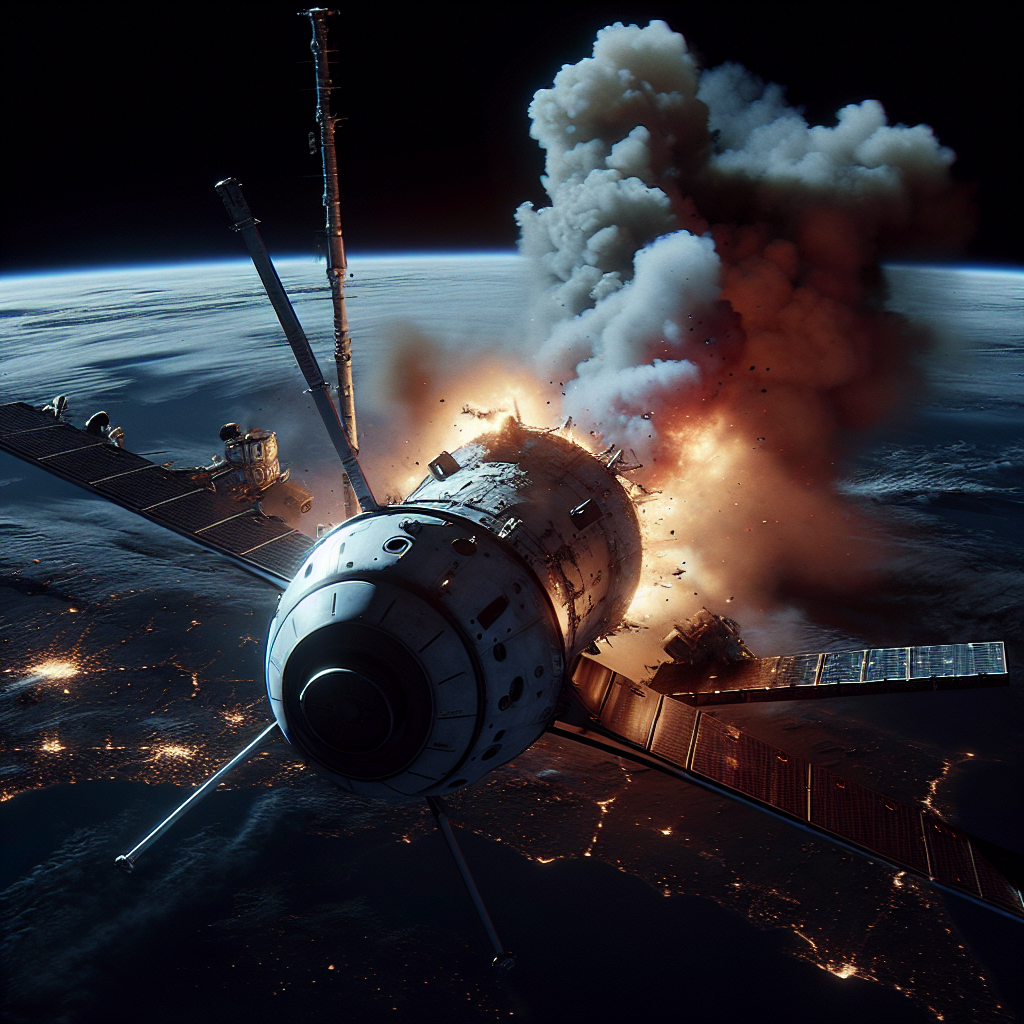
The Starship Saga: Analyzing SpaceX’s Response to the Recent Mishap
Space exploration has always fascinated humanity, capturing our imaginations with tales of distant galaxies, pioneering astronauts, and groundbreaking technology. In recent years, SpaceX, founded by the visionary Elon Musk, has become synonymous with innovation in space travel. However, even the most advanced technologies are not immune to mishaps. Recently, SpaceX’s much-anticipated Starship rocket self-destructed due to propellant leaks leading to fires and a communications blackout. Let’s dive into the intriguing details of this event and its implications for the future of space exploration.
The Event: What Happened to Starship?
The Build-Up to the Incident
SpaceX’s Starship is designed to be a fully reusable spacecraft for crew and cargo missions to a variety of destinations, including Mars. On its test flight, enthusiasm was high as millions tuned in to witness the next generation of space travel.
-
Test Goals:
- Demonstrate the ability of Starship to reach orbital speeds.
- Analyze the aerodynamic properties and durability of the spacecraft during rapid re-entry to Earth’s atmosphere.
- Gather data for the continuous improvement of future Starship designs.
- Initial Success:
- The launch sequence proceeded smoothly, with Starship clearing the tower and entering its pre-programmed flight path.
- Key flight metrics indicated that the craft was operating within expected parameters.
The Unraveling: Propellant Leaks and Fires
Propellant leaks were identified as the initial cause of the cascading failures that led to Starship’s self-destruction. Let’s analyze how these issues unfolded:
- Identification of Leak Points: Sources indicate that multiple leak points were detected in the oxidizer and methane tanks.
- Immediate Consequences:
- Fires were ignited due to leaks contacting hot engine components.
- Compromised structural integrity led to partial telemetry loss and deviations in flight control.
These fires resulted in an immediate communications blackout, effectively blinding the mission control’s ability to analyze real-time data and respond accordingly.
The Decision: Triggering Self-Destruct
When the onboard computer system detected unmanageable deviations and potential hazard to surrounding areas, it initiated the self-destruct sequence as per standard safety protocols. Though a disappointment, this strategic decision averted possible catastrophic outcomes, reinforcing SpaceX’s commitment to safety.
Cause Analysis: Digging Deeper
Understanding Propellant Leaks in Spacecraft
Propellant leaks are some of the most hazardous risks in spaceflight operations. Let’s explore why they occurred on the Starship and what it means for space engineering.
- Material Concerns: Understanding metal fatigue, sealant failures, and their contribution to developing leaks.
- Environmental Factors: The impact of vibration during ascent and extreme temperature changes that may trigger material failures.
- Detection Systems: The future of leak detection, including advanced sensors and AI monitoring systems that could avert similar incidents.
Communications Blackout and Its Implications
When communication with a spacecraft is lost, the risks escalate rapidly. This segment addresses:
-
Immediate Impacts:
- Inability to relay commands or extract useful data.
- Delays in assessing spacecraft health and safety.
- Long-Term Implications for Space Programs: The need to develop resilient communication networks, possibly leveraging satellite constellations or quantum communication to reduce blackout risks.
SpaceX’s Response: Recovery and Learning
SpaceX’s response to this incident showcases their adaptability and commitment to continuous learning. Here’s how they plan to move forward:
Crisis Management and Immediate Aftermath
- Within hours, SpaceX initiated a comprehensive review of flight data.
- A dedicated team was assembled to investigate and counteract the sequences leading to the disaster.
Lessons Learned
Crucial takeaways include:
- Revisiting design protocols to fortify against future leaks.
- Innovative solutions aimed at enhancing communication resilience, like redundant data channels and improved data encryption.
- Strengthening collaborations with NASA and other aerospace experts for third-party reviews and shared learnings.
The Road Ahead: SpaceX’s Strategy for Improvement
Despite setbacks, SpaceX is determined to be at the forefront of space travel innovation. Their roadmap includes:
- Accelerated prototyping and testing to incorporate the lessons from this incident.
- Enhanced Training: For both automated systems and human teams to better manage anomaly detections and decision-making under duress.
- Technological Advancements: Innovating advanced materials and propulsion systems to boost reliability and safety.
Conclusion: The Unyielding Pursuit of Space Exploration
SpaceX’s journey with the Starship program, while not without its challenges, embodies the courageous spirit of human exploration. The recent incident, while a speed bump, provides invaluable insights that will bolster future success.
As we continue to push the boundaries of what is possible, the lessons learned from such incidents enrich our understanding and bring us closer to the stars. It serves both as a humbling reminder of the universe’s vast mysteries and as an exhilarating evidence of the human resolve to conquer them.
So here’s to the next milestone in space exploration, where every challenge leads not just to answers, but to a million new questions ready to be explored. With eyes set on Mars and beyond, SpaceX continues its quest and invites humanity along for the ride.