
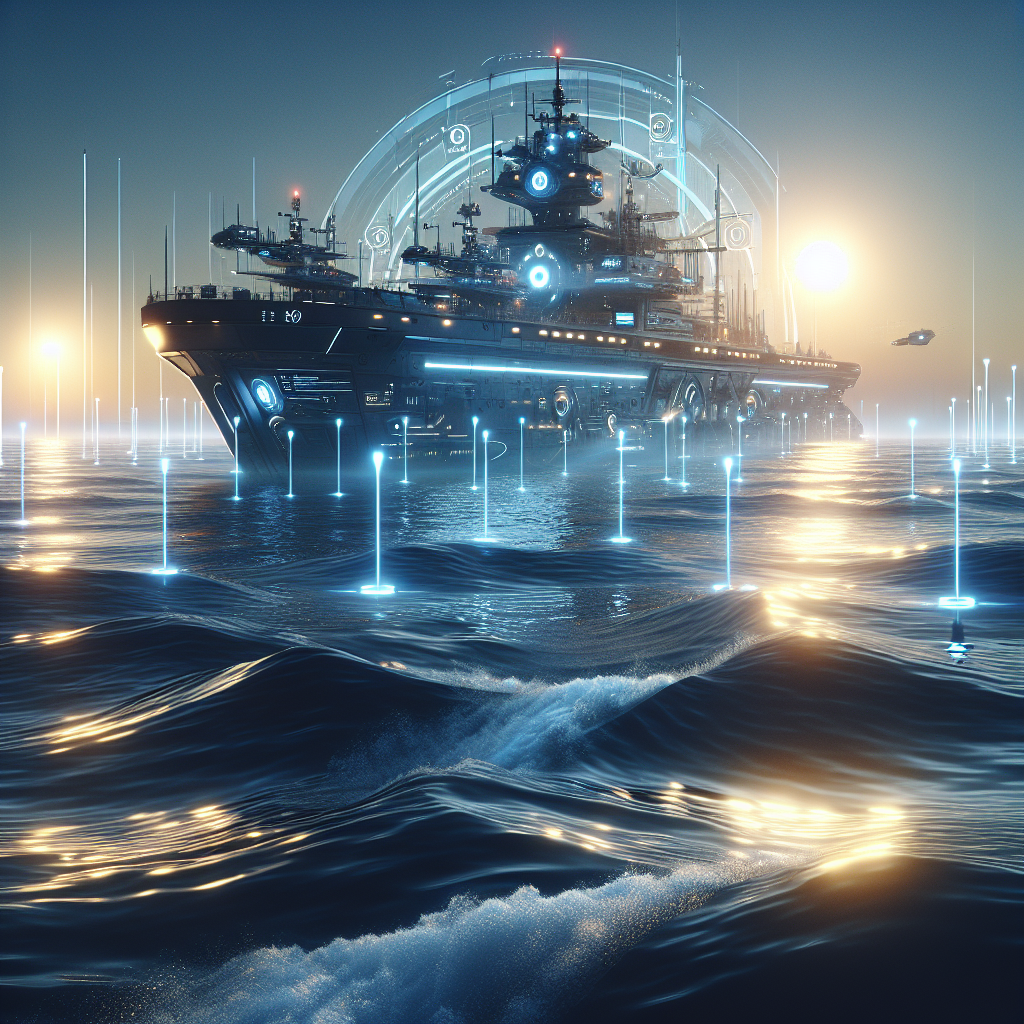
Saronic Raises $600M to Mass-Produce Autonomous Warships: A New Era in Maritime Defense
In a groundbreaking development within the defense sector, Saronic Technologies announced its latest accomplishment: a staggering $600 million funding round aimed at mass-producing autonomous warships. This monumental achievement marks a significant leap forward in maritime defense, signaling innovative changes for military strategies worldwide.
Riding the Tide of Innovation
As maritime threats evolve, so too must the strategies and technologies deployed to counter them. Countries around the globe are increasingly investing in defense technologies that promise enhanced security measures without the need for extensive human resources. At the forefront of these advancements are autonomous warships – unmanned vessels that autonomously navigate and perform missions, protecting coastlines and strategic maritime routes more efficiently than traditional warships.
Saronic’s recent funding success not only highlights the growing interest and potential in this field but also places the company within the elite circle of pioneers revolutionizing modern warfare technologies. But what does this mean for global defense, maritime technology, and military operations? In this article, we’ll navigate the currents of the autonomous warship industry, and explore the potential impacts, challenges, and opportunities that Saronic’s bold venture presents.
Unveiling Autonomous Warships: What Makes Them Special?
Modern warfare increasingly depends on intelligent systems capable of performing complex tasks. Autonomous warships are the marine counterpart of these systems, designed to operate in harsh maritime environments with minimal human intervention.
Key Characteristics
1. Self-navigating Capabilities:
Autonomous warships utilize advanced algorithms and AI technologies enabling them to chart and navigate their own courses. These systems eliminate the need for a large onboard crew, effectively reducing personnel risk and operational costs.
2. Enhanced Surveillance and Reconnaissance:
Equipped with state-of-the-art sensors and equipment, these vessels can perform surveillance missions, gather intelligence, and monitor maritime activities effectively – all while being capable of transmitting real-time data back to command centers.
3. Versatile Combat Functionality:
With the power to engage in direct combat, autonomous warships can carry out offensive and defensive maneuvers. They are designed to handle a variety of threats, ranging from conventional naval threats to asymmetric threats, such as piracy and terrorism.
Technology Behind the Navy’s New Weapon
Autonomous warships rely heavily on advanced technologies, including:
- Artificial Intelligence (AI): Enables object detection, decision-making, and dynamic mission planning.
- Machine Learning (ML): Used for pattern recognition and enhancing the vessel’s ability to adapt to new situations.
- Autonomous Navigation Systems: Utilize GPS and sophisticated mapping systems for route optimization.
- Cybersecurity Protocols: Essential to defending against hacking and ensuring secure communication channels.
Impact on Global Defense Tactics
The introduction of autonomous warships is poised to redefine naval warfare and global defense strategies. Here’s a closer look at how:
Broadening Naval Capabilities
Autonomous ships can undertake complex missions without fatigue, presenting a formidable presence in contested regions. They will enable:
- Increased Operational Range: Unmanned vessels can operate in extended deployments without the need for resupply, other than fuel and munitions.
- Force Multiplication: They act as force multipliers, allowing naval forces to project power more effectively across oceans.
Zeroing in on Cost Efficiency
The operational cost advantages of autonomous warships are substantial:
- Reduced Crew Costs: With little to no crew needed, navies can drastically cut down personnel expenses.
- Maintenance and Logistics Savings: Designed to be robust and low-maintenance compared to manned ships.
Strategic Implications
As autonomous systems deploy across the seas, nations will need to adapt to new operational tactics and defense postures, including:
- Formulating New Diplomatic Policies: The potential for autonomous engagement exists, urging countries to debate the rules and ethics of automated naval warfare.
- Arms Race Dynamics: As more countries adopt unmanned technologies, an arms race may ensue in fielding the most technologically superior platforms.
Challenges to Overcome in Manufacturing and Deployment
While the potential is vast, the journey to mass production and deployment of autonomous warships is fraught with technical, operational, and ethical challenges.
Technical Obstacles
Building autonomous vessels capable of functioning in complex and unpredictable ocean environments involves overcoming several hurdles:
- Reliability Under Stress: Ensuring these vessels can withstand harsh conditions and operate reliably during missions.
- Data Integrity and Security: Combating cyber threats and safeguarding the integrity of communication channels.
Ethical and Operational Concerns
Deploying autonomous warships raises several ethical and legal questions regarding accountability, engagement protocols, and the possible reduction in human oversight when making life-and-death military decisions.
Opportunities on the Horizon
Despite challenges, the movement towards autonomously controlled vessels is expected to open a wave of opportunities for defense contractors, tech companies, and research institutions worldwide.
Driving Technological Advancements
Saronic’s venture presents an unprecedented opportunity for tech innovation, steering the development of cutting-edge marine AI, communication systems, and autonomous logistics networks.
Boosting Economic Growth
In addition to bolstering national security, the production and advancement of autonomous vessels are anticipated to fuel job creation and stimulate economies centered around defense and technology sectors.
Conclusion: Navigating the Future
Saronic’s $600M venture into autonomous warship production stands as a beacon for the future of naval technology. The immense scope of what’s achievable with autonomous systems exemplifies a watershed moment in adopting tech-led warfare strategies. As the waves of change continue to swell, staying informed and proactive will be crucial for countries and corporations seeking to ride the next tide in maritime defense innovation.
As the seas grow quieter with fewer human-operated vessels, the unique hum of technology-driven ships may soon become the new rhythm of naval dominance. Welcome to the new era of maritime warfare, navigated by the invisible hand of artificial intelligence and autonomous surprise.