
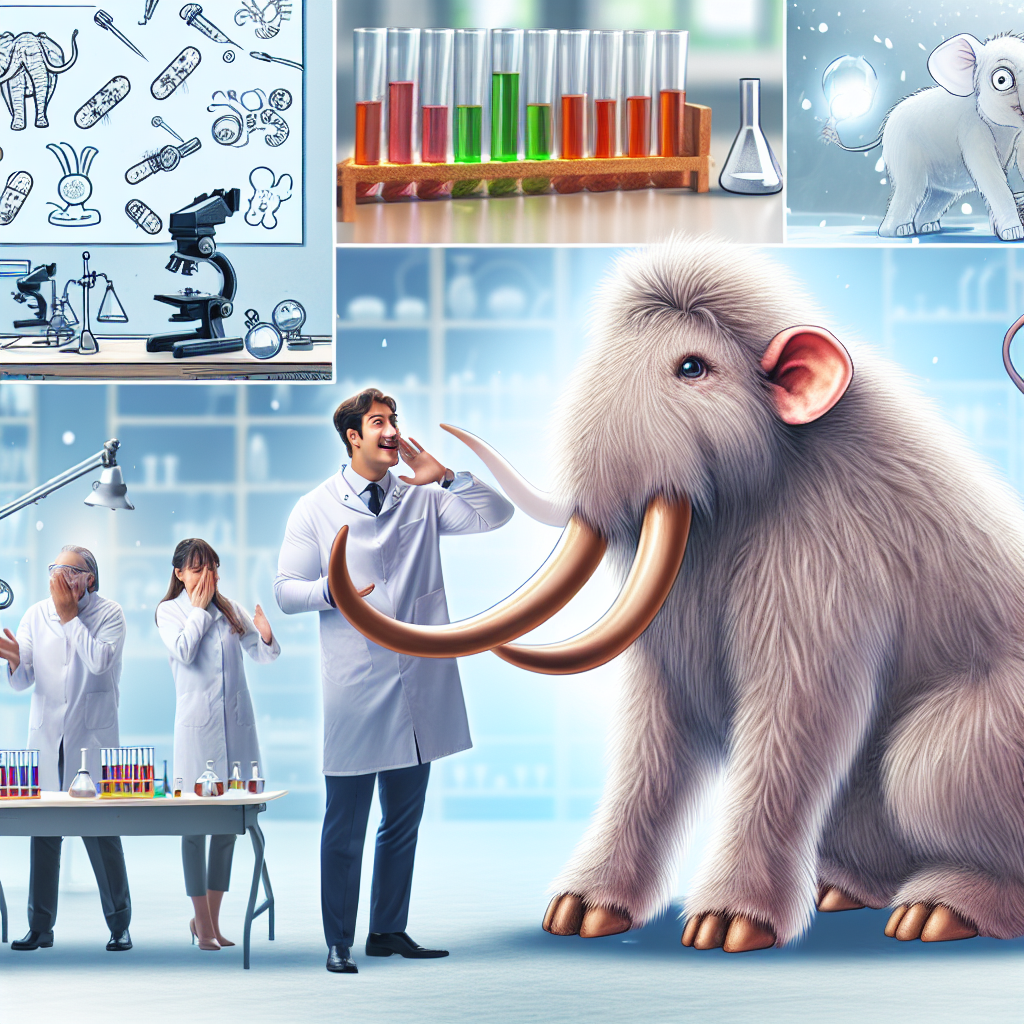
Reviving the Past: How Colossal Biosciences Created a Woolly Mouse on Their Quest to Bring Back the Woolly Mammoth
The idea of bringing extinct creatures back to life has fascinated us for generations. From movies like "Jurassic Park" to scientific debates, we are constantly drawn to the possibility of reversing extinction. Now, Colossal Biosciences, a pioneering company in the field of genetic engineering, is turning this intriguing possibility into reality. Not with dinosaurs, but with the legendary woolly mammoth. The first significant step? Creating a woolly mouse. But why a woolly mouse, and what does it mean for the quest to resurrect the woolly mammoth? Let’s explore this captivating journey.
The Mammoth Revival: A Glimpse Into History
Why the Woolly Mammoth?
The woolly mammoth once roamed the vast tundras of North America and Eurasia. These gigantic, yet gentle creatures played an essential role in their ecosystem, affecting vegetation patterns, soil fertility, and even climate. Sadly, around 10,000 years ago, they disappeared from most of their habitats, mainly due to a combination of climate change and human hunting.
- Ecological Impact: Their disappearance disrupted the ecosystem balance, accelerating changes in flora and fauna.
- Scientific Interest: Woolly mammoths have been preserved in ice, yielding intact DNA samples, making them ideal candidates for de-extinction projects.
The Role of the Woolly Mouse
In genetic engineering, scientists require a living model to test theories and understand processes before attempting de-extinction on a larger scale. This is where the woolly mouse fits in. By embedding woolly mammoth genetic characteristics into a mouse, Colossal Biosciences has crafted a vital stepping stone to understand the complexities of these genes.
- Model Organism: Mice are widely used in research because they share about 85% of their genes with humans.
- Proof of Concept: The woolly mouse serves as proof that mammoth genes can function inside a living organism, paving the way for further advancements.
The Science Behind Gene Editing
CRISPR and Genetic Engineering
At the heart of this revolutionary project is CRISPR-Cas9, a powerful gene-editing tool that allows scientists to make precise changes in DNA. CRISPR has already transformed agriculture and medicine, and now it is on the verge of enabling species revival.
- How It Works: CRISPR acts like a pair of molecular scissors that can cut DNA at specific places, allowing for the removal, addition, or alteration of genetic material.
- Application in Woolly Mouse: By using CRISPR, scientists insert specific mammoth genes into the mouse genome, aiming to express desired traits, such as thicker hair or subcutaneous fat.
Challenges and Ethical Considerations
With every technological breakthrough comes a set of challenges and ethical dilemmas:
- Off-Target Effects: Mistakes in gene editing can lead to unintended changes.
- Genetic Variation: Not all desired traits may be expressed consistently.
- Ethical Dilemmas: Questions arise about playing ‘God’ and the morality of reviving extinct species.
Potential Impacts of the Mammoth Revival
Ecological Restoration
One of the intriguing potentials of resurrecting the woolly mammoth is its ability to combat climate change. Mammoths could help:
- Prevent Permafrost Melting: By maintaining grasslands in the tundra, mammoths could slow the melting of permafrost, which releases significant greenhouse gases.
- Biodiversity Revival: Reintroducing a key species could restore balance to ecosystems.
Technological Advancements
The techniques refined during this research could have broad applications beyond de-extinction:
- Medical Breakthroughs: Improving human disease resistance through genetic enhancements.
- Conservation Efforts: Applying gene-editing technology to save critically endangered species.
Ethical and Social Implications
Human Perceptions
Reviving the woolly mammoth raises profound questions about our relationship with nature and technology:
- Conservation vs. Resurrective Biology: Should efforts focus on saving existing species over bringing back the extinct?
- Playing God: The anxiety over altering nature’s course and unforeseen consequences.
The Road Ahead for Colossal Biosciences
Colossal Biosciences is spearheading a movement that may redefine biodiversity conservation and ecological management in the 21st century. However, the journey from a woolly mouse to a woolly mammoth is complex and fraught with challenges.
Continuous Research and Development
- Iterative Process: Each experiment with the woolly mouse contributes valuable insights for refining techniques before tackling larger species.
- Interdisciplinary Approach: Collaboration with ecologists, ethicists, and technologists ensures a comprehensive strategy.
Global Collaboration and Regulations
For de-extinction to succeed, global scientific communities must:
- Align with Ethical Standards: Promote transparency and dialogue among stakeholders.
- Regulate Gene Editing: Establish frameworks that address safety and ethical concerns in genetic manipulation.
Conclusion
The woolly mammoth’s potential return symbolizes a remarkable intersection of past and future — ancient species meeting cutting-edge technology. Colossal Biosciences’ creation of the woolly mouse is a monumental leap forward, merging imagination with science. While many obstacles lie ahead, the adventure of rediscovering our planet’s lost giants has already begun. As we stand on the brink of an extraordinary future, we must weigh the responsibilities and wonders of rewriting life’s chapters. And the journey? It’s as compelling as the destination.
Join the Quest
Stay informed and engage in the conversation. As Colossal Biosciences and other researchers continue to navigate the fascinating landscape of de-extinction, we invite you to delve deeper into the possibilities that await. Could the woolly mammoth thrive once more? Only time, science, and collective effort will tell.
Join us on this captivating exploration, subscribe to our newsletter, or share your thoughts below.