
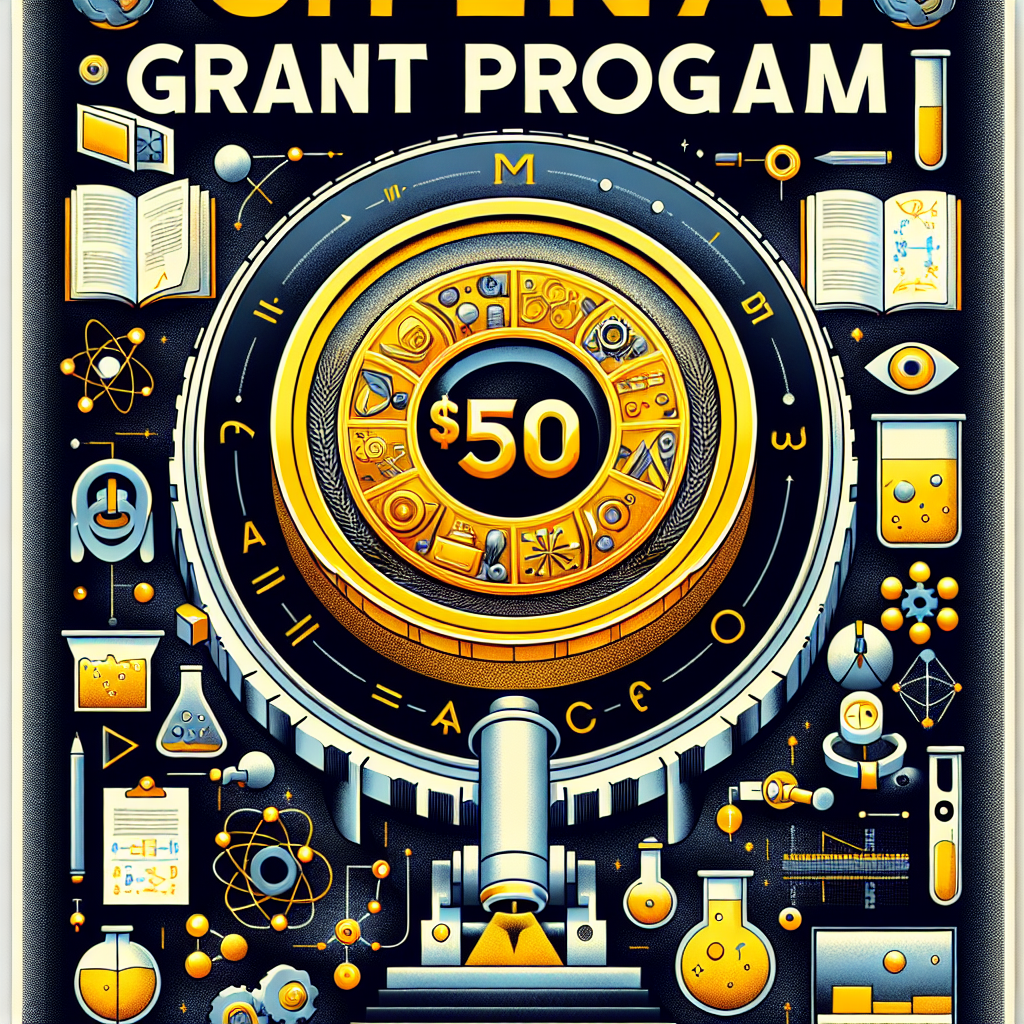
OpenAI’s $50M Grant Program: A Game-Changer for Academic Research
In a groundbreaking move aimed at revolutionizing the landscape of academic research, OpenAI has launched a $50 million grant program. This initiative is set to empower scholars and institutions around the globe, pushing the boundaries of artificial intelligence (AI) and fostering an era of unprecedented academic innovation. But what does this mean for the academic community, and how can researchers tap into this opportunity?
The Vision Behind OpenAI’s Grant Program
Enabling Cutting-Edge Research
OpenAI, a leader in artificial intelligence and machine learning, envisions a future where AI not only augments human capabilities but also democratically enhances research across disciplines. By providing substantial funding, OpenAI aims to bridge the gap between resources and groundbreaking ideas.
- The program encourages innovative uses of AI in traditionally underfunded areas.
- It supports projects that seek to address societal challenges.
- The initiative aims to accelerate collaboration between AI experts and other disciplines.
Democratizing AI Learning
Through this grant program, OpenAI is committed to making AI a more inclusive field. Here’s how:
- Inclusive Opportunities: The program is especially geared towards underserved communities and researchers from diverse backgrounds.
- Interdisciplinary Projects: OpenAI encourages proposals that merge AI with fields such as humanities, social sciences, and environmental studies.
Eligibility and Application Process
Who Can Apply?
The OpenAI grant program welcomes a wide range of applicants. Eligibility is designed to be broad to ensure a variety of research topics:
- Academic Researchers: Individuals associated with recognized academic institutions across the globe.
- Non-profit Organizations: Entities focused on academic research and development.
- Collaborative Teams: Groups comprising various disciplines, particularly those incorporating AI insights.
How to Apply?
The application process is streamlined to ensure accessibility and transparency:
-
Proposal Submission: Applicants need to submit a detailed proposal outlining their research objectives, methods, potential impact, and budget plan.
-
Review Process: A panel of experts from OpenAI and external academic institutions will review the proposals.
- Funding Decision: Successful applicants will receive grants ranging from several thousand dollars to more substantial funding levels, depending on the scope and potential impact of the project.
Application Deadline: The proposal calls are expected to occur in cycles; keep an eye on OpenAI’s official announcements for exact dates.
Potential Impact on Academic Research
Stimulating Innovation
The infusion of $50 million into the academic research domain can lead to numerous breakthroughs, such as:
- Enhanced development of AI models with real-world applications.
- Cross-discipline Innovations: Integration of AI with fields like medicine, climate science, and more, leading to hybrid research methodologies.
Addressing Societal Challenges
With this funding, researchers have the potential to address critical issues:
- Climate Change: AI tools to analyze and predict environmental changes more accurately.
- Healthcare: Development of AI for early diagnosis and treatment plans, improving patient care.
Fostering Global Collaboration
The program is a stepping stone towards global research collaboration, encouraging:
- International partnerships between institutions and researchers.
- Sharing of data, tools, and methodologies to deepen AI research and development.
Looking Ahead: The Future of AI in Academia
Scaling Research Capabilities
OpenAI’s grant initiative is not just about immediate impacts but long-term growth. Here’s what the future holds:
- Infrastructure Development: Creating robust AI research infrastructures in academic institutions, especially in developing regions.
- Increase in AI Adoption: With more financial backing, AI becomes an integral part of academic curriculums worldwide.
Encouraging Ethical AI Use
Amid growing concerns over AI ethics, OpenAI’s program emphasizes responsible AI:
- Ethical Considerations in Proposals: Researchers must factor in ethical implications and societal impact assessments in their submissions.
- Ongoing Ethical Workshops: Grant recipients may engage in workshops to discuss ethical AI deployment.
Conclusion
OpenAI’s $50 million grant program is a bold step towards reshaping academic research through AI. It promises to create a more inclusive, innovative, and collaborative research environment that not only pushes technological boundaries but also addresses critical societal needs. Researchers and institutions now have the unique opportunity to be at the forefront of AI-driven academic revolution. Keep abreast of this transformative initiative and prepare your groundbreaking proposals to join the wave of change.
For further details on the application and more insights on AI’s role in academia, visit OpenAI’s official website. Don’t miss the chance to make your mark in the world of AI-enhanced research!