
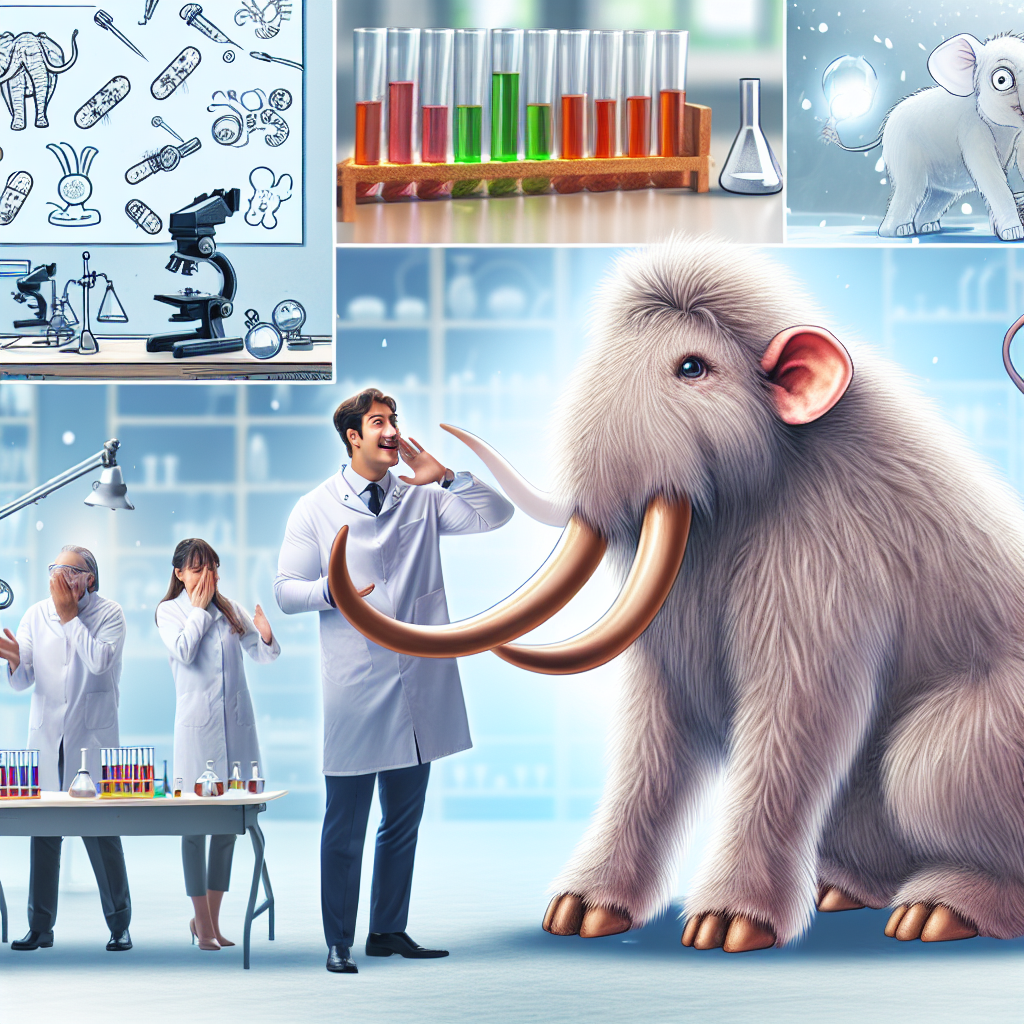
Colossal Biosciences: On a Quest to Revive the Woolly Mammoth with a Woolly Mouse Breakthrough
Imagine stepping into a world where woolly mammoths roam the Arctic tundra, the landscape once teeming with these magnificent creatures. Although it sounds like a scene from a sci-fi movie, recent advancements in genetic engineering are bringing us one step closer to that reality. At the forefront of this de-extinction movement is Colossal Biosciences. Their conception of a woolly mouse symbolizes a groundbreaking stride in the ambitious journey to resurrect the woolly mammoth. But how did it all start, and what does it mean for the future of biotechnology?
The Genesis of a Revolutionary Dream
The Vision Behind Colossal Biosciences
Colossal Biosciences, co-founded by renowned geneticist George Church and entrepreneur Ben Lamm, set its sights on an extraordinary mission: bringing back extinct species to rebalance ecosystems and advance genetic engineering technologies. With the support of investors passionate about biodiversity conservation, Colossal is pioneering revolutionary techniques to achieve what was once deemed impossible.
Why the Woolly Mammoth?
The woolly mammoth holds a unique allure. It’s not just its shaggy grandeur that captivates scientists and the general public alike. The mammoth’s reintroduction could play a pivotal role in climate change mitigation. By grazing on tundra vegetation, they would help keep permafrost from melting, thus preventing the release of carbon stores. Furthermore, the woolly mammoth serves as an ideal candidate for de-extinction due to its close genetic relationship with the modern-day Asian elephant.
Unveiling the Woolly Mouse
The Science Behind the Woolly Mouse
In a groundbreaking stride, Colossal Biosciences has developed the ‘woolly mouse’ – a genetically modified mouse carrying some of the traits of the woolly mammoth. The project involves advanced CRISPR gene-editing technology to insert mammoth genes into mouse DNA. But why start with a mouse?
- Size & Reproduction: Mice offer convenience due to their smaller size and fast reproduction rates, making them ideal candidates for experimental genetic research.
- Genetic Simplicity: Compared to complex mammalian DNA, handling the genetic makeup of mice is more straightforward and provides a stepping stone for future mammalian applications.
What Makes the Woolly Mouse Unique?
The woolly mouse carries distinctive genetic traits of the woolly mammoth, focusing on genes responsible for its dense fur and fat storage capability. Such traits are fundamental in providing insights into how mammoths adapted to icy environments.
Implications of De-Extinction Efforts
Ethical Considerations
Restoring extinct species is not just a matter of scientific hurdles. It poses significant ethical questions:
- Biodiversity Impact: Could resurrected species throw existing ecosystems off balance or threaten current biodiversity?
- Animal Welfare: The ethical treatment of genetically engineered animals must be considered.
- Playing God?: Philosophical debates arise over humans’ right to bring back extinct creatures.
Addressing these concerns is vital for ensuring that de-extinction endeavors are responsibly managed.
Environmental Benefits and Concerns
The reintroduction of species like the woolly mammoth could offer substantial environmental benefits:
- Climate Control: Potentially mitigating climate change by impacting permafrost stability.
- Biodiversity Restoration: Some ecologists argue that bringing back grazers can revitalize entire ecosystems.
Conversely, challenges exist in ensuring these creatures survive and integrate into current habitats without adverse impacts.
The Future of Genetic Engineering
Pioneering Scientific Innovation
Colossal’s endeavor heralds a new era in genetic sciences. The woolly mouse is just the beginning, with potential applications stretching beyond de-extinction:
- Disease Resistance: Genetic tweaks could lead to advanced treatments or the prevention of hereditary diseases in animals and humans.
- Biodiversity Conservation: Gene-editing tools can assist in conserving endangered animals by enhancing their adaptability.
The Road Ahead
While the woolly mouse represents a monumental step forward, the journey to a living woolly mammoth is fraught with challenges. Key milestones involve scaling up from mice to elephants and tackling significant technological, ethical, and ecological hurdles. However, each breakthrough builds foundational knowledge and sparks further innovation.
Conclusion: A Step Towards Re-imagining Our World
The creation of the woolly mouse by Colossal Biosciences is a landmark achievement that captures the imagination and raises critical questions about our future interactions with life on Earth. As we stand on the brink of unlocking nature’s genetic secrets, it’s essential that we weigh the scientific potentials against ethical imperatives and ecological responsibilities. Whether you view de-extinction as a fascinating possibility or a Pandora’s box, one fact remains undeniable: the future is indeed woolly, and it holds the promise of profound discoveries.