
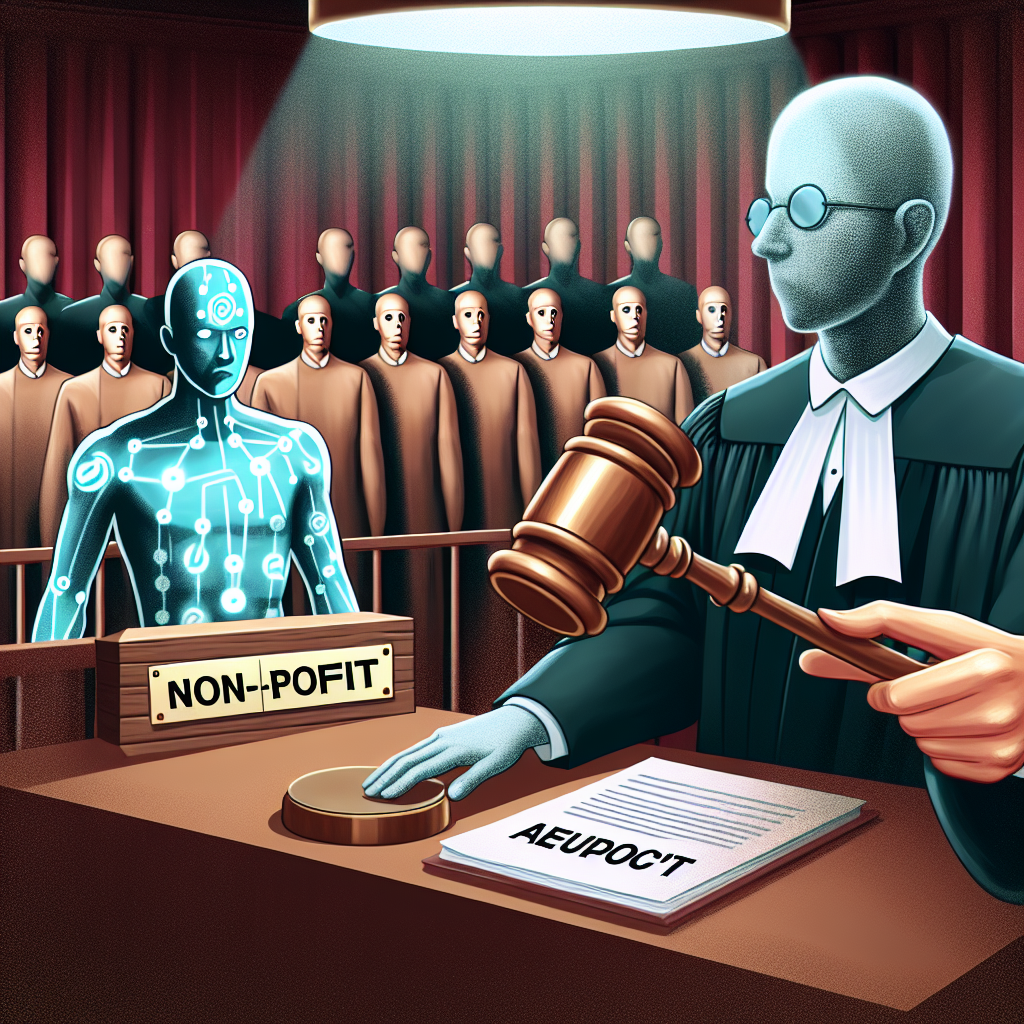
The Legal Battle Over OpenAI: Elon Musk’s Failed Attempt to Halt Its For-Profit Transition
In the rapidly evolving tech landscape, few stories have managed to captivate the public and industry insiders alike as much as the ongoing saga between Elon Musk and OpenAI. The recent news of a judge rejecting Elon Musk’s attempt to block OpenAI’s transition to a for-profit entity has added another intriguing chapter to this high-stakes narrative. If you’re curious how one of the tech industry’s most charismatic leaders found himself on the losing side of this battle, read on as we dive deep into the details and implications of this legal decision.
A Brief History of OpenAI
OpenAI’s inception was fueled by a vision to ensure that artificial intelligence serves the betterment of humanity. Founded in December 2015 by Elon Musk, Sam Altman, and others, it began as a non-profit organization with the aim of promoting and developing friendly AI.
The Non-Profit Roots
- Mission: To ensure AI benefits all of humanity.
- Funding: Initial funding of over $1 billion, primarily from donations by tech luminaries.
- Research Focus: OpenAI has always prioritized safe and broad-based distribution of AI technologies.
Why Elon Musk Tried to Block the Transition
Elon Musk has always been vocal about his concerns regarding AI, describing it as one of the existential risks to humanity. His attempt to block OpenAI’s for-profit transition stems from concerns that commercialization could diverge from the organization’s original mission.
Musk’s Concerns
- Mission Drift: He believed that a for-profit model might prioritize profits over safety and ethical considerations.
- Ethical Dilemmas: Concerns over real-world AI applications that prioritize shareholder value.
- Funding and Control: Transition may lead to influence by entities whose priorities might not align with OpenAI’s foundational goals.
OpenAI’s For-Profit Shift: Understanding the Move
Despite its non-profit origins, OpenAI chose to transition into a for-profit entity in 2019, adopting a unique model dubbed "OpenAI LP." This change sparked much debate and controversy.
The For-Profit Model
- OpenAI LP: A capped-profit model intended to attract more investment.
- Objectives: Facilitate the large-scale funding and talent acquisition necessary to compete with tech giants like Google and Facebook.
Justifications for the Transition
- Funding Needs: Advancing AI requires vast resources that a regular non-profit model could not sustain.
- Competitive Landscape: Remaining competitive in a field dominated by large tech companies necessitates substantial investments.
Legal Battle: Musk vs. OpenAI
The courtroom became the battleground for these philosophical differences, with the legal system weighing whether OpenAI’s strategic decisions aligned with its charter and intentions.
Key Legal Considerations
- Contractual Obligations: Examination of whether OpenAI’s original charter and agreements allowed for such a transition.
- Shareholder Rights: Evaluation of stakeholders’ rights, including Musk’s, under the new model.
The Judge’s Ruling: What Happened and Why
The judge’s ruling, dismissing Musk’s attempts, is pivotal but not entirely unexpected given OpenAI’s well-articulated defense.
The Court’s Decision
- Legal Compliance: Judge found no violation of legal or contractual obligations in OpenAI’s transition.
- Right to Transition: Affirmation of OpenAI’s right to adapt its operational model in pursuit of its broader mission.
Implications of the Verdict
- For OpenAI: Reinforces OpenAI’s autonomy to adapt as necessary to sustain its mission.
- For Stakeholders: Signals to investors and stakeholders that strategic flexibility is protected.
Industry Reactions: Voices from the Tech World
The tech community has reacted to the ruling with mixed opinions, highlighting the complexities of balancing innovation, ethics, and business interests.
Diverse Perspectives
- Proponents of the Move: Industry leaders who advocate for flexibility in achieving mission-driven AI.
- Critics: Argue the ruling could set a precedent for mission drift in tech non-profits.
The Future of AI and For-Profit Models
With this legal hurdle cleared, the focus shifts back to OpenAI’s trajectory and the broader implications for the AI landscape.
What Lies Ahead for OpenAI
- Continued Innovation: Ability to harness more resources to develop cutting-edge AI technologies.
- Public Scrutiny: Increasing responsibility to demonstrate ethical and societal commitments.
Broader Industry Implications
- Benchmarks for Future Transitions: This decision could serve as a case study for other non-profits contemplating a similar move.
- Increased Investment: Possible influx of capital into AI under for-profit models.
Conclusion
The ruling in favor of OpenAI’s for-profit transition marks a significant moment in the history of AI development and governance. While Elon Musk’s concerns highlight legitimate ethical questions about commercializing cutting-edge technology, OpenAI’s need for resources to maintain its competitive edge cannot be overstated. As this chapter closes, the dialogue around AI’s future, ethical considerations, and commercial imperatives will undoubtedly continue to evolve.
Take Action: Engage in discussions about the ethical dimensions of AI at your local tech meetups or online forums. Your voice in the ongoing discourse can help shape the future of this incredible technology.
Whether you’re a tech enthusiast, a policy maker, or someone keenly interested in the ethical dimensions of technology, staying informed and engaged is crucial as AI continues to redefine our world.