
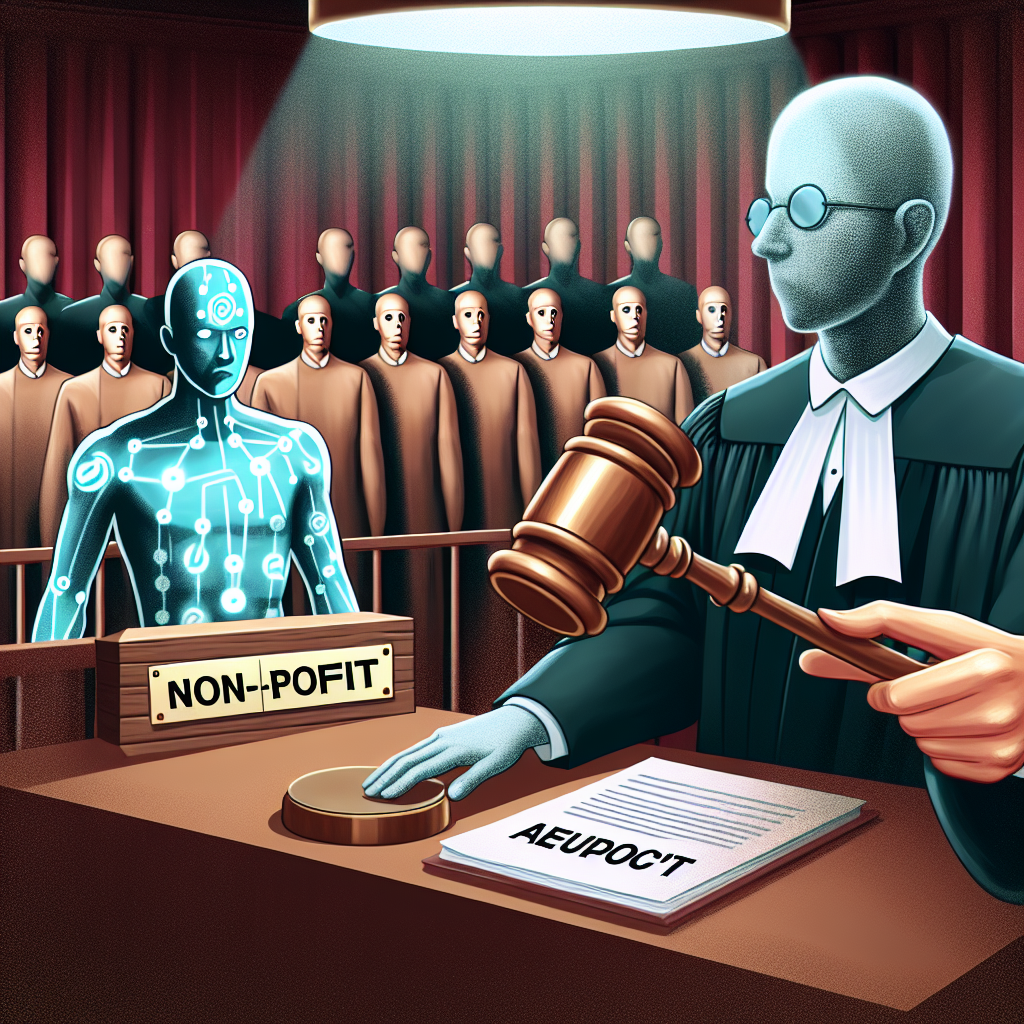
Judge Rejects Musk’s Attempt to Block OpenAI’s For-Profit Shift: What It Means for AI’s Future
As artificial intelligence (AI) progresses at an astonishing pace, the dynamics within this sector are undergoing significant shifts. A hot topic setting the tech industry abuzz recently is the legal battle involving Elon Musk and OpenAI’s transformation from a non-profit to for-profit status. While this news might appear as merely a legal scuffle, its implications ripple through the landscape of ethical AI development and corporate governance. This article unravels the significance of the judge’s decision to reject Musk’s attempt to halt OpenAI’s for-profit transition and what this means for the future of AI.
Understanding the Background: OpenAI’s Mission and Evolution
Founded in December 2015, OpenAI was established with a clear goal: to ensure that artificial general intelligence (AGI) benefits all of humanity. Initially structured as a non-profit, OpenAI aimed to create and promote open-source AI advancements. However, as the field of AI burgeoned with increased investment demands, OpenAI shifted to a "capped-profit" model known as OpenAI LP in 2019. This hybrid structure was designed to attract capital while adhering to ethical constraints.
The Role of Elon Musk
Elon Musk, a co-founder and original benefactor of OpenAI, parted ways with the organization in 2018 due to disagreements over its direction. However, his interest and investments in ethical AI development continued through other ventures, including Tesla and Neuralink.
- A Vocal Advocate: Musk has consistently emphasized the importance of safeguarding humanity against possible AI risks.
- A Financial Stakeholder: Despite leaving the board, Musk’s initial financial contributions make his opinions particularly notable.
Why Musk Opposed the For-Profit Transition?
Elon Musk’s opposition to OpenAI’s decision to transition into a for-profit entity didn’t arise from corporate rivalry but philosophical differences regarding AI governance.
Concerns Over Profit-Driven Models
Musk’s apprehension lies in a core belief that profit motivations could compromise ethical considerations in AI development.
- Possible Risks: A for-profit model might prioritize shareholder returns ahead of safe and responsible AI innovations.
- Transparency Issues: With corporate structures, there is a potential drift away from the open-access mission which might sideline transparency, a principle Musk holds essential for ethical AI advancement.
Trust and Control Issues
Musk has also expressed concerns about the control structure within OpenAI and whether the centralized decision-making could pose risks to aligning products with broader ethical goals.
The Judge’s Decision: A Blow to Musk, but Why?
Despite Musk’s arguments and concerns, a judge recently rejected his attempt to block OpenAI’s transition. The legal ruling underscored several key aspects:
Legal Justification
The court’s decision was fundamentally based on the legal structure and the rights awarded under corporate governance laws.
- Corporate Structure: The transition to a capped-profit model, approved unanimously by the OpenAI board, aligns with the bylaws permissible under its governance structure.
- Limited Stakeholder Influence: Musk’s lack of direct involvement within OpenAI’s current hierarchy further limited his legal authority to impede the transition.
Broader Implications
While on the surface it appears as a legal victory for OpenAI, this decision symbolizes the complexities in balancing ethical AI advancement and capitalist structures.
- Impact on AI Policy: The ruling brings forth a need for clear policies regarding ethical transitions for AI organizations.
- Investor Influence: It raises questions about how much control initial investors should retain over evolving tech entities.
Implications for AI Development and Corporate Ethics
Arguably, the greater question that emerges from this legal event is the long-term ramifications it holds for AI development and corporate ethics.
The Role of Ethical AI Development
Regardless of the profit status, OpenAI must continue to be a torchbearer for ethical AI, ensuring they lead by example.
- Maintaining Open Access: Ensuring open collaboration and access to AI innovations is vital for preventing misuse.
- Balancing Commercial Interests and Ethics: A profit-oriented model necessitates stringent self-regulation to uphold ethical standards.
Strengthening AI Governance
The decision also shines a light on the need for robust governance mechanisms tailored to tech entities undergoing rapid evolutionary shifts.
- Establishing Ethical Boards: Implementing independent ethical boards within AI companies can help mediate business goals with ethical considerations.
- Policy and Regulation: Policymakers must recognize the unique position AI occupies and draft regulations aligned not only with technological advancement but societal interest.
Conclusion: Navigating Future AI Transformations
As AI continues to redefine technological horizons, the path for organizations like OpenAI is fraught with both opportunities and ethical dilemmas. The rejection of Musk’s attempt to stall OpenAI’s for-profit transition is a testament to the evolving nature of corporate structures and AI governance. While this specific legal sunrise may be set, the broader debate over AI’s ethical trajectory remains a pivotal conversation.
> “In navigating the labyrinth of AI’s future, organizations must ensure their footprints echo with the hallmarks of ethical foresight and inclusive innovation.” — Anonymous Tech Ethicist.
Engage, Comment, and Share!
If you found this article insightful, feel free to share it with your network. Join the conversation in the comments below: How should AI organizations balance ethical considerations with profit motives?
Explore Related Articles
- "The Ethics of AI: Can For-Profit Models Coexist with Ethical AI?"
- "Elon Musk and AI: A Complex Relationship"
- "Understanding AI Governance: Challenges and Opportunities"
By delving into this multifaceted issue, stakeholders — from developers to policymakers — can better anticipate and navigate the convergence of technological innovation and ethical imperatives.