
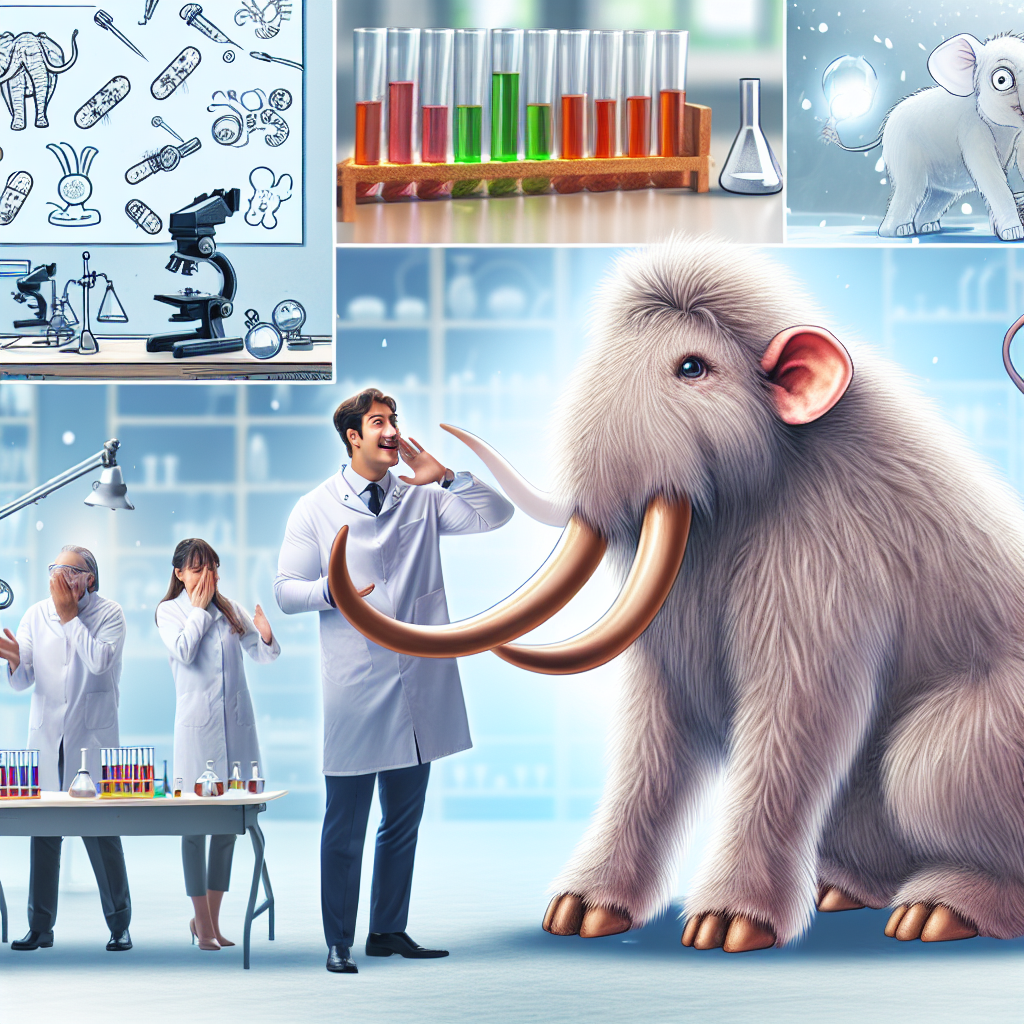
Unraveling the Past: How Colossal Biosciences’ Woolly Mouse Could Lead Us to the Woolly Mammoth Revival
Imagine a world where the woolly mammoth, a creature that roamed the Earth thousands of years ago, walks the planet once again. This scenario is no longer science fiction but a potential reality, thanks to pioneering projects initiated by biotechnology companies like Colossal Biosciences. In a groundbreaking stride towards reviving extinct species, Colossal Biosciences has created a woolly mouse — a vital stepping stone in their quest to bring back the woolly mammoth. This article delves into the fascinating endeavor of de-extinction, examining the implications, challenges, and the future possibilities it holds.
The Ambitious Vision of Colossal Biosciences
What Drives the De-Extinction Effort?
Colossal Biosciences, founded by Ben Lamm and renowned geneticist George Church, ventures into the realm of de-extinction and its profound impact on ecology and conservation. Their main objective is to bring back the woolly mammoth using advanced genetic engineering techniques, aiming to restore lost ecosystems and combat climate change. The woolly mouse is not just a scientific feat; it represents a critical testing ground for the technologies that will eventually be employed in mammoth revival.
The Role of Genetics and CRISPR Technology
At the heart of this intriguing project lies CRISPR-Cas9 technology, a revolutionary gene-editing tool that enables scientists to make precise, targeted changes to the DNA. By introducing elements of mammoth DNA into the genome of an Asian elephant — its closest living relative — researchers hope to recreate a living organism that displays the traits of the extinct mammoth.
- Precision Editing: CRISPR allows for specific alterations within the DNA sequence, essential for succeeding in creating viable mammoth-like organisms.
- Genomic Mapping: Detailed analysis and mapping of the woolly mammoth genome are vital to identify the genes responsible for its unique characteristics such as thick fur, subcutaneous fat, and adaptations to cold climates.
Steps Toward Creating a Woolly Mouse
From Concept to Creation
To test their methodologies and prove the viability of their technology, Colossal Biosciences developed a process to create a woolly mouse. This entails:
- Extracting DNA: DNA is extracted from well-preserved woolly mammoth specimens encountered in permafrost layers.
- Incorporating Traits: Specific mammoth traits are introduced into the genome of a lab mouse to assess the impact and viability of the changes.
- Monitoring Developments: The modified mice are studied for any physiological and metabolic changes that reflect mammoth-like characteristics.
Why Start with Mice?
Mice serve as an ideal model organism due to their rapid reproductive cycle and genetic similarities to many mammals. By starting with a smaller creature, scientists can iteratively improve their techniques – learning valuable lessons without the ethical and logistical challenges of directly modifying elephant DNA first.
Ethical Considerations Surrounding De-Extinction
The Debate Over Playing God
The idea of resurrecting extinct species like the woolly mammoth has sparked considerable debate in scientific and public circles. Concerns include:
- Ecological Impact: Reintroducing species into ecosystems that have adapted in their absence could disrupt current biodiversity.
- Animal Welfare: The process of genetic engineering and breeding raises questions about the wellbeing of modified organisms.
- Diverging Resources: De-extinction may divert attention and resources from conserving endangered species still fighting against extinction.
Balancing Progress and Caution
Proponents highlight the potential positive impacts on ecosystem restoration and climate change. Reviving the mammoth could potentially stabilize Arctic permafrost by promoting growth of grasslands over forests, thus maintaining habitats that store carbon rather than release it.
Potential Impacts on Science and Nature
Redefining Conservation
Colossal’s initiative could redefine traditional conservation methods. Instead of just conserving what’s left, it opens the possibility of restoring what was lost, potentially revitalizing degraded ecosystems.
Addressing Climate Change
- Permafrost Preservation: Mammoths could help preserve permafrost by knocking down trees and allowing icy winds to maintain the soil.
- Carbon Sequestration: Turning up the soil for grass expansion could enhance carbon sequestration, playing a role in mitigating climate change.
Future Technological Advancements
The procedures and discoveries made during this de-extinction initiative could spur further technological advancements in medicine, genetic engineering, and biodiversity management.
Conclusion: The Road Ahead
As Colossal Biosciences steadily progresses on their mission to bring back the woolly mammoth, each step, including the creation of the woolly mouse, holds monumental implications for science, conservation, and our understanding of life itself. While challenges and ethical questions remain, the potential benefits beckon us to tread thoughtfully yet decisively. The path of de-extinction could intertwine the echoes of the past with the promise of a sustainable future.
By forging ahead with caution and ingenuity, Colossal Biosciences engages not just in reviving an ancient icon, but in leading a new frontier of science that reshapes nature’s fabric. As we journey with them in this extraordinary quest, we stand on the cusp of witnessing history, both ancient and new.