
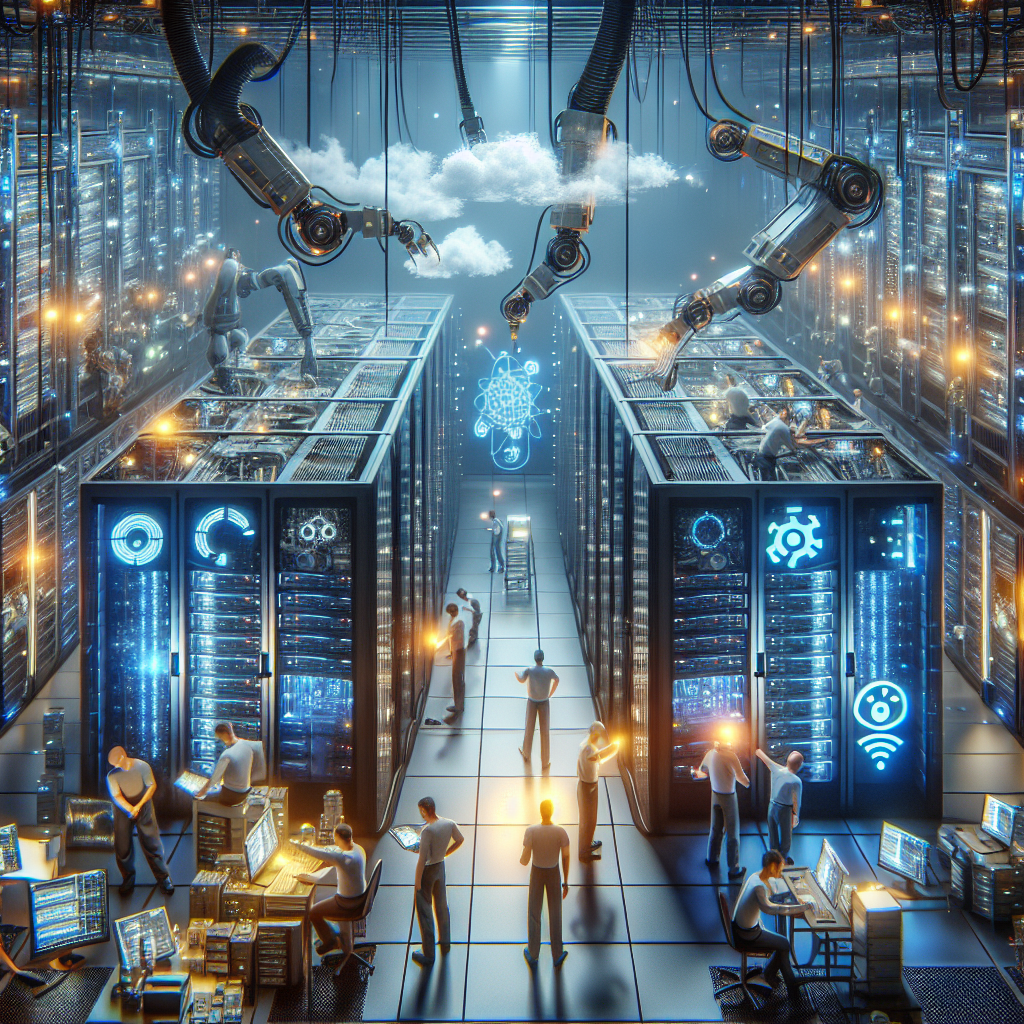
Unlocking Untapped Energy: How Data Center Tweaks Could Yield 76 GW of New Power Capacity in the U.S.
In a world increasingly dominated by digital infrastructure, data centers stand as the backbone of our online existence. They house the servers and networking equipment that power everything from social media to cloud computing, and their importance is underscored by the remarkable 76 gigawatts (GW) of potential power capacity that could be unleashed through strategic tweaks. In the United States, where data center demand is at an all-time high, this potential could be a game-changer in both the energy and tech industries. But how can we achieve this? What tweaks are necessary, and what benefits will they bring? Let’s delve deeper into this compelling possibility.
The Power Potential in Data Centers
Data centers are notorious for their energy consumption. Yet, within this high usage lies an opportunity for substantial energy efficiency gains. The National Renewable Energy Laboratory (NREL) estimates that optimizing data center operations could unleash up to 76 GW of additional power capacity in the U.S., propelling us towards a more sustainable future.
What is Power Capacity?
Power capacity represents the maximum amount of power that an infrastructure or facility can supply. For data centers, this involves the ability to handle a heavier computational load or more equipment without the need for additional energy sources.
Potential benefits of increased power capacity:
- Enhanced Data Handling: More efficient processing and storage capabilities.
- Reduced Costs: Savings on energy spend by decreasing overall usage.
- Environmental Gains: Reduced carbon footprint and energy waste.
- Economic Growth: Bolstered digital infrastructure supporting new business opportunities.
Where Does the 76 GW Come From?
Unlocking 76 GW of power capacity requires a combination of innovative technologies and behavioral shifts in the management of data centers. Here’s where it could come from:
- Energy Efficiency Improvements: Retrofitting old systems with cutting-edge technology.
- Cooling Optimization: Implementing advanced cooling solutions.
- Renewable Energy Integration: Utilizing solar and wind power in data operations.
- Virtualization and Cloud Services: Transitioning to cloud-based infrastructure reduce redundancy.
Key Areas for Data Center Improvement
To achieve the untapped 76 GW power capacity, several areas can be optimized. Addressing these key areas not only enhances efficiency but also aligns with broader sustainability goals.
Cooling Systems and Their Optimization
Data centers generate immense heat, making cooling systems essential. However, traditional methods are often energy-intensive.
Emerging Cooling Techniques:
-
Liquid Cooling:
- Direct-to-chip Systems: Transfer heat directly from the server to a coolant.
- Immersion Cooling: Entire systems are submerged in dielectric heat-transfer liquids.
-
Free Cooling:
- Utilizes natural air or water sources for cooling instead of conventional mechanical refrigeration.
- AI-Driven Temperature Regulation:
- Employ machine learning algorithms to predict and adjust cooling needs dynamically.
Power Usage Effectiveness (PUE) Metrics
Power Usage Effectiveness is a critical metric for assessing the energy efficiency of data centers. It is the ratio of total facility energy to the energy used by IT equipment.
- Lower PUE indicates better efficiency.
- Top-tier data centers aim for PUE close to 1.2, but the industry average still lags.
Strategies to Improve PUE:
- Upgrade Infrastructure: Replace outdated equipment with energy-efficient alternatives.
- Implement Monitoring Tools: Continuous monitoring can help identify inefficiencies.
- Optimize Server Utilization: Consolidate workloads to minimize idle servers.
Embracing Renewable Energy Sources
Adopting renewable energy solutions not only supports increased power capacity but also aligns with global sustainability mandates.
Ways to Integrate Renewable Energy:
- Onsite Solar Panels: Generate electricity directly at the data center.
- Purchase Renewable Energy Credits (RECs): Participate in the green energy market.
- Partner with Green Energy Providers: Direct procurement of wind or solar energy.
Economic and Environmental Implications
Unleashing 76 GW of power from data centers brings numerous advantages transcending beyond operational performance.
Economic Advantages
- Energy Cost Savings: Reduced reliance on nonrenewable energy leads to significant cost reductions over time.
- Job Creation: Expansion in renewable energy sectors and tech innovations can foster new employment opportunities.
- Competitive Edge: Businesses with enhanced data capabilities can leverage these for growth and competitive distinction.
Environmental Impact
Data centers currently account for roughly 1% of global electricity consumption, making their optimization crucial for environmental health.
- Reduction in Carbon Emissions: Less energy-intensive operations contribute to the broader fight against climate change.
- Promotion of Sustainable Practices: Paves the way for more environmentally conscious data center designs.
Embracing a Data-Centric Future
The path to unlocking 76 GW of untapped power capacity in U.S. data centers is not just a technical challenge, but a journey towards a future defined by sustainability and innovation. By optimizing cooling systems, improving energy metrics, integrating renewable sources, and driving economic growth, data centers can evolve into more than just digital fortresses—they can become catalysts for positive change.
As we stand on the cusp of this transformation, stakeholders from developers to policymakers and energy experts must collaborate to seize this golden opportunity. The future of data centers is not just about keeping the digital world running, but about doing so in a way that benefits our planet and its people.
In the end, by unleashing the potential of our data centers, we unlock the potential for a brighter, more sustainable future, symbolizing a leap toward an era where technology and environmental stewardship go hand in hand.