
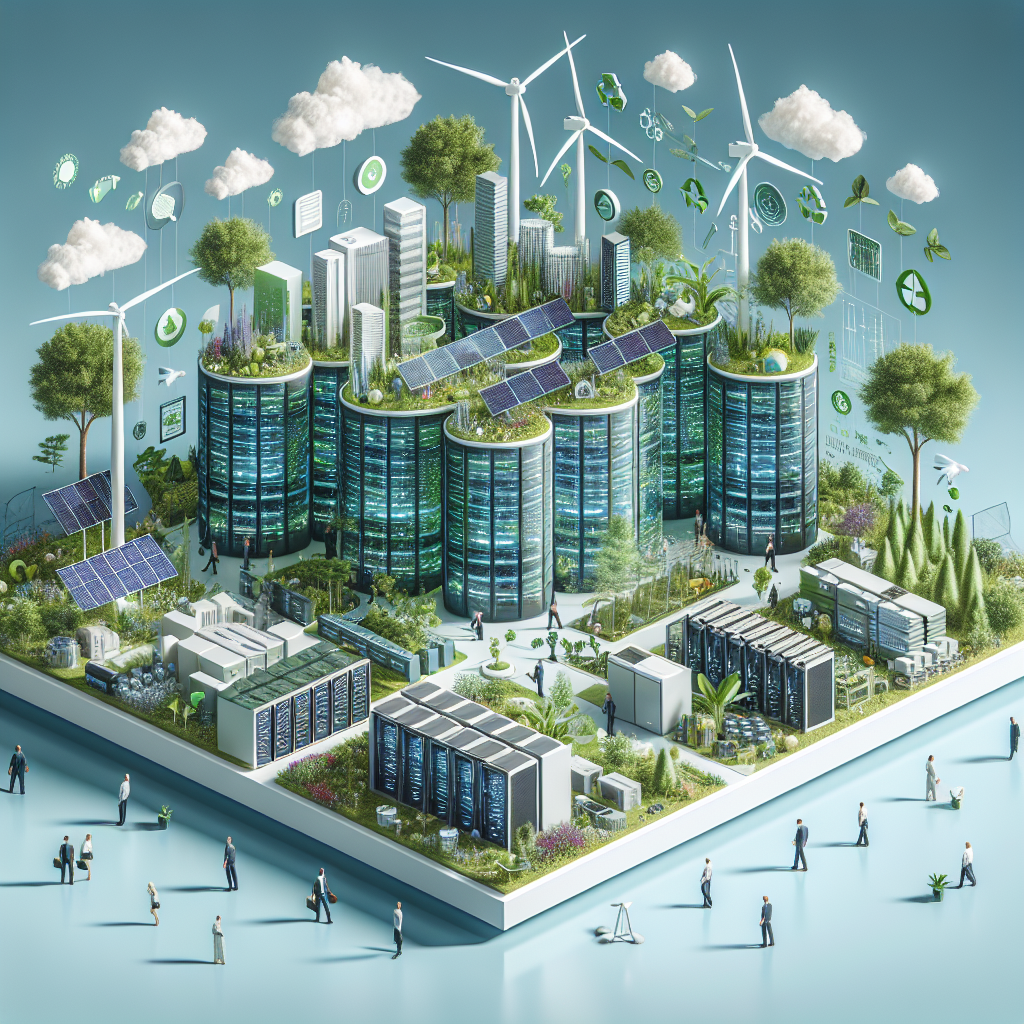
Building a Greener Future: CoreWeave and EcoDataCenter’s Sustainable AI Infrastructure
In the realm of cutting-edge technology, the synergy between CoreWeave and EcoDataCenter has sparked significant interest. These two powerhouses are setting the stage for a more sustainable future in AI infrastructure by investing a staggering half a billion dollars. This impressive commitment not only aims to advance AI capabilities but also underscores the vital importance of eco-friendly building practices in the tech industry. This partnership is a beacon for others in the field who look to balance innovation with sustainability.
The Genesis of the Partnership
The collaboration between CoreWeave and EcoDataCenter is a response to the growing energy demands of AI processing. As AI technology continues to evolve, so does its need for expansive and sustainable data infrastructure.
Who is CoreWeave?
CoreWeave is a groundbreaking force in the field of cloud computing. They specialize in providing scalable computing resources, which are crucial for tasks such as deep learning, visual effects rendering, and other high-performance computing (HPC) applications. Their products are widely used among businesses looking to leverage the power of cloud computing for AI and machine learning.
Who is EcoDataCenter?
On the other hand, EcoDataCenter stands out as a pioneer in creating carbon-positive data centers. They aim to minimize the environmental impact of high-performance computing by utilizing renewable energy sources and efficient architectural designs.
The Necessity for Sustainable Infrastructure in AI
The Environmental Impact of AI
AI’s advancements come at a considerable environmental cost. Running complex AI models consumes a vast amount of electricity, primarily derived from non-renewable sources. This leads to:
- Increased carbon emissions
- Intensive resource consumption
- High operational costs
Bridging the Gap with Sustainable Solutions
CoreWeave and EcoDataCenter’s partnership is focusing on addressing these concerns by investing in sustainable infrastructure. The goal is to reduce AI’s carbon footprint significantly. This initiative seeks to implement renewable energy, such as hydropower, to fuel their data centers.
Technologies and Approaches Making AI More Eco-Friendly
Energy-Efficient Hardware
One of the first steps towards a sustainable AI ecosystem is implementing energy-efficient hardware. Hardware design enhancements can lead to substantial energy savings.
- Use of GPUs and TPUs: These specialized processors handle AI tasks more efficiently than CPUs.
- Innovative cooling techniques: Cooling systems, such as liquid cooling, help reduce energy consumption by effectively managing heat.
Data Center Innovations
To achieve sustainability, data centers must adopt several innovative practices:
Renewable Power Integration
The partnership plans to incorporate renewable energy, predominantly hydropower, to run their operations.
- On-site renewable installations: Use of solar panels and wind turbines.
- Energy grids that are integrated and optimized for green power usage.
Waste Heat Recovery
By utilizing waste heat recovery systems, data centers can reduce their overall energy consumption by recycling excess heat into usable energy for other purposes.
The Economic and Environmental Benefits
Economic Impact
This project marks a significant economic investment, but the long-term savings and benefits outweigh the initial costs.
- Lower operating costs: Reduced energy bills due to sustainable practices.
- Job creation: The establishment and operation of these facilities generate jobs in the tech and renewable energy sectors.
Environmental Gains
By focusing on sustainability, this venture seeks to achieve:
- A significant reduction in carbon emissions.
- A decreased reliance on fossil fuels.
- Enhanced efficiency leading to smaller land use and minimized ecological footprints.
Challenges and the Road Ahead
Technical Challenges
Implementing a half a billion-dollar project involves overcoming significant technical challenges.
- Scalability issues: Ensuring that the infrastructure can support increasing AI demands.
- Integration of new technologies: Aligning older systems with modern eco-friendly technologies.
The Future Vision
Despite these challenges, the future of CoreWeave and EcoDataCenter’s partnership is bright. Their work provides a blueprint for:
- Building more sustainable data centers worldwide.
- Influencing policy changes that support eco-friendly computing practices.
- Expanding their green AI initiative to other regions globally.
Conclusion
CoreWeave and EcoDataCenter’s ambitious project represents a monumental step in redefining how technology and sustainability can coexist and thrive. As leaders in their respective fields, their commitment to developing sustainable AI infrastructures sends a powerful message to the industry and the world. By investing in more sustainable buildings, they not only pave the way for a greener future but also inspire other organizations to follow suit.
This partnership exemplifies what’s possible when technological prowess meets environmental responsibility. As both companies continue to work towards a more intelligent and sustainable future, they remind us that with determination and innovation, balancing progress and planet is not only attainable but essential.