
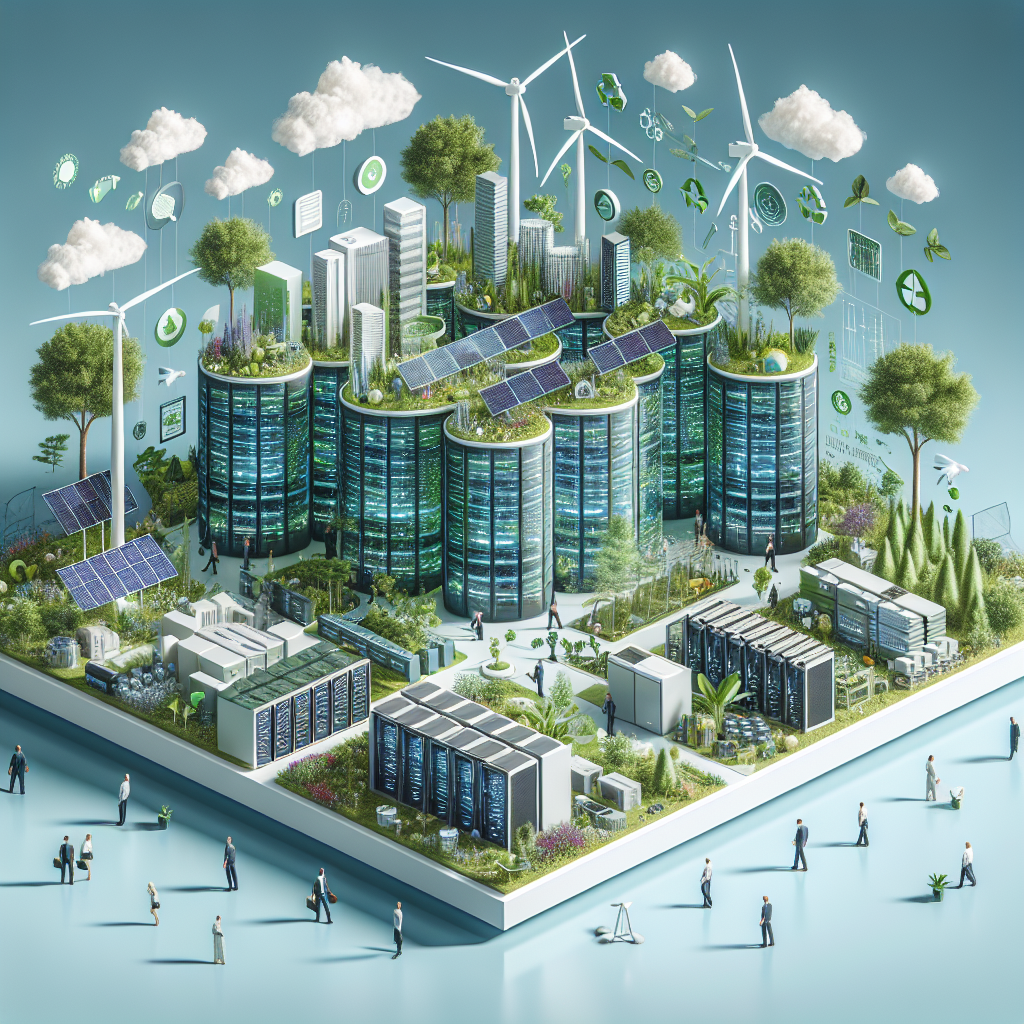
CoreWeave and EcoDataCenter: Pioneering a Greener Future for AI Infrastructure
In a world where artificial intelligence is rapidly transforming various industries, the demand for robust and sustainable infrastructure to support AI initiatives is more critical than ever. Enter CoreWeave and EcoDataCenter, two trailblazers in the tech field that are joining forces to redefine the future of sustainable buildings for AI. With a staggering half a billion dollars earmarked for this mission, their collaborative effort aims to strike a balance between cutting-edge technological advancements and environmental stewardship.
A New Era of Green AI Infrastructure
As we delve deeper into the digital age, the environmental implications of data centers that power AI tools cannot be ignored. Data centers are notorious for their immense energy consumption and carbon footprints. Yet, the strategic partnership between CoreWeave and EcoDataCenter signifies a transformational shift towards sustainable solutions. What makes this collaboration noteworthy, and how do they intend to actualize their vision?
Understanding CoreWeave and EcoDataCenter
Who is CoreWeave?
CoreWeave is a specialized cloud infrastructure provider renowned for its high-performance computing capabilities. By offering enormous resources for parallel processing tasks, CoreWeave plays a pivotal role in the field of machine learning, visual effects, and other computationally intense applications. Their central focus is on delivering scalable and flexible infrastructure that meets the ever-evolving demands of modern AI applications.
Meet EcoDataCenter
On the other hand, EcoDataCenter is synonymous with innovation in sustainable data center solutions. Hailing from Sweden, EcoDataCenter is committed to minimizing the environmental impact of data-rich operations. Their facilities are designed to be climate-positive, meaning that they absorb more greenhouse gases than they emit. This is achieved through innovative techniques such as using renewable energy sources and employing heat recovery systems.
The Mission: $500 Million Investment for Sustainability
The collaboration between CoreWeave and EcoDataCenter represents a colossal financial commitment of half a billion dollars aimed at constructing eco-friendly data centers dedicated to AI workloads. This initiative encapsulates a comprehensive strategy to curtail the environmental repercussions associated with digital transformation.
Key Objectives of the Investment
- Reduction of Carbon Footprint: By employing renewable energy and advanced cooling solutions, the facilities aim to significantly reduce CO2 emissions.
- Scalability and Efficiency: Leveraging cutting-edge technology to ensure that the infrastructure can efficiently handle the vast data processing requirements of AI.
- Pioneering Sustainable Practices: Establishing new benchmarks for sustainability that can inspire other players in the tech industry to follow suit.
Innovations Driving the Sustainability Agenda
Innovation is at the core of this partnership. From energy-efficient infrastructure to smart cooling systems, CoreWeave and EcoDataCenter are leveraging an array of cutting-edge technologies to fulfill their sustainability commitments. Here are some of the pioneering innovations they are employing:
Utilizing Renewable Energy Resources
- Solar and Wind Energy: By relying on renewable energy sources, they are ensuring that the data centers operate on a green power supply, reducing reliance on fossil fuels.
- Hydroelectric Power: Taking advantage of Sweden’s robust hydroelectric capabilities to ensure a continuous flow of clean energy.
State-of-the-Art Cooling Solutions
- Liquid Cooling Systems: These systems are more effective than traditional air cooling and play a critical role in reducing energy consumption.
- Ambient Cooling Technology: Utilizing the cooler ambient temperatures in Sweden for natural cooling, further reducing the need for energy-intensive cooling systems.
Energy Optimization through Smart Systems
- AI-Driven Energy Management: Utilizing AI to optimize energy usage in real-time, adapting to the changing demands dynamically.
- Heat Recovery Innovations: Transforming the heat produced by data centers into useful resources, such as district heating for communities around the facilities.
The Bigger Picture: Impact on the Tech Industry
The investment and collaborative effort by CoreWeave and EcoDataCenter transcend beyond simply building a few sustainable data centers. It marks a significant step toward a greener tech industry where sustainability becomes an integral part of technological advancement. Some of the potential industry-wide impacts include:
- Inspiration for Change: Leading by example, these organizations are inspiring other tech companies to adopt greener infrastructure practices.
- Standardization of Eco-Friendly Practices: Establishing new benchmarks for what constitutes an eco-friendly data center and encouraging industry-wide adoption of these standards.
- Encouraging Policy Support: The push for green tech may accelerate policy development in favor of sustainable practices, potentially offering incentives and support for similar initiatives globally.
Conclusion: A Promising Future for Sustainable AI Infrastructure
In conclusion, the collaboration between CoreWeave and EcoDataCenter is an inspiring advancement that reflects both the challenges and opportunities of evolving AI infrastructure. With their half a billion-dollar investment, they are setting the groundwork for a future where technology and sustainability coexist harmoniously. As more data centers adopt these innovations, it becomes increasingly feasible to envision a tech industry that genuinely prioritizes our planet’s well-being. These efforts are not only crucial for battling climate change but also essential for fostering a future where technological progress supports, rather than undermines, environmental sustainability.
The world is watching, and as these two giants collaborate to lay down the cornerstones for sustainable AI architecture, we can look forward to a time when such initiatives will no longer be the exception but the norm.