
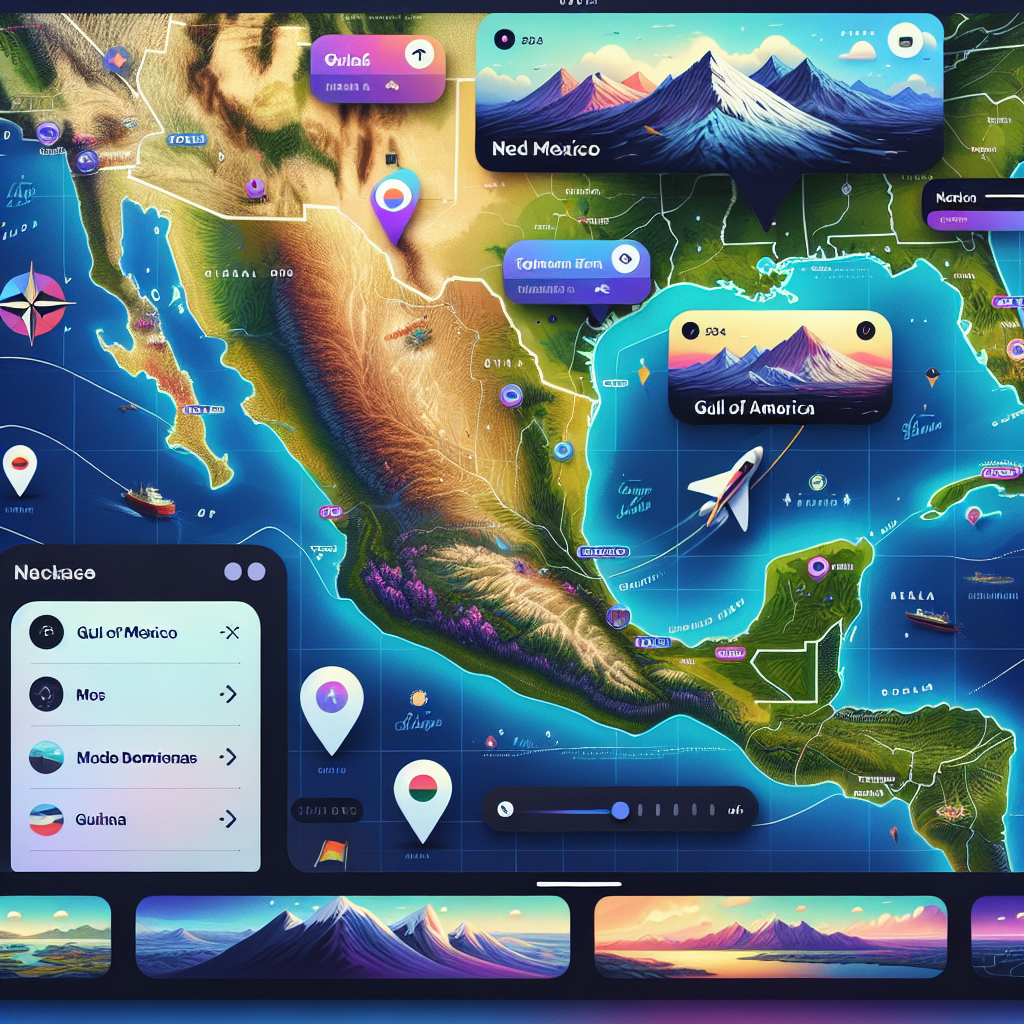
Apple Maps to Label ‘Gulf of America’: A Bold Move Following Google
In an unexpected yet fascinating turn of events, Apple Maps has announced plans to label the water body nestled between the United States and Mexico as the “Gulf of America,” following in the footsteps of Google Maps. This move has stirred discussions across diverse platforms and resulted in a surge of interest amongst geographers, cartographers, and tech enthusiasts. What does this mean for map users, and how does it reflect the dynamics of digital cartography? Let’s dive into this captivating topic and uncover all there is to know about this change.
The Evolution of Digital Mapping: From Paper to Pixels
Digital mapping has come a long way since the days of paper maps and atlases. With the evolution of technology, maps have become more interactive, accessible, and detailed, sparking interest and ensuring higher accuracy.
The Advent of Digital Mapping
The digital transformation of maps has revolutionized navigation and wayfinding. People no longer rely on static paper maps but utilize dynamic, real-time digital maps that provide turn-by-turn navigation, traffic updates, and even street-level views.
- 1996: The launch of MapQuest marked the beginning of digital cartography for public use.
- 2005: Google Maps introduction paved the way for highly interactive mapping services.
- 2012: Apple Maps made its debut, challenging Google’s dominance in this space.
Importance of Accurate Naming in Mapping Services
Names hold power; they carry historical, political, and cultural significance.
- Cultural Significance: Names of natural features like oceans and gulfs reflect regional history and heritage.
- Political Implications: Changing a label on a map can have geopolitical impacts, influencing public perception.
- Navigational Clarity: Correct naming allows for accurate navigation and reduces confusion, which is vital for smooth user experiences.
Apple Maps’ Decision: Influences and Implications
Apple’s decision to adopt the “Gulf of America” label aligns with various contextual influences and has far-reaching implications.
Why the Change?
The reasons behind map labeling changes can be multifaceted.
- Standardization: Adhering to naming conventions used by significant competitors like Google may promote uniformity.
- User Requests: Consideration of public feedback; users often express the desire for consistency across mapping platforms.
- Geopolitical Considerations: Reflecting a certain political stance by identifying features through particular names could be strategically beneficial.
Potential Reactions
Such significant alterations often provoke a range of responses from the public, experts, and other stakeholders.
- Positive Reception: Some users appreciate such changes, aligning with personal or cultural preferences.
- Controversial Backlash: Not everyone will agree with the renaming, leading to spirited debates or opposition.
- Neutral Adjustments: For some, it’s just an update with no real impact on their daily use of the maps.
Comparing Apple and Google Maps: An Analyzing Perspective
Understanding the landscape of digital networking entails a comparison of two giant platforms: Apple Maps and Google Maps.
Google Maps: Pioneering Changes
Google Maps has long been at the forefront of digital cartography:
- History of Changes: Google has made several updates in the past, including controversial name changes.
- Interactive Features: Offers advanced features like Google Street View, real-time traffic conditions, and personalized recommendations.
Apple Maps: Growing Influence
While Apple was initially criticized for the accuracy of their Maps application, substantial improvements have transformed it into a viable competitor.
- Improvement Over Time: Apple has tirelessly worked on enhancing its mapping service’s reliability and features.
- Privacy-Centric Design: Apple prioritizes user privacy, something it has frequently highlighted as a competitive advantage over Google Maps.
- Integrative Technology: Seamless integration with the Apple ecosystem, from iPhones to the Apple Watch, offers a unique user experience.
Which is More Reliable Today?
For users deciding between Apple Maps and Google Maps, the choice often depends on personal preferences and specific needs.
- Data Accuracy: Both companies continuously update their databases to enhance map accuracy.
- Usability: Preferences regarding user interface, integration with other apps, and device compatibility play a critical role.
Future Implications of Map Renaming
Where might this change lead Apple and its users in the realm of location services?
Mapping Service Evolution
Changing the name of a large geographical feature can set a precedent for future updates and affect broader mapping practices.
- User Experience: Potential improvements or adaptations based on user feedback following the change.
- Technology Development: Utilizing advanced machine learning and AI to keep map data precise and up-to-date.
Navigating Cultural Sensitivities
As significant cultural artifacts, maps require delicate handling with regards to the social and political significance of names.
- Attention to Sensitivity: Companies like Apple must navigate these waters carefully to prevent alienating segments of their user base.
- Global Implications: Decisions such as these can resonate in international contexts, shaping global user interactions with digital platforms.
The decision by Apple Maps to begin using the term "Gulf of America" accentuates the powerful impact of naming in digital mapping, raising essential questions about identity, diversity, and technology. As one of the many changes we can expect in the constantly evolving digital cartography landscape, such steps represent more than just lines on a digital surface; they are the symbols of our worldviews and our interactions with global geography.