
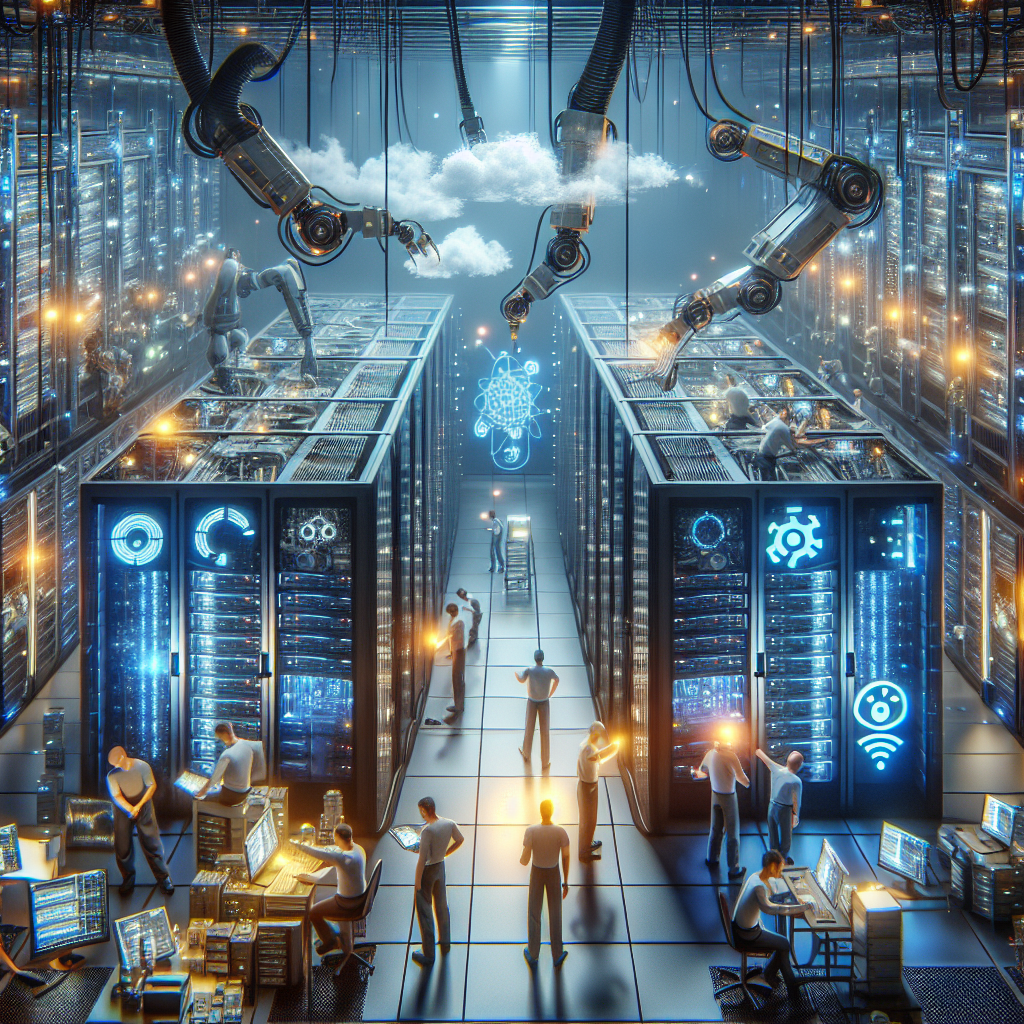
Unlocking 76 GW of New Power Capacity: Revolutionizing U.S. Data Centers
In our increasingly digital world, data centers serve as the backbone of the internet, housing gigantic servers that store, process, and disseminate the information we rely on daily. With the ever-growing demand for data and cloud services, the energy consumption of data centers has skyrocketed. But what if slight modifications and innovations could unleash a stunning 76 GW of new power capacity in the U.S., completely reshaping the landscape of digital infrastructure? This article dives into the promising tweaks and advancements that could yield such transformative power, all while boosting efficiency and supporting sustainability.
Understanding the Current State of Data Centers
To fully appreciate the potential impact of these tweaks, it’s important to first understand how data centers operate today.
The Basics of Data Centers
Data centers are specialized facilities that house a network of computers and storage systems. They are responsible for:
- Data storage: Housing vast amounts of digital information
- Data processing: Calculating and analyzing data efficiently
- Networking: Ensuring seamless connectivity and communication
Energy Consumption and Challenges
Data centers are notorious energy guzzlers. In fact, they currently account for around 1-2% of the world’s total electricity usage. The key challenges include:
- Cooling demands: Keeping servers at optimal temperatures is energy-intensive.
- Capacity management: Increasing server usage leads to higher consumption.
- Sustainability concerns: The carbon footprint and environmental impact are significant.
Innovative Tweaks to Unlock Power Capacity
With these challenges at the forefront, a range of technological and operational improvements promises to optimize the existing infrastructure, unlocking untapped power potential.
Advanced Cooling Solutions
Liquid Cooling Technology
Traditional air cooling is being swapped out for more efficient liquid cooling systems. This method involves circulating a liquid coolant in close proximity to the components that need heat removal, offering improvements like:
- Enhanced efficiency: Better thermal management than air cooling
- Higher density configurations: Allowing more servers per rack
- Reduced energy consumption: Achieving cooler temperatures with less power
AI-Powered Cooling Management
By harnessing AI, data centers can optimize their cooling processes:
- Predictive analytics: Anticipating thermal trends and adjusting systems accordingly
- Smart automation: Dynamically controlling fans and cooling units
- Energy savings: Lowering overall operational costs
Hardware and Software Optimizations
Innovations in both hardware and software can drive significant improvements in performance and energy usage.
Enhanced Hardware Configurations
- Energy-efficient servers: Deploying servers designed to consume less power
- Quantum computing: Leveraging exponentially faster processing with minimal energy consumption
- Optimized chipsets: Utilizing more efficient processors tailored to the workload
Software Defined Infrastructure
- Virtualization: Reducing the need for physical servers by running multiple virtual systems
- Cloud computing: Distributing workloads across multiple data centers for better efficiency
- Edge computing: Processing data closer to the end user to minimize latency and energy use
Sustainability and Environmental Impact
Making these changes is not just about unlocking more energy; it’s about committing to a sustainable future for our digital infrastructure.
Renewable Energy Adoption
Switching to renewable energy sources can drastically reduce the environmental impact:
- Solar and wind energy: Harnessing natural resources to power facilities
- Hydropower and geothermal energy: Exploiting geographical advantages for cleaner power options
- Power Purchase Agreements (PPAs): Establishing partnerships to secure renewable energy
Carbon Neutral Initiatives
Organizations are pursuing initiatives to offset their carbon emissions:
- Carbon credits: Investing in projects that counterbalance emissions
- Reforestation programs: Planting trees to absorb CO2
- Sustainable frameworks: Setting industry standards for lower carbon footprints
The Economic and Social Benefits
Optimizing data center operations has far-reaching benefits, from economic advantages to societal impacts.
Job Creation and Economic Growth
- New technology sectors: Driving growth in renewable energy, AI, and hardware manufacturing
- Local employment opportunities: Increasing demand for workers in data center operations and maintenance
Enhanced Service Delivery
- Improved digital services: Faster, more reliable internet and cloud services
- Broader connectivity: Expanding access to digital resources in underserved areas
Conclusion
The potential to unlock 76 GW of new power capacity in U.S. data centers is a game changer for the tech industry. With smart tweaks in infrastructure and an unwavering commitment to sustainability, we stand on the brink of a digital transformation. By embracing these innovations, data centers can not only power the future but do so while championing eco-friendly practices and driving socio-economic benefits.
Through these strides, we pave the way for a future where digital demands are met responsibly, sustainably, and robustly, ensuring that the backbone of our digital world is ready to support generations to come.