
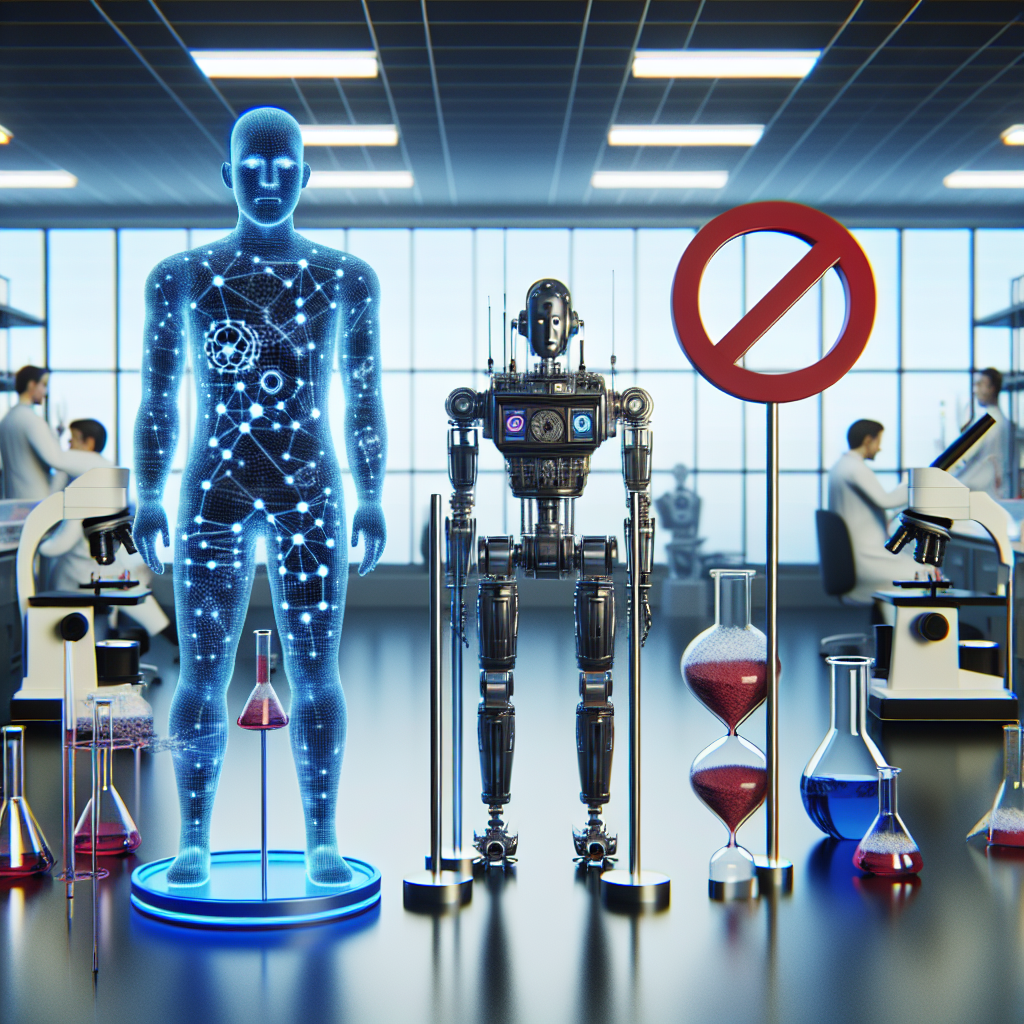
Is AI Ready to Wear a Lab Coat? Why Scientists are Still Skeptical
Artificial Intelligence (AI) has made waves in fields ranging from healthcare to finance, promising innovations that could revolutionize entire industries. Yet, when it comes to scientific discovery—the very process of understanding the world around us—AI’s role remains a topic of hot debate among experts. While AI can analyze vast amounts of data quicker than any human ever could, can it truly be considered a "co-scientist"? Many experts argue that AI isn’t quite ready to wear a lab coat. Below, we delve into the reasons why.
The Limitations of AI in Scientific Discovery
AI has demonstrated its potential through tasks like data analysis, pattern recognition, and even generating hypotheses. However, experts caution that it has significant limitations when viewed as a partner in the scientific process.
Data Dependency
AI thrives on data. The more data you feed it, the better it performs—or at least, that’s the theory. Herein lies the first roadblock:
- Incomplete Data: AI requires comprehensive datasets, and real-world datasets are often incomplete or imperfect.
- Quality Over Quantity: More data isn’t always better if it’s not of high quality. AI systems often struggle when the data they’re fed is flawed.
Lack of Creativity and Intuition
While AI systems can detect patterns and anomalies, they cannot replicate human creativity or intuition:
- No "Eureka" Moments: Scientific discoveries often come from the human ability to think outside the box, something AI lacks.
- Emotional Intelligence: Understanding nuanced phenomena often requires emotional intelligence—a capability that AI lacks entirely.
Case Studies: AI in Real-World Science
Some fascinating case studies illustrate AI’s potential—and its limitations—in scientific applications.
Chemistry and Drug Discovery
AI has been used for:
- Drug Repurposing: Identifying new uses for existing drugs at a faster rate.
- Molecule Simulation: Predicting how molecules interact, which can accelerate drug design.
However, these processes still need human oversight:
- Without human validation, AI’s suggestions could lead to unsafe recommendations.
Climate Science
AI is used for climate modeling:
- Predictive Analytics: Forecasts future climate patterns based on historical data.
Yet:
- Complexity Beyond Comprehension: Climate systems are incredibly complex, and AI models may oversimplify critical variables.
The Ethical Concerns
As with any transformative technology, the use of AI in science doesn’t come without ethical questions:
- Bias in Algorithms: If the data fed to AI systems is biased, their outcomes will also be biased.
- Transparency: AI’s "black box" nature makes it difficult to understand how decisions are made.
The Future: Collaborative Intelligence
Rather than viewing AI as a replacement for scientists, experts advocate for a more collaborative approach termed "Collaborative Intelligence."
Augmentation, Not Replacement
AI can be used to:
- Enhance Human Capabilities: By handling labor-intensive tasks like data crunching, AI frees up scientists to focus on creative problem-solving.
- Support Decision-Making: Serve as a tool to provide supplementary data that aids human decisions.
Ultimately, AI should be seen as a complement to human scientists rather than a substitute.
Educational Initiatives
Educating future scientists on how to leverage AI technologies innovatively will be vital:
- Interdisciplinary Training: Curriculum that integrates AI with scientific principles is essential.
- Ethics and AI: Teaching ethical considerations when using AI in scientific research should be a priority.
Conclusion
The debate about whether AI is ready to be a "co-scientist" remains open, and the consensus among experts is clear: AI is not yet ready to don a lab coat as a co-equal partner in scientific research. While its capabilities are impressive, they are not a substitute for human intuition, creativity, and ethical judgment. Instead, the focus should be on leveraging AI to enhance and augment the scientific process, ensuring that humans and AI work together to drive discovery forward.
Embracing this collaborative model will allow the scientific community to harness AI’s full potential while keeping human intelligence at the core of innovation.