
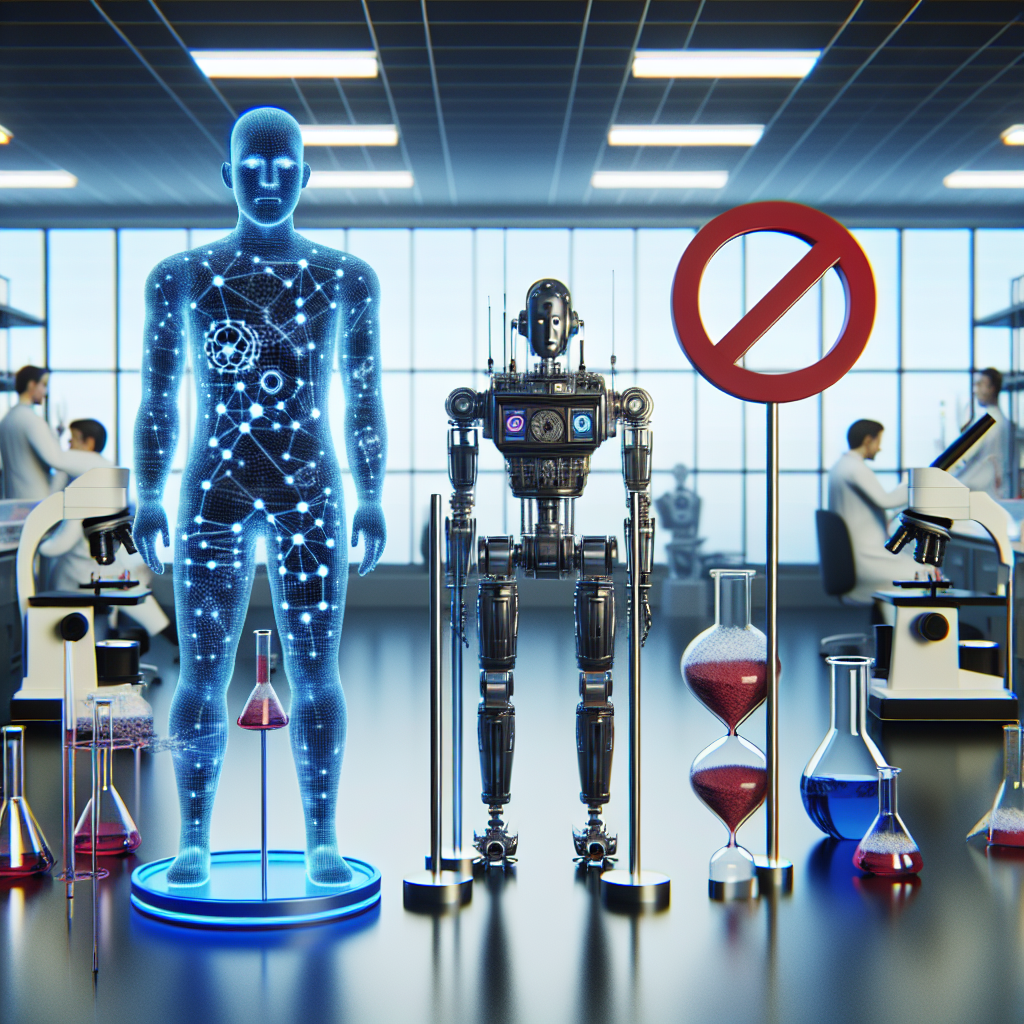
Is AI Ready to Be Your Science Lab Partner? Experts Weigh In
In a world where Artificial Intelligence (AI) is making significant strides in transforming various sectors, from healthcare to entertainment, a question that frequently surfaces is whether AI is ready to step up as a ‘co-scientist’. This term suggests that AI could potentially assist human scientists in conducting experiments, offering insights, and making groundbreaking discoveries. Yet, experts remain skeptical about how close we are to this reality. This hesitation arises from multiple challenges and limitations that AI currently faces. Let’s delve deeper to understand why experts believe AI is not yet ready to wear the scientist’s lab coat.
Understanding the Co-Scientist Concept
AI as a co-scientist implies that AI can work alongside human scientists, contributing significantly to research and development. This concept is tantalizing, as it promises accelerated scientific discoveries and freeing scientists from mundane tasks. However, a closer inspection reveals nuanced challenges that hinder AI from fully stepping into this role.
The Strengths and Limitations of AI in Science
AI excels in areas such as data processing, pattern recognition, and predictive analytics. It has the potential to handle vast amounts of data more efficiently than any human. But what are the current limitations that prevent AI from being a reliable co-scientist?
Data Bias and Quality Issues
One of the significant hurdles AI faces is data bias. AI systems operate based on the data they are trained on. If this data is biased or incomplete, the AI’s outcomes can also be skewed.
- Biased Data: Historical data might carry inherent biases, leading to skewed AI predictions.
- Incomplete Data: Inadequate datasets can lead to half-baked conclusions.
Lack of Critical Thinking and Creativity
AI lacks the innate critical thinking and creative problem-solving skills that human scientists possess. While it can propose solutions based on available data:
- AI cannot challenge existing paradigms.
- It struggles with generating novel hypotheses or theories.
Trust Issues with AI Findings
A significant deterrent in adopting AI as a co-scientist is the issue of trust. Trust is foundational for any scientific endeavor, and AI’s black-box nature makes it challenging for scientists to trust AI-generated results fully.
The ‘Explainability’ Problem
AI often produces results that are difficult to interpret and explain, known as the ‘black-box’ problem.
- Complex Algorithms: AI models, especially deep learning, are complex and not easily interpretable.
- Accountability: Without understanding how AI derives its results, establishing accountability is difficult.
The Role of Human Intuition and Insights in Science
Scientific discovery is not solely about data processing. It is fundamentally about intuition, insight, and the ability to ask the right questions—a domain where AI currently falls short.
The Value of Human Experience
Experienced scientists draw on years of intuition and expertise to navigate uncertainties and complexities in research.
- Nuanced Understanding: Human experts can discern patterns or anomalies based on subconscious learning.
- Ethical Judgement: Deciding what research is ethically permissible is often a question of moral judgment rather than technical capability.
Could AI Eventually Become a Co-Scientist?
While today’s experts are skeptical, this doesn’t imply that AI will never reach this level. Continued advancements in AI technologies could address the current limitations, but this journey requires time and prudence.
Continued AI Research and Ethical Development
Researchers work tirelessly to improve AI technologies while ensuring their safe and ethical deployment.
- Advances in Explainability: Developing more transparent AI models can enhance trust.
- Addressing Bias: Ongoing efforts to create unbiased AI datasets are crucial.
Collaboration Between AI Experts and Scientists
A rich collaboration between AI developers and scientists is essential to navigate the complexities of integrating AI into scientific processes.
- Interdisciplinary Teams: Fostering teams that combine expertise from various fields can drive AI innovation forward.
- Regular Dialogue: Continued conversations between AI experts and scientists can ensure that AI tools meet the genuine needs of the scientific community.
Conclusion: A Promising Future Ahead
The concept of AI as a co-scientist is fascinating and ambitious. While we’re not quite there yet, the ongoing work and dialogue in the field promise a future where AI could truly complement human intellect in the lab. Today, AI serves as a valuable tool, aiding in data crunching and analysis, but it still relies heavily on human guidance for meaningful scientific inquiry. With careful advancements and ethical considerations, tomorrow’s scientific endeavors might indeed see AI as a trusted partner, pushing the boundaries of what’s achievable.
As both AI technology and scientific understanding deepen, we may find ourselves closer to this dream of AI-assisted discovery. Until then, staying informed about AI’s potential and limitations ensures we harness its capabilities effectively, paving the way for a future where humans and machines work hand in hand in the spirit of scientific discovery.