
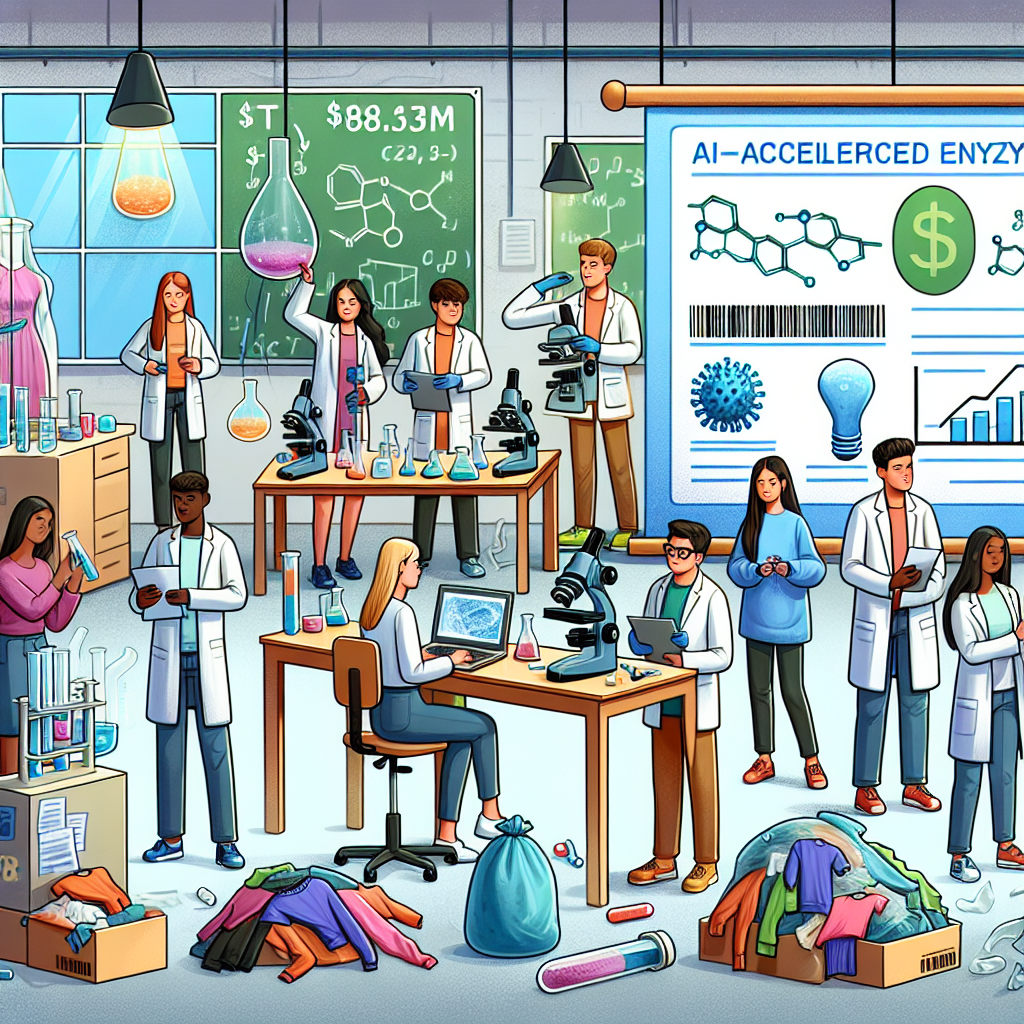
From High School Science Project to $18.3M: AI-Accelerated Enzymes Revolutionize Fast Fashion’s Plastic Waste Problem
In recent years, the fashion industry has come under scrutiny for its significant environmental footprint. With millions of tons of plastic waste generated every year, the need for sustainable solutions is more urgent than ever. Enter the innovative world of AI-accelerated enzymes—a groundbreaking solution that traces its roots back to a humble high school science project but is now making waves with its potential to transform fast fashion’s waste management. This article delves into the journey of these enzymes, their development using artificial intelligence, and their transformative impact on the fashion industry.
The Genesis of AI-Accelerated Enzymes
From Science Project to Groundbreaking Research
The story of AI-accelerated enzymes begins with a high school student who dared to dream big. Inspired by a school assignment, this young innovator envisioned using naturally occurring enzymes to break down plastics at a molecular level, potentially rendering them eco-friendly. What began as a simple experiment soon caught the attention of leading scientists and researchers.
- Concept Origin: Initial research involved identifying bacteria capable of degrading plastics.
- Initial Challenges: Overcoming limitations in efficiency and scalability was a significant hurdle.
How AI Transformed the Enzyme Development Process
Artificial intelligence played a pivotal role in advancing this project from a school science experiment to a multi-million-dollar innovation. By leveraging machine learning algorithms, researchers could predict enzyme mutations that would enhance their plastic-degrading capabilities.
- Enhanced Efficiency: AI models helped design over 500 enzyme variants, significantly improving their plastic-degrading rates.
- Data-Driven Insights: Machine learning provided deeper insights into enzyme-substrate interactions, predicting the most effective combinations.
The Science Behind Enzyme-Driven Plastic Degradation
Understanding the Enzymatic Process
Enzymes are proteins that act as catalysts, speeding up chemical reactions. In the context of plastic degradation, specific enzymes can break down the long polymer chains found in plastics into simpler, environmentally benign compounds.
- PETase and MHETase: These enzymes are particularly effective in degrading polyethylene terephthalate (PET)—a common plastic in textiles.
- Degradation Process: The enzymes cleave the plastic chains via hydrolysis, resulting in monomers like terephthalic acid and ethylene glycol.
The Role of AI in Fine-Tuning Enzyme Activity
AI not only enhanced the efficiency of enzyme development but also ensured that the enzymes could work under various environmental conditions—important for real-world applications in diverse industrial settings.
- Optimized Conditions: AI algorithms identified optimal temperature and pH levels for maximum enzyme activity.
- Simulation and Testing: Virtual simulations helped predict enzyme stability and effectiveness, reducing the need for costly laboratory trials.
The Financial and Environmental Impact
Turning Innovation into a Multi-Million Dollar Venture
The success of AI-accelerated enzymes catalyzed substantial financial backing, culminating in $18.3 million raised to scale this technology for industrial applications. This funding is intended for both ongoing research and real-world deployment.
- Investment Highlights: Significant contributions from eco-focused venture capital firms.
- Future Prospects: Plans to collaborate with leading fashion brands to integrate enzyme technology into their supply chains.
Environmental Benefits and Industry Applications
Adopting AI-accelerated enzymes can markedly reduce plastic waste generated by the fashion industry, leading to substantial environmental benefits.
- Waste Reduction: Potential to decrease plastic waste by 50% in the next decade.
- Broader Applications: Beyond textiles, these enzymes are being considered for packaging and other industries reliant on plastics.
The Future of AI and Enzyme Technology in Fashion
Collaborative Efforts for Sustainable Fashion
The integration of enzyme technology requires collaboration across multiple sectors, including fashion, technology, and environmental science.
- Partnership Models: Initiatives are underway to foster partnerships between biotech firms and fashion companies.
- Consumer Impact: Educational campaigns aim to raise awareness about sustainable practices and drive consumer demand for eco-friendly products.
Ongoing Research and Development Milestones
With ongoing advancements in AI and biotechnology, the potential for further breakthroughs in enzyme efficiency and application is promising.
- International Collaborations: Global research teams are pooling resources to accelerate progress.
- Emerging Technologies: Innovations such as CRISPR are being explored to enhance enzyme capabilities further.
Conclusion: A New Era for Sustainable Fashion
The evolution from a high school science project to a potential game-changer in the fast fashion industry highlights what can be achieved through innovation and interdisciplinary collaboration. AI-accelerated enzymes present an exciting opportunity to drastically reduce the industry’s environmental footprint, and with continued investment and research, they promise to be an integral part of a sustainable future for fashion.
In embracing these technologies, the fashion industry stands on the brink of a revolutionary change that could finally reconcile consumer demand with environmental responsibility. The partnership of cutting-edge technology and sustainable practices represents a significant leap forward in addressing one of the most pressing challenges of our time.
By highlighting the journey and potential of AI-accelerated enzymes, we celebrate a beacon of hope in the quest for a sustainable future—a testament to the power of science and technology in driving unprecedented change.