
From High School Science Fair to Million Dollar Breakthrough: How AI-Enhanced Enzymes are Tackling Fast Fashion’s Plastic Waste
The realm of innovation often witnesses remarkable transformations, but few are as compelling as the journey from a high school science project to an $18.3 million venture that promises to revolutionize the fast fashion industry. At the heart of this transformation lies the promise of AI-accelerated enzymes capable of reducing the massive plastic waste footprint of fast fashion. As the fashion industry grapples with its environmental impact, this novel approach could spell a new dawn for sustainable practices.
Introduction: The Plastic Problem in Fast Fashion
Fast fashion – the rapid production of high volumes of clothing – has long been a darling of the consumer world due to its affordability and ever-evolving style offerings. However, it comes with a significant environmental cost. One of its gravest contributors to pollution is plastic waste, primarily from synthetic fibers like polyester. According to the International Union for Conservation of Nature, 35% of microplastics released into the world’s oceans stem from such synthetic textiles.
The Environmental Cost of Fashion
The fashion industry is the second-largest polluter globally, only trailing behind oil. With synthetic materials making up over 60% of the clothing produced, the environmental footprint is substantial:
- Non-biodegradability: Plastic fibers can take hundreds of years to decompose.
- Microplastics: These are shed during washing and end up in waterways, affecting marine life.
- High Carbon Footprint: Polyester production emits more greenhouse gases than cotton, and recycling processes for plastic textiles remain energy-intensive.
AI-Accelerated Enzymes: A Game Changer
Enter the realm of AI-accelerated enzymes – microscopic biological catalysts that facilitate chemical reactions. While natural enzymes excel in many processes, their artificially enhanced variants promise greater efficiency and specificity, especially when crafted with advanced AI algorithms.
What Are AI-Accelerated Enzymes?
At its core, AI-enhanced enzyme technology seeks to harness computational power for enzyme optimization. Key features include:
- Machine Learning Algorithms: These are used to predict how enzymes interact with specific substrates, like plastic.
- Efficiency: Improved reaction rates for breaking down polymers.
- Specificity: Enhanced ability to target and decompose particular types of plastics.
From Classroom to Cutting-Edge Research
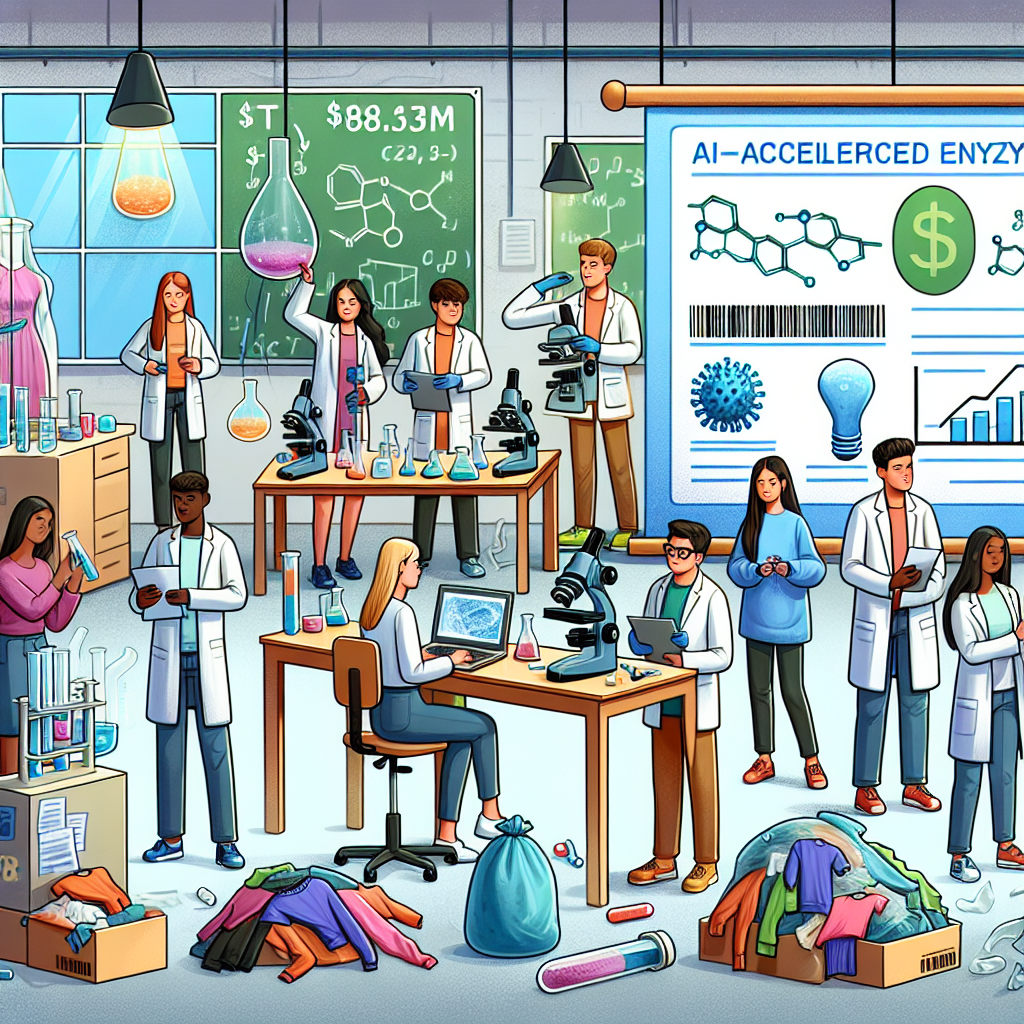
The journey of developing AI-accelerated enzymes began in high school science labs, where curious minds first pondered novel enzyme functions. With increasing access to AI tools, these students transitioned their projects into sophisticated research, attracting attention and eventually securing substantial funding.
The $18.3 Million Leap
The massive financial backing, amounting to a staggering $18.3 million, underscores the technology’s potential. Investment efforts are primarily directed towards:
- Research and Development: Advancing enzyme efficiency and expanding their range of applicability.
- Scaling Production: Creating infrastructure for widespread adaptation in the fashion industry.
- Commercialization Efforts: Bringing enzyme technology from the lab into clothing manufacturers’ hands.
Collaborations Driving Innovation
Collaboration between academia, industry leaders, and tech innovators enhances this venture’s success. Together, they aim to bridge the gap between scientific potential and practical application.
- Partnerships: Collaborations with leading fashion brands for pilot programs.
- Academic Alliances: Engaging top-tier institutions for groundbreaking R&D.
- Tech Firms: Leveraging AI expertise for continuous innovation.
Implications for the Fast Fashion Industry
Sustainability: A Core Consideration
By integrating AI-accelerated enzymes, the industry can significantly reduce its ecological footprint:
- Improve Biodegradability: Clothes treated with these enzymes degrade faster.
- Reduce Microplastic Pollution: Minimize synthetic fiber shedding.
- Lower Carbon Emissions: Streamlined processes reduce energy consumption.
Economic and Social Impact
The rise of this technology not only signals environmental benefits but also potential economic and societal shifts:
- Cost Efficiency: Long-term operational savings for manufacturers.
- New Job Opportunities: Demand for skilled professionals in AI and biotechnology.
- Consumer Appeal: Growing demand for sustainable and ethical fashion choices.
Conclusion: A Future Reimagined
The convergence of artificial intelligence and enzyme technology promises not only a solution to fast fashion’s plastic waste dilemma but also a sustainable path forward for the industry. This technological revolution, initiated by a simple science project, paves the way for enhanced environmental stewardship and offers a blueprint for how youthful curiosity can result in global innovation.
Fast fashion’s transformation towards sustainability through AI-accelerated enzymes stands as a testament to the power of innovative spirit, backed by technical advancements and strategic investments. The promise of a greener, more responsible fashion future is not just within reach—it’s actively being woven into the fabric of tomorrow’s world.