
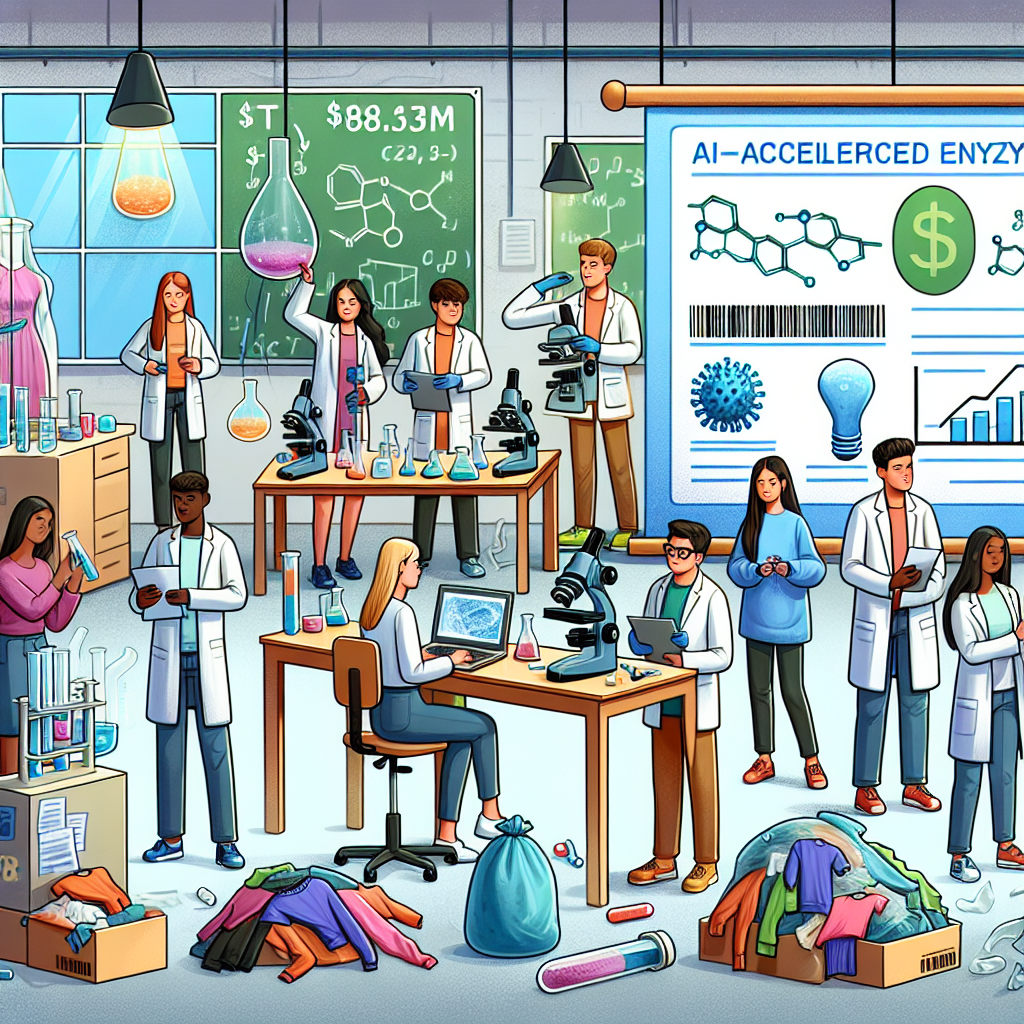
Transforming Trash into Treasure: AI-Accelerated Enzymes Are Revolutionizing Fast Fashion’s Plastic Waste
In a world engulfed by the fast-paced buzz of fashion, the environmental impact of plastic waste poses a critical challenge. From clothes packing materials to synthetic fibers like polyester, fashion contributes to the plastic waste crisis profoundly. But a new hope emerges from an unlikely source: a high school science project that evolved into a revolutionary technology, harnessing AI-accelerated enzymes to combat fashion’s plastic waste woes. The endeavor, now valued at $18.3 million, promises to potentially turn the textile industry upside down and make significant strides in tackling waste issues.
The Birth of a Solution: From Classroom to Cutting Edge
The Humble Beginnings
This story begins in a high school science lab. A curious student stumbled upon an ingenious idea, creating a project that soon drew the attention of scientists and investors globally. By exploring the potential of enzymes—proteins that speed up chemical reactions—this young innovator laid the groundwork for groundbreaking technology in waste management. What began as a school science fair project evolved into a formidable initiative backed by millions.
The Role of Artificial Intelligence
AI technology has breathed new life into enzyme studies. With the ability to analyze and reconfigure vast datasets, AI enables researchers to design custom enzymes that degrade plastics efficiently. This pairing helps identify enzyme mutations and accelerate the development of optimized enzymes, specifically targeting synthetic fibers found in fashion.
- Data Analysis: AI algorithms analyze large datasets to determine which enzymes are most effective against specific plastics.
- Rapid Prototyping: Advanced computer modeling predicts how different enzymes would perform, allowing scientists to prototype solutions with unprecedented speed.
- Precision Engineering: AI-generated insights help in structuring enzymes, enhancing their ability to break down even the most resilient plastic materials.
The Enzyme Effect: Addressing Fast Fashion’s Dirty Secret
Breaking Down Synthetic Fibers
Fast fashion’s reliance on synthetic materials makes it one of the top contributors to global plastic waste. Polyethylene terephthalate (PET) is widely used for making polyester fabrics, dyes, and packing materials.
How Enzymes Work Their Magic
Enzymes operate by exploiting vulnerabilities in plastic polymers:
- Catalytic Action: Enzymes accelerate the decomposition process by acting as catalysts, breaking the long polymer chains found in plastics.
- Selectivity: They can be engineered to target specific bonds within the plastic structure, leaving other materials within the clothing intact.
- Eco-friendliness: Unlike chemical processes that can release harmful byproducts, enzymes provide a more environment-friendly alternative.
Fast Fashion Brands Stepping Up
Several fashion giants have recognized the potential of AI-accelerated enzymes and are beginning to incorporate them into their sustainability roadmaps. For instance, major retailers are embedding recycled materials processed by enzymes into their new collections, potentially introducing a shift towards more sustainable fashion practices.
- Partnership Alignments: Collaborations between biotech firms and fashion labels are paving the way for large-scale deployment of enzyme technology.
- Consumer Education: As awareness grows, companies invest in educating consumers about the advantages of enzyme-treated fabrics.
- Recyclable Collections: Some brands are launching lines featuring entirely enzyme-recycled textiles, appealing to eco-conscious consumers.
The Future Landscape of Enzyme Technology
Economic and Environmental Impact
The prospective application of enzyme technology spans not only textiles but also packaging, electronics, and more. The economic ramifications are enormous, offering the potential for cost savings on materials and waste disposal.
- Reduced Landfill Contributions: By transforming previously non-recyclable plastics, enzymes divert significant amounts of waste from landfills.
- Lowered Production Costs: The circular economy model encourages the reintroduction of recycled components into production lines, reducing new resource requirements.
Challenges and Limitations
Despite the promising potential, several hurdles remain:
- Scalability: Developing technology that efficiently scales from laboratory success to global application remains challenging.
- Investment and Research: Ongoing financial support is crucial for continuous research and development of new, improved enzyme formulations.
- Regulatory Concerns: Compliance with international environmental regulations and ensuring safe implementation of biotechnologies are critical.
How You Can Contribute to a Sustainable Future
Making Thoughtful Choices
As consumers:
- Be Informed: Understand which brands prioritize sustainable practices and enzyme-recycled products.
- Support Innovation: By purchasing enzyme-processed products, you help drive demand and endorse continual innovation in the sector.
- Reduce and Reuse: Adopt practices that minimize fashion waste, such as upcycling or donating clothing.
Advocating for Change
Participation in movements advocating for responsible fashion production and waste management also helps in pushing the envelope further.
The promising union of artificial intelligence and enzyme innovation shines a light at the end of the tunnel for the fast fashion industry’s plastic crisis. From high school science dreams to multi-million dollar endeavors, this journey speaks volumes about human ingenuity’s power and potential in transforming global challenges into opportunities. Ready to join the revolution?