
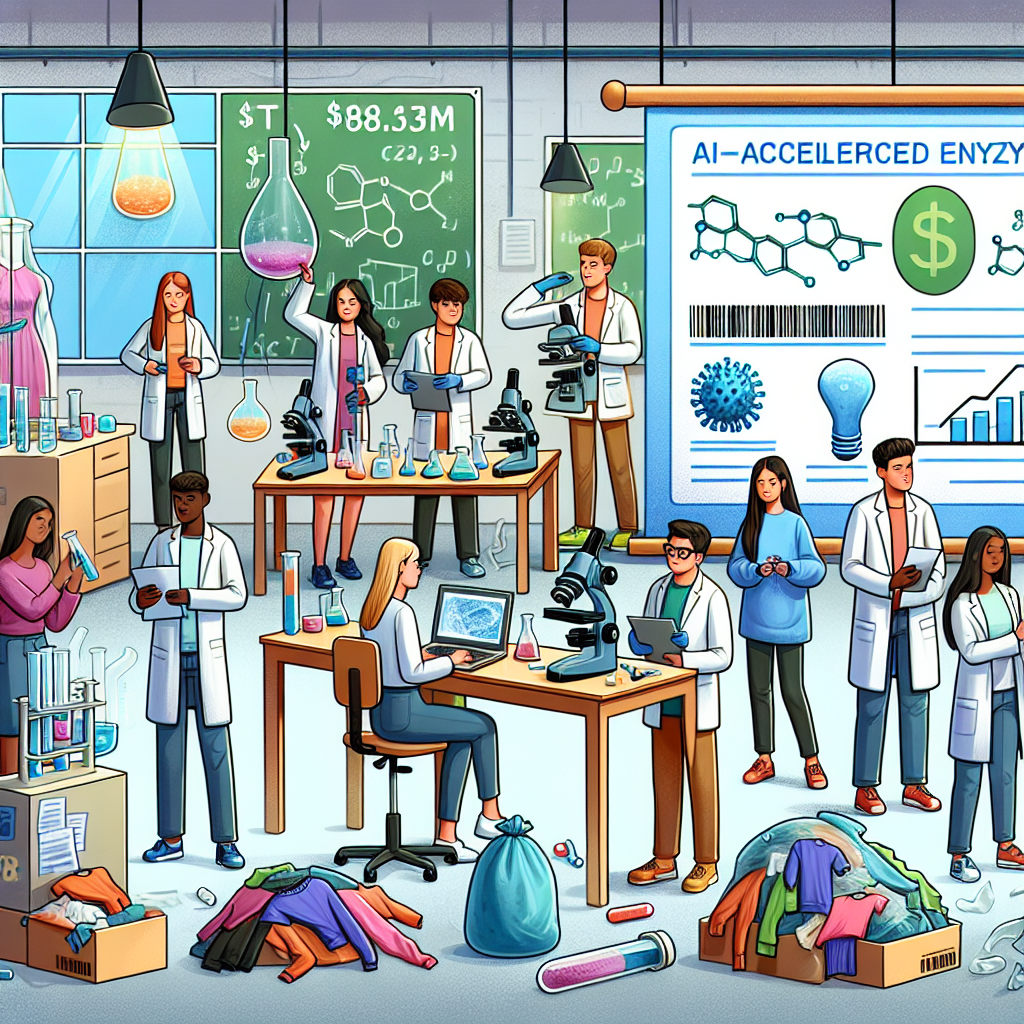
From Science Fair to Sustainability: AI-Powered Enzymes Revolutionizing Plastic Waste in Fast Fashion
In an era where the environmental impact of fast fashion is under intense scrutiny, innovative solutions are emerging from unexpected places — including high school science projects. The story of how a curious student’s exploration into enzymes evolved into a groundbreaking $18.3 million venture is not just inspiring; it signifies a pivotal shift in addressing one of the industry’s biggest challenges: plastic waste. This article delves into how AI-accelerated enzymes are poised to transform fast fashion’s relationship with plastic waste, initiating a new era of sustainability.
The Genesis: A High School Science Project with Big Dreams
High school students are often hailed for their creativity and fresh perspectives. It was within this environment that the seeds of AI-accelerated enzymes were first sown. A young science enthusiast began experimenting with enzymes, curious about their potential to break down waste materials. Over time, this curiosity transformed into a project that caught the attention of academic mentors and eventually investors, laying the groundwork for a technology with global sustainability implications.
Understanding Enzymes: Nature’s Powerful Catalysts
Enzymes are biological molecules that act as catalysts, accelerating chemical reactions without being consumed in the process. They are crucial in numerous biological processes and have the unique ability to break down complex compounds.
- Biodegradation Potential: Enzymes can target and break down plastics, traditionally resistant to natural degradation processes.
- Environmentally Friendly: As natural catalysts, enzymes offer an eco-compatible solution compared to chemical methods of waste treatment.
This understanding of enzymes became the cornerstone of developing a method primed to mitigate the waste issues plaguing the fast fashion industry.
AI and Enzyme Innovation: The Perfect Pair
With the advancement of artificial intelligence, the potential of enzymes in tackling environmental issues has skyrocketed. Combining AI with enzyme discovery and development created a new frontier in biodegradation technology.
The Role of AI in Enzyme Discovery
Artificial intelligence algorithms have the ability to process large datasets, discovering patterns and predictions beyond human capability. In the context of enzyme development, AI is pivotal in:
- Accelerating Research: AI can swiftly simulate and test enzyme reactions, drastically cutting down the time required for research and development.
- Optimizing Enzyme Efficiency: It identifies the most effective enzyme strains to target specific plastic compounds found in waste materials.
The Financial Leap: From Science Fair to Millions
The combination of enzyme technology with AI caught the attention of investors, resulting in significant funding—$18.3 million—to bring these innovations to scale. This capital infusion showcases a growing recognition of sustainable technologies as viable investments, promising not only environmental benefits but also economic returns.
Fast Fashion’s Reckoning with Plastic Waste
Fast fashion, characterized by rapid production cycles and disposable clothing, is notorious for its environmental impact, particularly its contribution to plastic waste. Synthetic fibers like polyester, a staple in many fast fashion garments, take hundreds of years to break down.
The Scale of the Problem
- Volume of Waste: Each year, millions of tons of clothing end up in landfills, contributing substantially to plastic pollution.
- Microplastics: As these synthetic garments degrade, they release microplastics, polluting our ecosystems.
Transforming Practice: How AI-accelerated Enzymes Can Help
By integrating AI-accelerated enzymes into the clothing lifecycle, the industry could achieve significant sustainability milestones:
- Pre-consumer Waste Reduction: Enzymes could be applied during manufacturing to recycle offcuts and defective items.
- Post-consumer Waste Management: End-of-life garments could be effectively degraded, minimizing landfill contributions.
The Broader Environmental Impact
Beyond the spheres of fashion, the potential of AI-encrypted enzymes touches various sectors, offering robust solutions for widespread plastic waste management.
Expanding Applications
- Packaging Waste: AI-assisted enzymes can expedite the breakdown of plastic packaging.
- Marine Pollution Control: Solving microplastic pollution in oceans could benefit from enzyme-driven technologies.
Long-term Vision
The success of AI-accelerated enzymes in fast fashion could serve as a blueprint for other industries grappling with plastic waste, promoting a more sustainable global economy.
Challenges and the Road Ahead
While the prospects are promising, overcoming certain challenges is crucial:
Technical and Economic Barriers
- Scalability: Ensuring the technology can be deployed at a mass scale economically.
- Regulatory Compliance: Meeting environmental and industrial safety standards globally.
Encouraging Industry Adoption
It is essential for industry stakeholders to collaborate, embracing technological advancements. Transparent communication about benefits, potential returns, and ecological impacts will be necessary to incentivize widespread adoption.
Conclusion: A New Era for Sustainability in Fast Fashion
From a humble high school project to a multimillion-dollar endeavor, AI-accelerated enzymes represent a transformative approach to one of fashion’s most pressing environmental challenges. As the industry grapples with the task of becoming truly sustainable, such innovative technologies do not just offer a solution; they pave the path for a sustainable future.
Beyond optimistic projections, this dual approach of AI and biotechnology puts into perspective a powerful truth: The next revolution in sustainability might just be one brilliant idea away, reminding us of the vast potential within the nexus of nature and technology.