
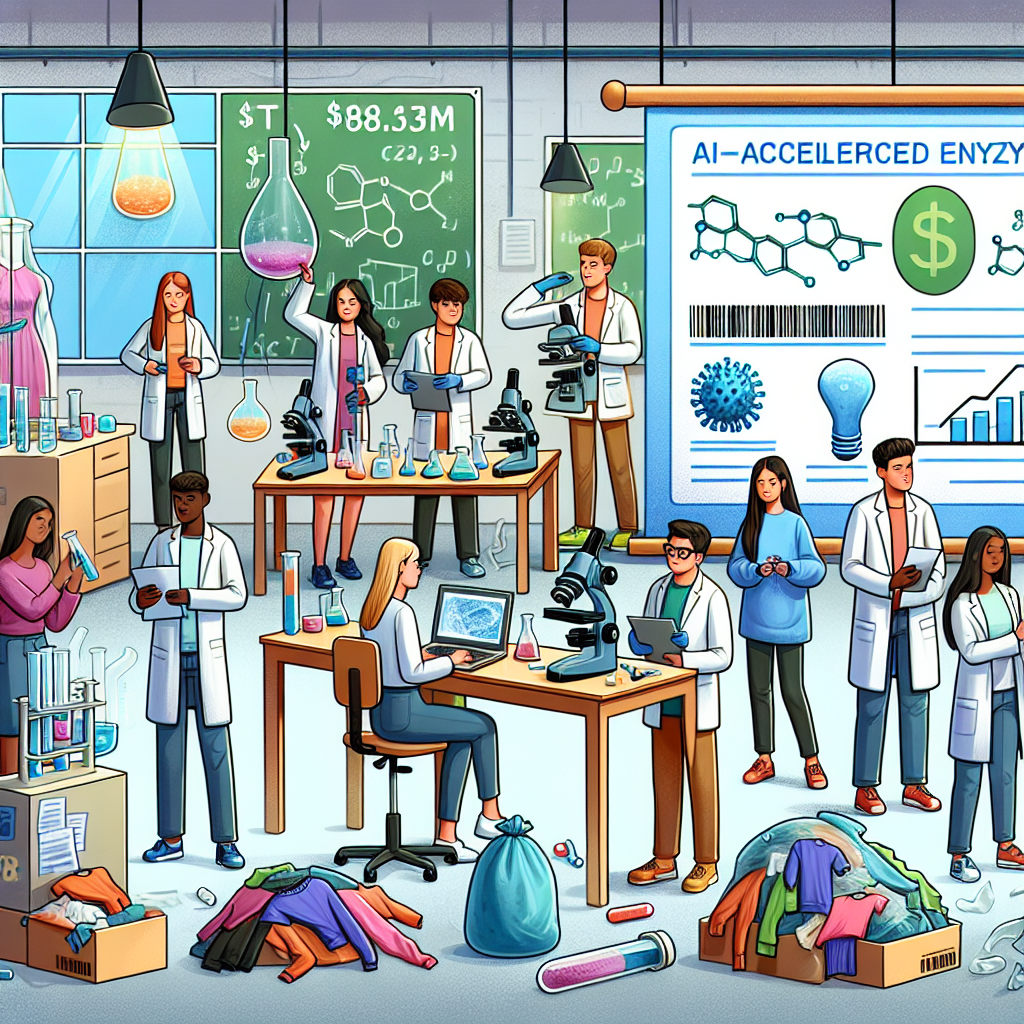
From High School Science Project to $18.3M: How AI-Accelerated Enzymes Are Revolutionizing Fast Fashion’s Plastic Waste Problem
The fashion industry, often accused of environmental negligence, is on the brink of a groundbreaking transformation. The spotlight is on an innovation that sprouted from a humble high school science project and has now snowballed into a staggering $18.3 million venture: AI-accelerated enzymes. These remarkable enzymes are turning heads as they promise to tackle one of fast fashion’s most notorious issues—plastic waste.
The Genesis of a Sustainable Solution
The Humble Beginnings
It’s remarkable to consider that this cutting-edge technology was born out of a high school science fair. The project began simply, with a keen curiosity about biology and a desire to make an impact. A group of ambitious students from Springfield High took on the challenge of exploring how nature’s own tools might solve the world’s synthetic problems. This endeavor would lay the foundation for a groundbreaking discovery that has since captured the attention of environmentalists and industrialists alike.
From Concept to Funding
After the initial discovery, the journey from a seedling idea to a multi-million-dollar venture necessitated dedication, collaboration, and vision. Academic mentors, industry leaders, and venture capitalists were swept into the fray, each contributing their unique expertise and resources to legitimize and propel the project. The infusion of AI technology was the turning point, allowing enzymes to be designed with unprecedented precision, subsequently leading to a fund of $18.3 million to scale the venture.
Understanding AI-Accelerated Enzymes
What Are Enzymes and Why AI?
Enzymes are nature’s catalysts, biomolecules that speed up chemical reactions in living organisms. In the context of fashion, AI-accelerated enzymes refer to those engineered with the aid of artificial intelligence to break down complex polyethylene terephthalate (PET) plastic, a predominant component of textile waste.
- AI’s Role in Enzyme Innovation:
- High-throughput simulations aid in exploring thousands of enzyme mutations.
- Machine learning models predict enzyme efficiency and stability.
- AI streamlines the overall research, reducing time and cost.
The Process: From AI to Enzyme
The process begins with collecting data on enzyme characteristics and potential. AI tools then analyze this data to predict modifications that could enhance enzyme performance. These predictions undergo experimental verification, fine-tuning the enzymes to increase their efficiency in degrading plastic.
The Impacts on Fast Fashion
Tackling Textile Waste
Fast fashion is infamous for its massive environmental footprint, primarily driven by cheap, non-biodegradable materials such as PET plastics. AI-accelerated enzymes offer an eco-friendly alternative to traditional recycling methods:
- Decreased Waste Accumulation: Efficient enzymatic breakdown reduces landfill waste.
- Enhanced Material Recovery: By breaking down plastics into reusable monomers, these enzymes enable the recycling of textiles into new garments.
Economic and Environmental Benefits
The adoption of AI-accelerated enzymes in fashion has multi-fold advantages:
- Cost-effectiveness: Reducing dependency on crude oil and decreasing production costs.
- Innovation Catalyst: Spurring further research and development in sustainable fashion technologies.
- Eco-conscious Branding: Brands can leverage this technology to enhance their environmental credentials.
Consumer Response
A significant shift is occurring in consumer preferences, emphasizing sustainability and ethical production:
- Increased Brand Loyalties: Consumers are more likely to support brands that invest in genuine sustainability efforts.
- Surge in Demand for Sustainable Fashion: As awareness grows, so does the demand for products that are less harmful to the planet.
The Broader Implications
A New Paradigm in Waste Management
By providing a sustainable solution to the fashion industry’s waste issues, AI-accelerated enzymes set a precedent for other sectors. Industries like packaging, where plastic use is predominant, stand to benefit from similar technologies.
Future Innovations
The success of this initiative has opened doors for further research. Potential areas of exploration include:
- Cross-Industry Applications: Extending enzyme technology to other types of synthetic waste.
- Advanced AI Integration: Employing more sophisticated AI models for better prediction and design of enzyme characteristics.
- Global Collaboration: Encouraging a worldwide cooperative effort to combat plastic waste with biological solutions.
Embracing the Path Forward
The narrative of AI-accelerated enzymes heralds a new age of environmental stewardship in fast fashion and beyond. As this technology gains momentum, it represents not just a beacon of hope for the waste-choked facets of industry but also an inspiring tale of young innovation meeting seasoned expertise. In embracing these advances, both the industry and its consumers can steer towards a more sustainable future, redefining what it means to be fashionable in the modern world.
As we look to the future, the question remains not if, but when, enzymatic solutions like these will become mainstream, and to what extent they will reshape industries rooted historically in unsustainable practices. While the journey from a science fair project to a multi-million-dollar industry was unpredictable, it’s clear that the ripples of this innovation will be felt for generations.
Fast fashion’s dance with sustainability has just begun, and AI-accelerated enzymes are leading the waltz into a new era, with a promise of cleaner, greener pastures ahead.