
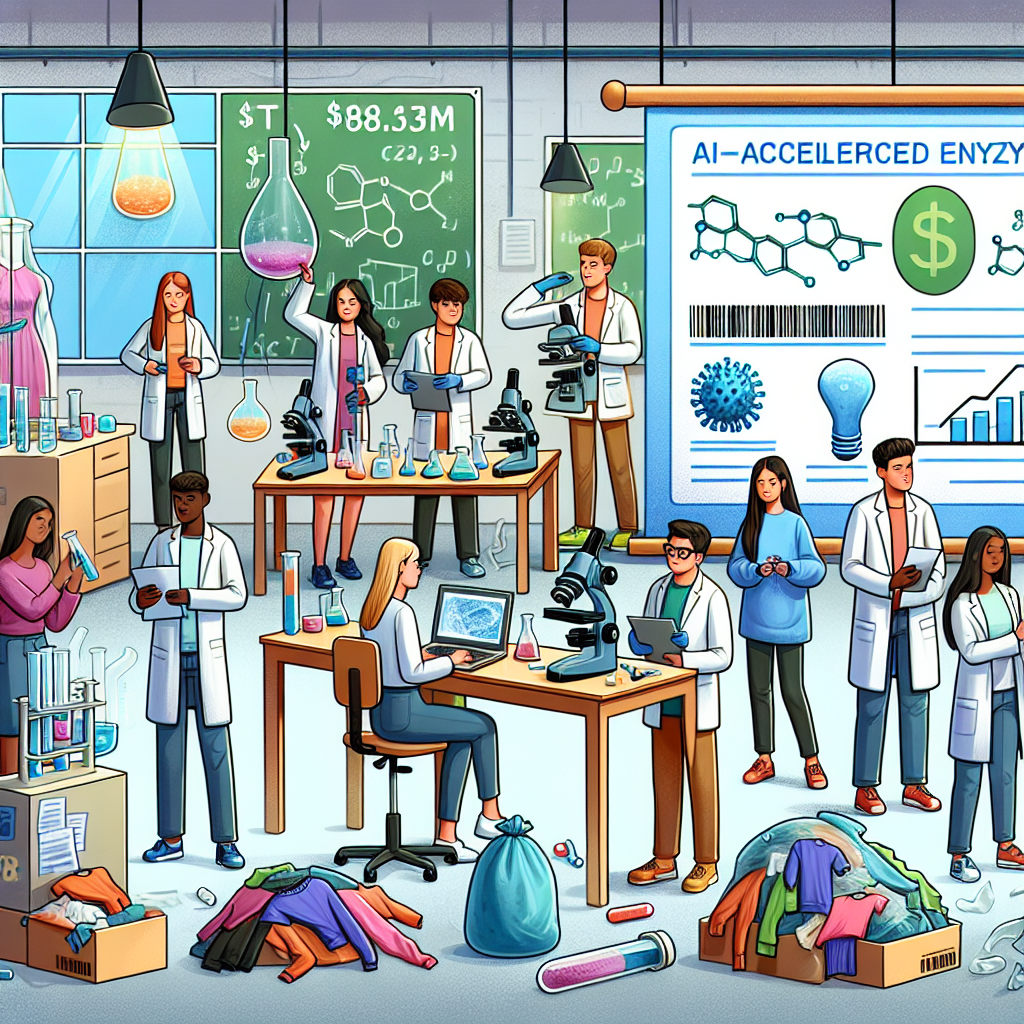
Innovating Fashion: From High School Science Fair to Multi-Million Dollar Enzyme Ventures
In a world where innovation and environmental sustainability go hand in hand, a stunning development has emerged from the unlikeliest of places—a high school science project. A breakthrough on a molecular level, this project has now escalated into an $18.3 million venture, addressing one of the fashion industry’s most pressing issues: plastic waste. This rapidly advancing solution involves AI-accelerated enzymes specifically targeting the plastic waste pervasive in the fast fashion sector.
Understanding the Fast Fashion Plastic Problem
Before delving into the groundbreaking solution, it’s crucial to understand the core issue.
Fast Fashion’s Environmental Toll
Fast fashion—characterized by its rapid production, low cost, and quick turnover—caters to the modern desire for new trends at affordable prices. However, this comes at a significant environmental cost:
- Pollution: The fashion industry is responsible for about 10% of global carbon emissions.
- Waste: Annually, about 92 million tons of textile waste is generated.
- Water Usage: It’s estimated that producing one cotton shirt requires about 2,700 liters of water.
Plastic microfibers, which shed during the washing of synthetic garments, contribute substantially to ocean pollution, harming marine life and posing risks to human health through the food chain.
The Birth of AI-Accelerated Enzymes
From School Project to a Scientific Revolution
The Journey Begins: It all started as a humble high school project aimed at solving plastic pollution. The young scientists explored the potential of enzymes, which are natural catalysts, to accelerate plastic degradation.
The Powerhouse Collaboration
AI and Enzyme Engineering: One of the fundamental leaps in this field has been integrating Artificial Intelligence with biotechnology. AI algorithms are designed to:
- Predict enzyme structures that can break down complex plastic polymers.
- Optimize the efficiency of these enzymes for industrial applications.
Key Milestone: What once required years of laboratory testing can now happen in days, thanks to AI. This innovation significantly cuts down on research times and accelerates solutions to the market.
The $18.3 Million Investment Surge
Attracting Venture Capital
The potential for AI-accelerated enzymes in tackling environmental waste has caught the eye of venture capitalists. Here’s why:
- Market Potential: With a focus on sustainability, brands are seeking green solutions, offering enormous market potential for effective waste-reduction technologies.
- Scalability: The process, powered by AI, can be adapted and scaled, making it viable for widespread industrial application.
Why the Investment?
The $18.3 million investment essentially funds:
- Continued Research: Further development of enzyme efficiency and production.
- Production Scaling: Enabling the large-scale application of these enzymes in textile manufacturing and waste management.
- Partnerships: Engaging with fashion brands that aim to reduce their ecological footprint.
Impact on the Fast Fashion Industry
Sustainable Practices for Brands
With these enzymes, brands can incorporate closed-loop systems, allowing for:
- Efficient Recycling: Enhanced recycling processes that convert old clothes into new fabric with minimal resource waste.
- Lower Carbon Footprint: By harnessing nature’s own decomposers on a molecular level, the emissions associated with traditional waste management can be reduced.
Consumer Attitudes and Behavioral Changes
An essential part of this shift involves altering consumer behavior:
- Awareness: Educating consumers about sustainable fashion and the impact of their purchases.
- Engagement: Providing options for environmentally friendly fashion choices without compromising style or quality.
Future Prospects and Global Implications
A Model for Other Industries
While the primary focus is on fashion, the implications for AI-accelerated enzymes extend far beyond:
- Packaging Waste: The same technology could be harnessed for breaking down plastic packaging waste.
- Automotive: Reducing the environmental impact of polyester in car manufacturing.
A Global Initiative
The global nature of plastic pollution demands global solutions:
- International Collaborations: Encouraging cross-border partnerships to tackle plastic waste.
- Policy Influence: Legislation in favor of supporting sustainable practices in industries across the board.
Conclusion: From Classroom to Global Change
What began in a high school classroom has now blossomed into an industry-altering innovation. AI-accelerated enzymes are not just a story of scientific progress but a testimony to how ingenuity, fueled by the urgency of environmental sustainability, can transform sectors. As this venture scales and more brands join the movement, fast fashion might soon become synonymous with fast solutions, turning the tide on plastic waste for good.
In Closing: The transformation from a simple science fair project to an $18.3 million funded initiative underlines the power of youthful innovation, the importance of interdisciplinary approaches, and the growing market for sustainable practices. This landmark discovery, riding on the coattails of AI and biotechnology, is a promising advancement toward a cleaner, greener planet.