
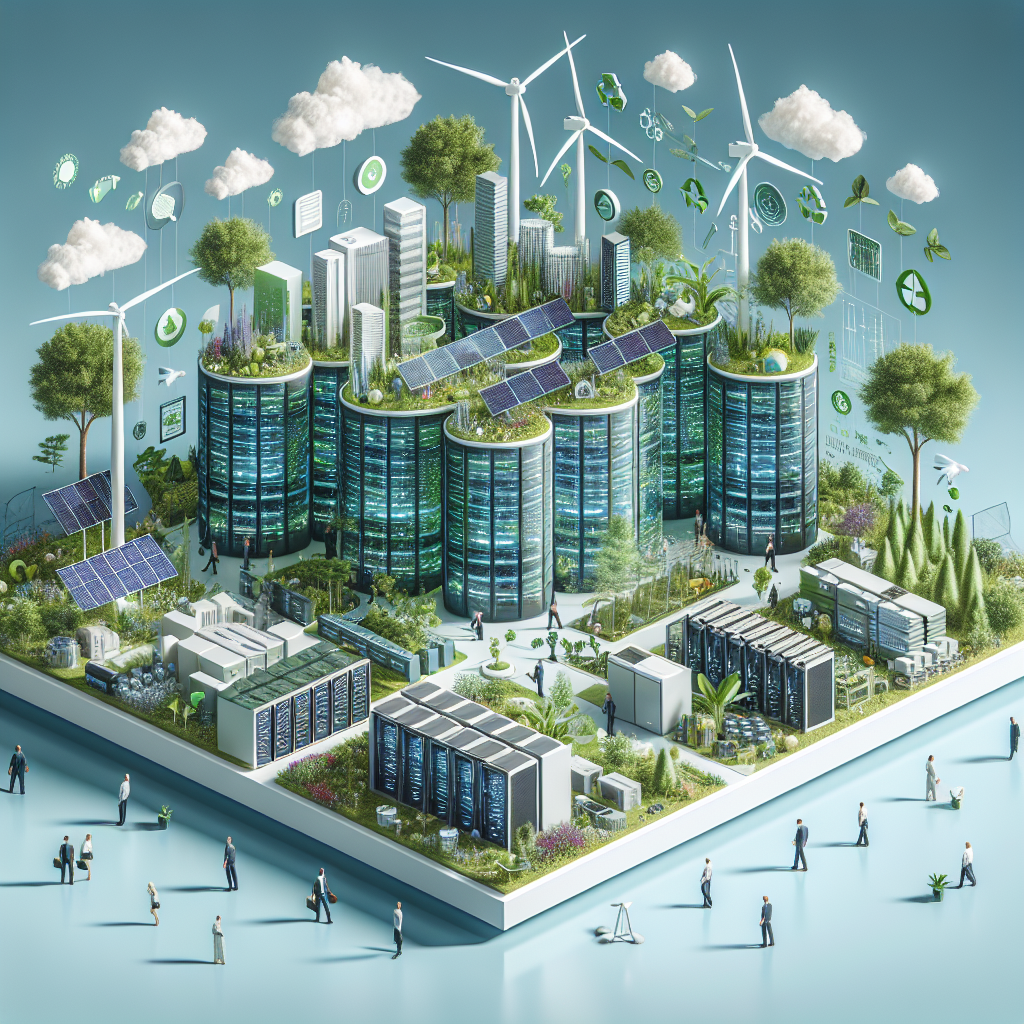
Revolutionizing AI Infrastructure: How CoreWeave and EcoDataCenter’s $500 Million Partnership Aims to Build a Sustainable Future
In the increasingly digital world we live in, technology companies are constantly innovating to meet the demands of burgeoning artificial intelligence (AI) infrastructure. Enter CoreWeave and EcoDataCenter—two tech giants who’ve recently made waves in the industry by announcing an impressive partnership valued at half a billion dollars. Their mission? To build state-of-the-art, sustainable buildings for AI systems that pave the way for a more eco-friendly future. Let’s delve into how this revolutionary collaboration aims to reshape the landscape of data centers while meeting modern-day environmental goals.
Understanding the Need for Sustainable AI Infrastructure
To truly appreciate the magnitude of CoreWeave and EcoDataCenter’s partnership, it is essential to understand the current landscape of data centers and AI infrastructure.
The Growing Demand for AI
Artificial intelligence is no longer a futuristic concept—it’s here, and it’s transforming industries across the globe. From self-driving cars and personalized online experiences to sophisticated healthcare solutions, AI technologies are increasingly woven into the fabric of everyday life. This digital transformation propels the demand for robust, reliable data centers that power these advanced AI systems.
Why AI Demands High Energy Usage:
- High computational power: AI systems, particularly those involved in machine learning and deep learning, require colossal computational resources.
- Data storage and management: AI applications manage extensive data sets that necessitate significant storage capacities.
Environmental Concerns with Traditional Data Centers
Current data centers account for roughly 1% of global electricity use, and this percentage is expected to climb as AI applications continue to expand. The need for sustainable solutions is more pressing than ever.
Challenges:
- Excessive energy consumption: Conventional data centers are notorious for their massive energy requirements.
- Inadequate cooling systems: Inefficient cooling solutions lead to excess energy use and increased greenhouse gas emissions.
- Waste management issues: Many data centers struggle with managing their electronic waste.
With these challenges in mind, optimizing data centers to be more energy-efficient and environmentally sustainable is a necessary path forward.
Overview of CoreWeave and EcoDataCenter
Having identified the issues plaguing traditional data centers, it’s worth introducing the key players—CoreWeave and EcoDataCenter—who are driving the initiative for change.
CoreWeave: A Leader in Cloud Solutions
CoreWeave is a leading provider of scalable cloud solutions tailored to power high-performance workloads. Specializing in rendering, AI, and machine learning, CoreWeave ensures their clients receive customized solutions to optimally meet their computational needs.
CoreWeave’s Vision
- Customization: Offering tailored solutions to cater to specific client needs.
- Scalability: Facilitating seamless scaling of resources to match fluctuating demands.
- Technology-forward: Embracing cutting-edge technologies to optimize cloud computing.
- Sustainability Commitment: Pursuing initiatives that reduce environmental impacts of their services.
EcoDataCenter: A Pioneer in Sustainable Data Infrastructure
In contrast, EcoDataCenter has distinguished itself as a pioneer in creating sustainable data infrastructure. They focus on constructing carbon-neutral data centers that form the backbone of a greener digital ecosystem.
Key Elements of EcoDataCenter’s Approach
- Renewable energy utilization: Opting for renewable energy sources to power data centers.
- Innovative design concepts: Employing advanced architectural designs to enhance efficiency and minimize energy loss.
- Circular resource use: Promoting methods that recycle waste products and improve overall resource management.
Their Partnership’s Green Goals
The collaboration between CoreWeave and EcoDataCenter aligns with a shared goal: redefining data centers to meet the needs of next-generation AI systems, without compromising the planet’s health.
Objectives of the $500 Million Partnership
- Development of Sustainable Data Centers: Aiming to construct environmentally-friendly data centers that leverage renewable resources.
- Focus on Carbon Neutrality: Striving to achieve carbon-neutral operations by tackling energy consumption and emissions at every level.
- Advanced Cooling Solutions: Innovating cooling technologies to optimize energy usage while lowering greenhouse gas output.
- Waste Management Protocols: Implementing efficient waste recycling protocols to reduce the environmental footprint.
Expected Outcomes
- Reduced carbon footprint of AI systems
- Minimized energy consumption across the board
- Enhanced AI infrastructure stability and performance
- Establishing a model for the rest of the industry to follow
Impact on the Broader Industry
CoreWeave and EcoDataCenter’s partnership sets a new standard for sustainable practices in the AI industry—potentially influencing other companies to rethink their strategies in the face of mounting environmental challenges.
Benefits for Other Players
- Potential for collaboration with innovators who adopt sustainable technologies.
- Knowledge sharing that can accelerate industry-wide advances in eco-friendly engineering practices.
- Economic incentives presented through regulatory compliance and sustainability-focused investments.
A Call to Action for Tech Giants
The groundbreaking collaboration signifies that it is feasible for large-scale tech companies to succeed financially while operating sustainably. The hope is that others in the field will follow suit, prioritizing environmental considerations alongside their technological pursuits.
Conclusion
The partnership between CoreWeave and EcoDataCenter offers a glimpse into the promising future of sustainable AI infrastructure. By investing half a billion dollars in eco-friendly buildings, they are paving the way for responsible technological advancement that aligns the growth of AI with ecological stewardship. What emerges is more than a business venture—it’s a clear statement that innovation can go hand in hand with sustainability, offering a blueprint to inspire the broader tech ecosystem for years to come.