
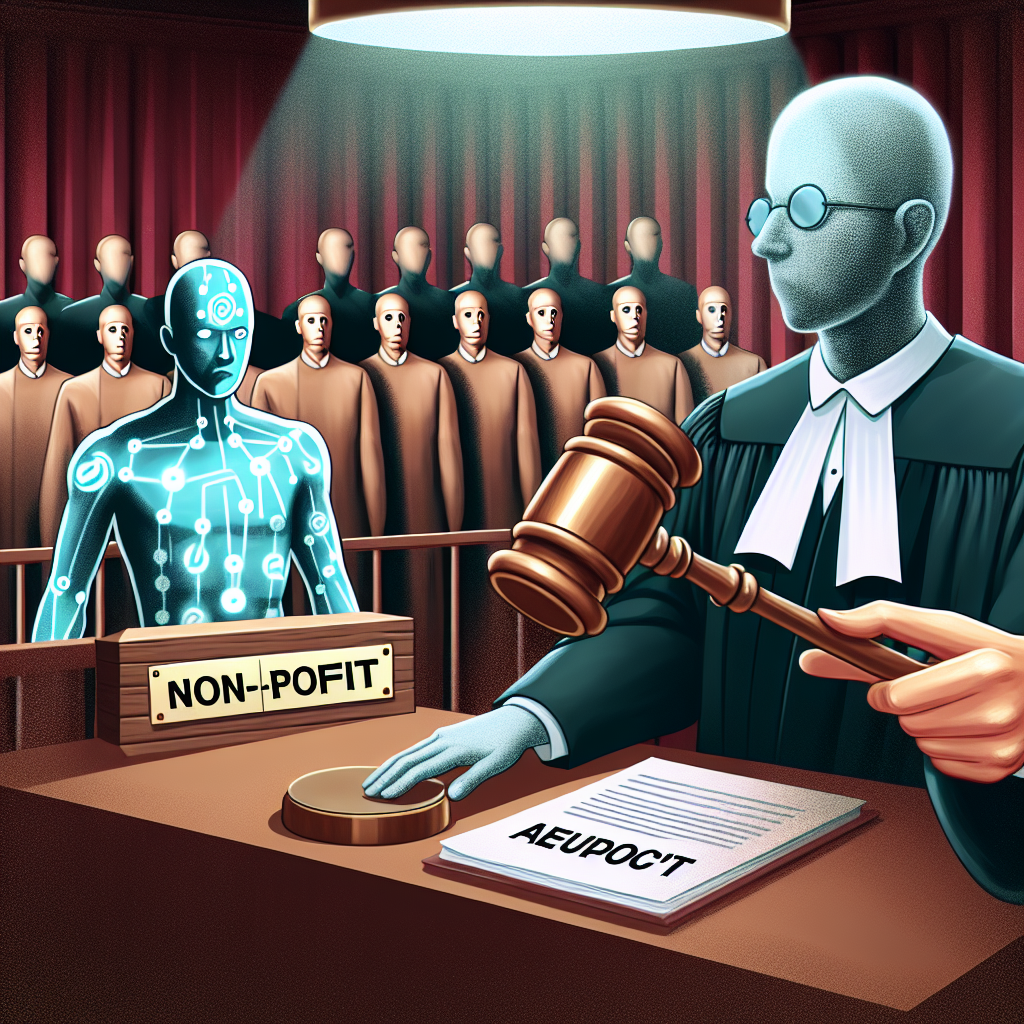
Judge Rejects Elon Musk’s Bid to Halt OpenAI’s For-Profit Shift: What It Means for AI’s Future
In a fascinating development within the world of artificial intelligence and business strategy, a judge recently rejected Elon Musk’s attempt to block OpenAI’s transition to a for-profit entity. This decision reverberates through the AI community and raises many questions about the ethical development of AI technologies, the role of corporate influence, and the future directions of AI innovation. In this article, we’ll explore the background, implications, and future outlook of this legal battle and the potential consequences for OpenAI and the broader tech industry.
OpenAI’s Transformation and Elon Musk’s Concerns
The Genesis of OpenAI
OpenAI was founded in December 2015 by Elon Musk, Sam Altman, and others as a non-profit initiative with the mission of developing and promoting friendly AI. The key idea was to ensure AI advances in a way that is beneficial to humanity as a whole, rather than being driven by profit motives that might lead to unfavorable outcomes.
The Transition to For-Profit
In 2019, OpenAI announced a strategic change to a "capped-profit" model, creating a structure known as OpenAI LP. This move was explained as a necessary step to attract more funding to fuel its expensive research undertakings while ensuring profits do not exceed a certain cap to stay aligned with its core mission.
Elon Musk’s Discontent
Elon Musk, one of OpenAI’s early champions and benefactors, expressed concerns about this new direction. Musk’s apprehensions center on:
- Mission Drift: Moving to a for-profit model may divert OpenAI’s mission towards profit generation rather than being exclusively focused on ethical AI development.
- Competition: OpenAI might engage more directly with tech giants thus altering its collaborative nature.
Why the Court Rejected Musk’s Appeal
A significant question arises: why was Musk’s attempt blocked? There are several key reasons that might have influenced the court’s decision:
Legal Standing
Musk’s legal standing in the case was one of the decisive factors. Since he stepped down from the board in 2018 due to potential conflicts of interest as Tesla began exploring its own AI initiatives, his direct influence on OpenAI’s governance diminished.
Strategic Necessity
OpenAI’s transformation into a capped-profit entity is seen by many as a strategic necessity. AI development requires substantial resources, and the transition is aimed at balancing the need for funding with ethical considerations, where profits are capped to ensure alignment with foundational values.
Governance Framework
The judge noted that OpenAI’s governance framework allowed it to maintain control over its mission’s alignment with its ethical objectives, thus addressing some concerns over mission drift.
Implications for OpenAI and the Tech Industry
The decision to maintain OpenAI’s new for-profit model could pave the path for both opportunities and challenges within the AI industry.
Opportunities for Innovation
With increased access to capital, OpenAI can:
- Accelerate Research: More funding can bolster research into cutting-edge AI capabilities, leading to faster advancements.
- Expand Collaborations: Collaboration with industry partners could lead to groundbreaking applications in various sectors.
Challenges to Ethical Development
With for-profit motives in the background, numerous concerns arise:
- Mission Dilution: As OpenAI veers towards a corporate model, keeping its core mission intact while pursuing profitability could present challenges.
- Commercial Influence: Partnerships with major tech companies could lead to prioritizing market-driven developments over ethical imperatives.
Looking Ahead: The Future of AI Governance
The OpenAI ruling underscores a broader narrative in the tech industry about the governance of AI development, especially when profit motives are in play.
Rethinking AI Ethics
As AI continues to permeate all facets of life, revisiting ethical norms becomes crucial. This incident invites tech policymakers, developers, and consumers to debate questions such as:
- How can companies balance profitability and ethical AI innovation?
- What governance frameworks can ensure AI benefits everyone equitably?
- How should stakeholders manage conflicts between corporate interests and broader societal good?
Role of Transparency and Accountability
A potential byproduct of this case could be increased demand for transparency and accountability from AI companies. They might need to outline:
- Public Partnership Reports: How partnerships align with ethical values.
- Impact Assessments: Evaluating and reporting the societal impact of AI advancements.
Conclusion: Navigating a New AI Frontier
The judge’s decision has marked a new chapter in the OpenAI saga, raising critical questions about the intersection of business strategy, technology ethics, and organizational mission. As OpenAI proceeds down this path, the tech world will watch closely to see how it navigates the dual goals of driving innovation and maintaining ethical practices.
In this rapidly evolving landscape, stakeholders across the globe will need to consider not only the immediate implications of such transformations but also their long-term consequences on the trajectory of AI and its impact across industries. OpenAI’s ability to maintain its integrity while pursuing ambitious goals might set a precedent for companies worldwide, highlighting how innovation can integrate with ethics in our pursuit of a better, technologically advanced future.