
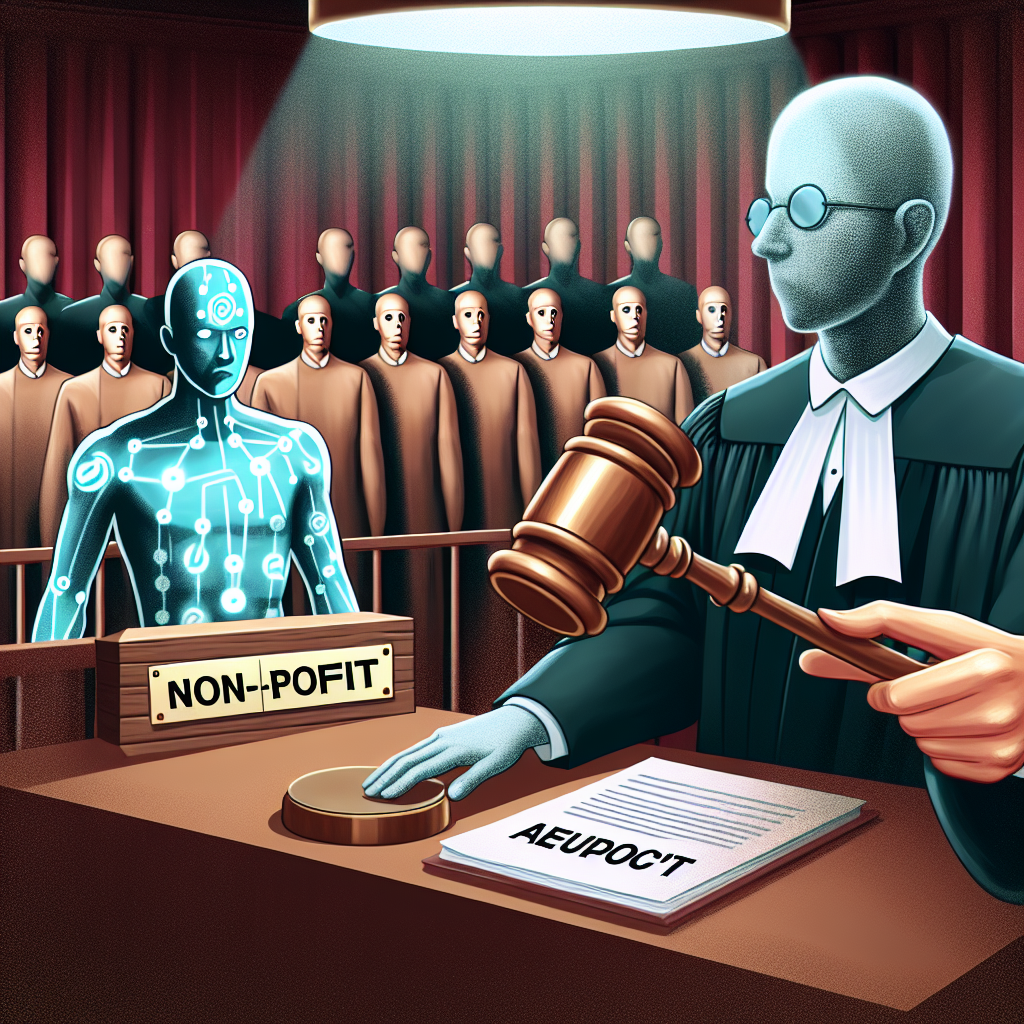
Musk’s Challenge Blocked: Unveiling the Legal Drama Behind OpenAI’s For-Profit Transition
In the ever-evolving landscape of artificial intelligence, powerhouse names like Elon Musk and OpenAI often dominate the headlines. Recently, a gripping legal saga unfolded that saw Musk striving to halt OpenAI’s transition to a for-profit model. This intriguing story serves not only as a window into the complexities of AI development, but also as an exemplary case study in the world of tech entrepreneurship. Let’s dive into the depths of this story, its implications, and what it means for the future of AI technology.
The Original Vision: OpenAI’s Non-Profit Foundation
What OpenAI Originally Stood For
OpenAI’s inception was rooted in an ambitious mission: to ensure that artificial general intelligence (AGI) benefits all of humanity. Established as a non-profit in 2015, its founding members including Elon Musk, pledged an initial $1 billion to drive research without the constraints of profit-driven motives.
Key Principles of the Founding Mission:
- Wide Accessibility: Making advancements in AI widely accessible to prevent monopolization by corporations.
- Research Transparency: Committing to open-source research to accelerate technological progress.
- Ethical AI Development: Prioritizing the ethical implications of AI capabilities.
How OpenAI Achieved Initial Success
OpenAI quickly rose to prominence by producing groundbreaking work like the GPT series. Their success was not just in their technical prowess, but also in rallying a global community around their cause for ethical AI development.
The Controversial Pivot: Moving Towards a For-Profit Model
Motivation Behind the Transition
As AI research requires increasingly massive datasets and computational power, OpenAI began facing financial strains. The quest for sustainable funding became a topic of existential importance.
Transition Points:
- Strategic Partnerships: Formulating collaborations with tech giants like Microsoft, who injected substantial investment.
- “Capped-Profit” Model: Introducing a unique hybrid model to balance profit-making with maintaining some of its non-profit ideals.
Musk’s Objections to the Shift
Elon Musk, previously a vocal advocate, became a critic as OpenAI shifted gears. His concerns were rooted in misalignment with OpenAI’s founding principles and the potential risks of AI commercialization.
Musk’s Main Arguments:
- Betrayal of Initial Mission: The change was seen as straying from their original ethical blueprint.
- AI Safety Concerns: Fears of prioritizing profit over ethical safeguards could potentially have unforeseen negative consequences on AGI development.
The Legal Battle: Musk Takes a Stand
Filing a Motion: Musk’s Attempt to Block the Transition
In his quest to stop the transition, Musk filed a legal motion aimed at pausing OpenAI’s strategic shift towards a for-profit model. This legal stance thrust the issue into the spotlight, garnering much public and media attention.
Legal Arguments Presented:
- Contract Breach: Alleged that transitioning violated financial and ethical agreements made at the company’s founding.
- Public Interest: Argued that moving to a for-profit model could harm public trust and restrict AI accessibility.
Outcome of the Legal Proceedings
After months of litigation, the court delivered a decision that was monumental for tech entities worldwide. The judge rejected Musk’s attempt to block the transition, citing a lack of adequate evidence to support his claims.
Key Judicial Insights:
- Compliance with Original Mission: The judge noted OpenAI’s continued emphasis on ethics via its capped-profit model.
- Strategic Autonomy: Acknowledged that OpenAI needs adaptability to remain sustainable in a competitive tech landscape.
The Bigger Picture: Implications and Future Trajectories
Impact on the AI Industry
The resolution of this high-profile case underscores significant themes in AI development, particularly the balance between innovation, ethics, and sustainability.
Important Takeaways:
- Increasing Pressure for Ethical Standards: Growing calls for clear ethical codes despite profit motives.
- Influence of Tech Titans: Realization that individual influence, even from figures like Musk, is limited within collective governance frameworks.
What Lies Ahead for OpenAI
With the court’s decision settled, OpenAI stands at the cusp of significant growth possibilities. Its partnership with Microsoft and pursuit of new investment channels promise exciting possibilities.
Future Strategies:
- Expansion of Strategic Alliances: Further partnerships with leaders in tech to amplify research capabilities.
- Focus on Ethical Progress: Continuation of open discussions and independent audits to safeguard its foundational principles.
Conclusion: Lessons from the Legal Saga
This dramatic confrontation between Musk and OpenAI over the non-profit-to-profit transition is emblematic of broader tensions in the technology ecosystem. It highlights the perpetual tug-of-war between profit motives and public benefit, serving as a reminder that the future of AI must be shepherded with utmost responsibility. As OpenAI pivots into its next chapter, the world watches with bated breath, cognizant that today’s decisions will shape the contours of tomorrow’s digital landscape.
In the world of AI, this isn’t the last we’ll hear of high-stakes drama. As the field continues to innovate at lightning speed, it will inevitably navigate new ethical and logistical challenges. Keep an eye on OpenAI, Musk, and other players shepherding AI’s future, as their impact extends far beyond boardrooms into the lives of billions.