
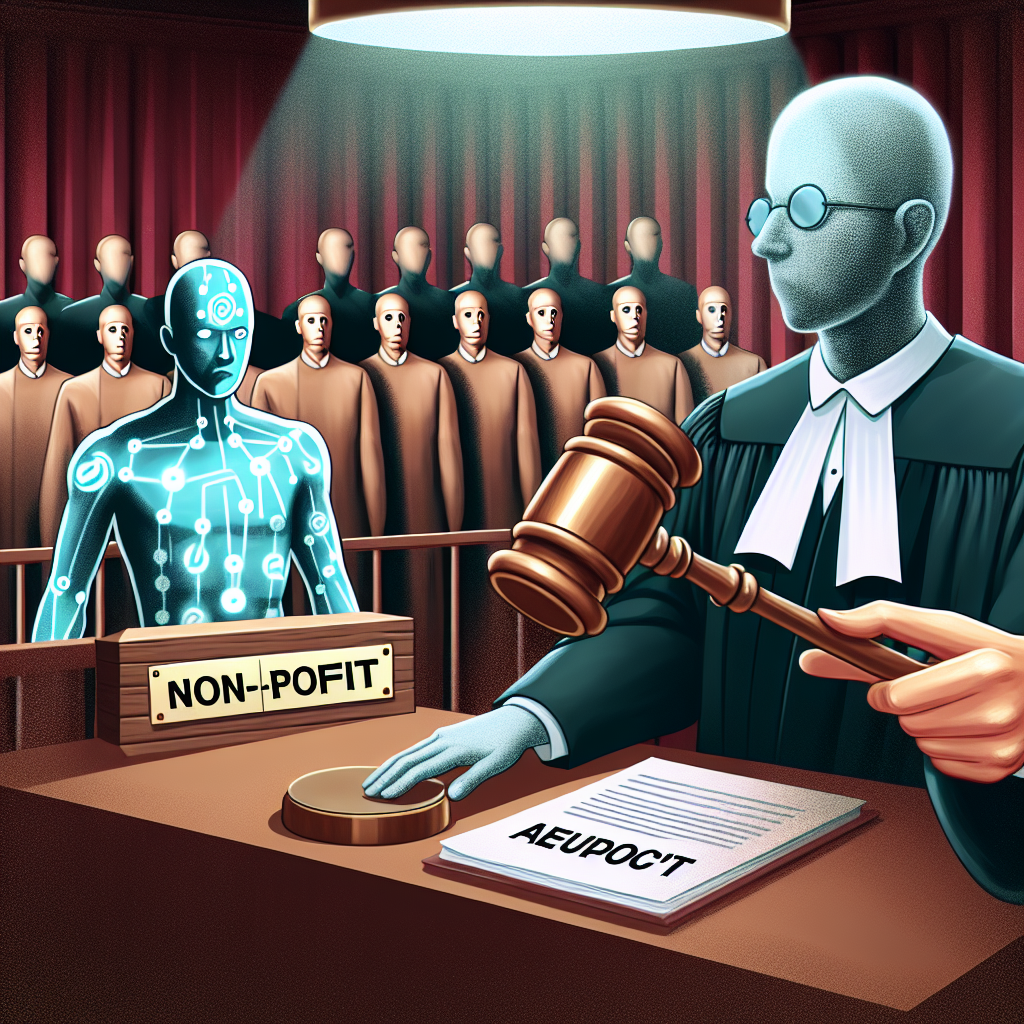
Elon Musk’s Legal Bid to Block OpenAI’s For-Profit Transition Rejected: What It Means for the AI Industry
The tech world was abuzz when news broke out that a judge had rejected Elon Musk’s attempt to halt OpenAI’s transition to a for-profit model. Founded as a non-profit organization with Musk as one of its co-founders, OpenAI was established to promote and develop friendly AI for the benefit of humanity. However, the decision to transition to a “capped-profit” model has sparked controversy and legal challenges. What does this ruling mean for the AI landscape, and how does it impact stakeholders involved? Let’s dive into the details.
A Deep Dive into OpenAI’s Transformation
When OpenAI was first launched in 2015, its mission was clear: to ensure that artificial general intelligence (AGI) benefits all of humanity. The organization’s shift towards a for-profit structure, branded as "OpenAI LP," intended to enable them to secure more resources while remaining committed to their mission. Let’s explore why this transition was significant.
The Birth of OpenAI as a Non-Profit
- Objective: Focused on safety in AI and addressing ethical concerns.
- Stakeholders: Included high-profile tech investors like Elon Musk and Sam Altman.
- Funding: Initially secured $1 billion, promising to freely share its research.
Transition to OpenAI LP: The Controversy
- Capped-Profit Model: Allows investors to receive up to a 100x return, aiming to balance profit and purpose.
- Reasons for Transition: Financial sustainability, competition in the tech landscape, and scalability in AI projects.
- Criticism: Concerns over transparency, deviation from initial mission, and monopolistic behavior.
The Legal Battle: Musk’s Attempt to Block Transition
Why Did Musk Object?
- Mission Drift: Concerns that OpenAI was veering away from its foundational ethics by catering to profit-centric motives.
- Corporate Competition: Musk runs Tesla and Neuralink, where AI is pivotal, leading to potential conflicts.
- Transparency Demands: Musk insisted on retaining open-source principles initially pledged by OpenAI.
The Court’s Verdict
- Judgment Summary: The court ruled in favor of OpenAI’s restructuring, emphasizing their innovative financial model could still align with their mission.
- Implications for Musk: Signals a legal recognition of flexible operational structures in tech ecosystems.
- Precedent: Sets a potential legal standard for other tech non-profits exploring for-profit opportunities.
The Ripple Effect on the AI Industry
The ruling doesn’t just affect Musk and OpenAI. It has wider implications across the rapidly evolving AI sector. Here’s how:
Promoting Innovation Through Investment
- Attracting Capital: Demonstrates how mission-driven models can still attract hefty investments.
- Encouraging Creativity: Fosters a financial environment where AI firms can innovate without stringent non-profit constraints.
Ethical Concerns and Challenges
- Trust Factor: Can profit-motive ecosystems maintain public trust in ethical AI?
- Open Source Dilemma: Continues the debate on balancing open-source benefits with corporate secrecy.
Impact on Policy and Regulations
- Regulation Development: Calls for clearer AI governance frameworks maintaining checks on profit-oriented AI entities.
- Future Reforms: Encourages legislative bodies to revisit frameworks encompassing AI ethics and commercial activities.
Future of Collaborative Models in AI
As OpenAI continues to trailblaze with its novel approach, how should other AI organizations and stakeholders respond? Here’s a glance at developing trends and strategic insights:
Navigating Hybrid Models
- Capped-Returns Trend: Encourages nonprofits with tech roots to explore capped-profit pathways.
- Collaborative Ventures: Urges cross-sector collaborations between traditional and contemporary AI institutions.
Balancing Ethical Paradigms
- Stakeholder Engagement: Prioritizing transparency in decision-making aligns trust within both investors and the public.
- Advisory Committees: Establish committees to ensure ethics remain at the core despite financial adaptations.
Conclusion: Moving Forward with Cautious Optimism
While the judge’s rejection of Musk’s attempt to block OpenAI’s for-profit transition marks a significant juncture within the AI sphere, it sets a precedent simultaneously fraught with challenges and opportunities. The industry must tread a fine balance between commercial viability and ethical responsibility. The story of OpenAI serves as a compelling case study for tech firms striving to make an impact while navigating complex ethical terrains.
OpenAI’s journey shows that as our relationship with technology evolves, so too must our legal and ethical frameworks. Only by embracing both innovation and integrity can we truly harness the potential of AI for all of humanity.