
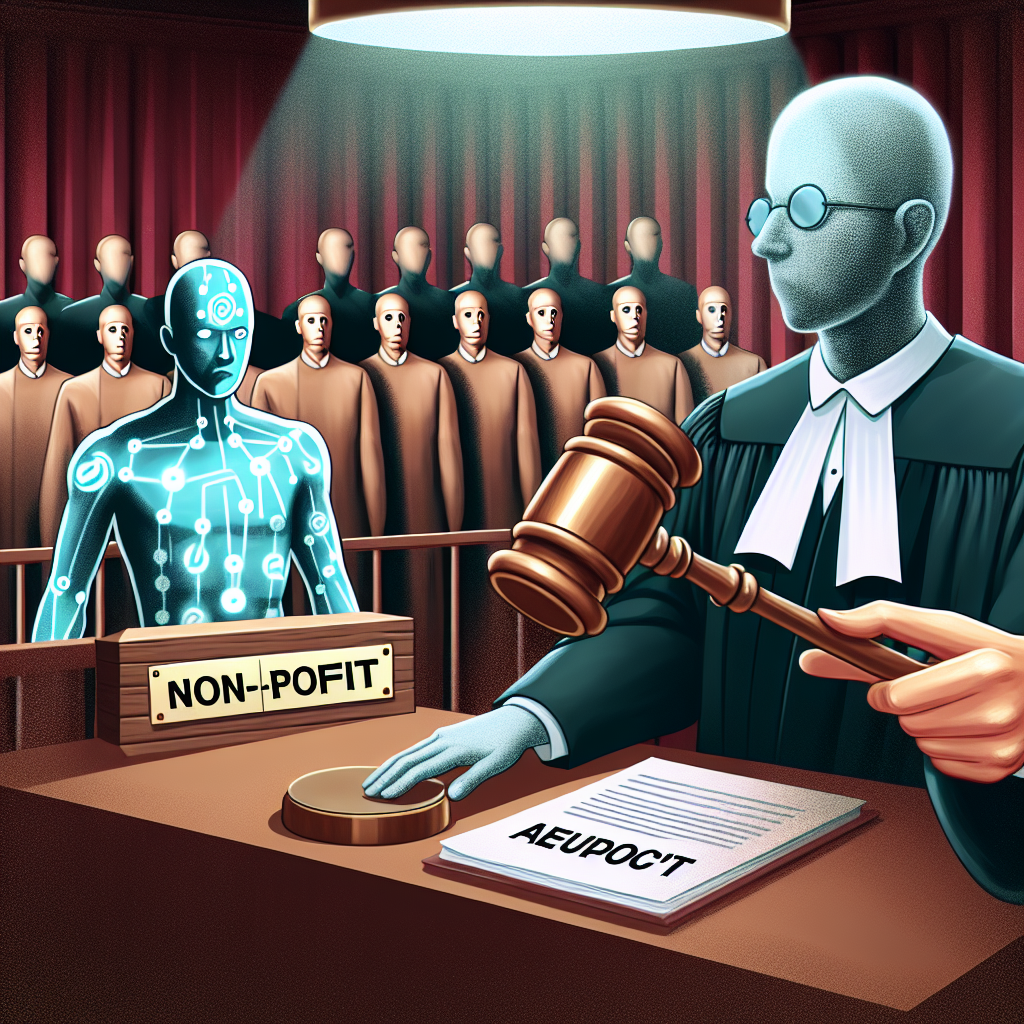
Judge Rejects Musk’s Attempt to Block OpenAI’s For-Profit Transition: What This Means for AI’s Future
The world of artificial intelligence (AI) is in constant flux, balancing between innovation and ethical considerations. In a recent legal battle, Elon Musk’s attempt to halt OpenAI’s move towards a for-profit structure was rejected by a judge. This decision is more than just a legal affair within the tech world—it symbolizes a pivotal moment in the AI community, highlighting a shift in how AI development might be funded and governed. As technological powerhouses assert varying visions for AI’s future, stakeholders stand at a crossroads that could define our relationship with AI technology.
Elon Musk’s Relationship with OpenAI
A Founding Vision
Elon Musk co-founded OpenAI with several goals in mind, aiming to ensure that artificial general intelligence (AGI) benefits all of humanity. While OpenAI began as a non-profit, Musk’s involvement was rooted in concerns about the existential risk posed by advanced AI technologies. He envisioned OpenAI as a safeguard against the monopolization of AI capabilities by a few entities, believing that its research and solutions should be universally accessible.
Divergence of Missions
Over time, Musk parted ways with OpenAI. Disagreements over AI’s development direction, compounded by his increasing commitments to Tesla and SpaceX, led to his reduced involvement. As OpenAI’s ambitions and operating model evolved, Musk’s perspectives and OpenAI’s path diverged significantly.
OpenAI’s Transition to a For-Profit Model
The Introduction of the "Capped-Profit" Model
In 2019, OpenAI announced a new organizational framework called the “capped-profit” model. Under this structure:
- Investors receive a return capped at 100x their investment.
- Any excess profits are reinvested into OpenAI’s mission to ensure AGI is aligned with human values.
The transition was spurred by the necessity for substantial computational resources and funding to attain its AGI objectives.
Funding AI’s Future
Moving to this model facilitated OpenAI’s ability to attract significant funding. It raised $1 billion from Microsoft, which allowed for more aggressive advancements in AI research. This funding model, however, sparked ethical debates around balancing innovation with profit motives.
The Legal Battle
Musk’s Attempt to Block the Transition
Musk’s concerns about OpenAI’s transition revolve around the potential for concentrated power and profit motives overshadowing the original mission of promoting universally beneficial AGI. His legal challenge sought to preserve OpenAI’s original non-profit mission and its dedication to human-centered AI development.
Judicial Rejection
The judge’s decision to reject Musk’s legal bid was grounded in several arguments:
- OpenAI’s current mission and practices were deemed aligned with its foundational purpose.
- The organization demonstrated commitment to ethical AI development despite bearing a profit-driven structure.
This rejection marks a reinforcement of OpenAI’s autonomy over its operational strategies.
Implications for the AI Industry
Balancing Profit and Purpose
The transition reflects a broader trend where AI companies must reconcile financial viability with ethical imperatives. The need for sophisticated AI models requires investments that a purely non-profit approach might not sustain.
Ethical Considerations in AI Development
Musk’s objections underscore longstanding ethical concerns in AI:
- Monopolization of AI resources could stifle innovation and skew AI’s societal impact.
- The challenge remains to ensure equitable access to AI advancements and mitigate bias in AI algorithms.
OpenAI as a Model for Future AI Companies
OpenAI’s distinction as a “capped-profit” entity may inspire future AI firms to pursue similar hybrid models, striving for a middle path between profit motivation and public good.
Conclusion
The judge’s decision on Elon Musk’s attempt to restrict OpenAI’s for-profit conversion is more than just a court ruling—it’s a critical commentary on AI’s evolving landscape. As OpenAI marches forward, balancing its foundational ethos with financial imperatives, this moment serves as a reminder of the complexities entwined in AI’s trajectory. The future of AI hinges on bold decisions like these, aiming to harmonize innovation, ethics, and accessibility, as the world watches this technological saga unfold.