
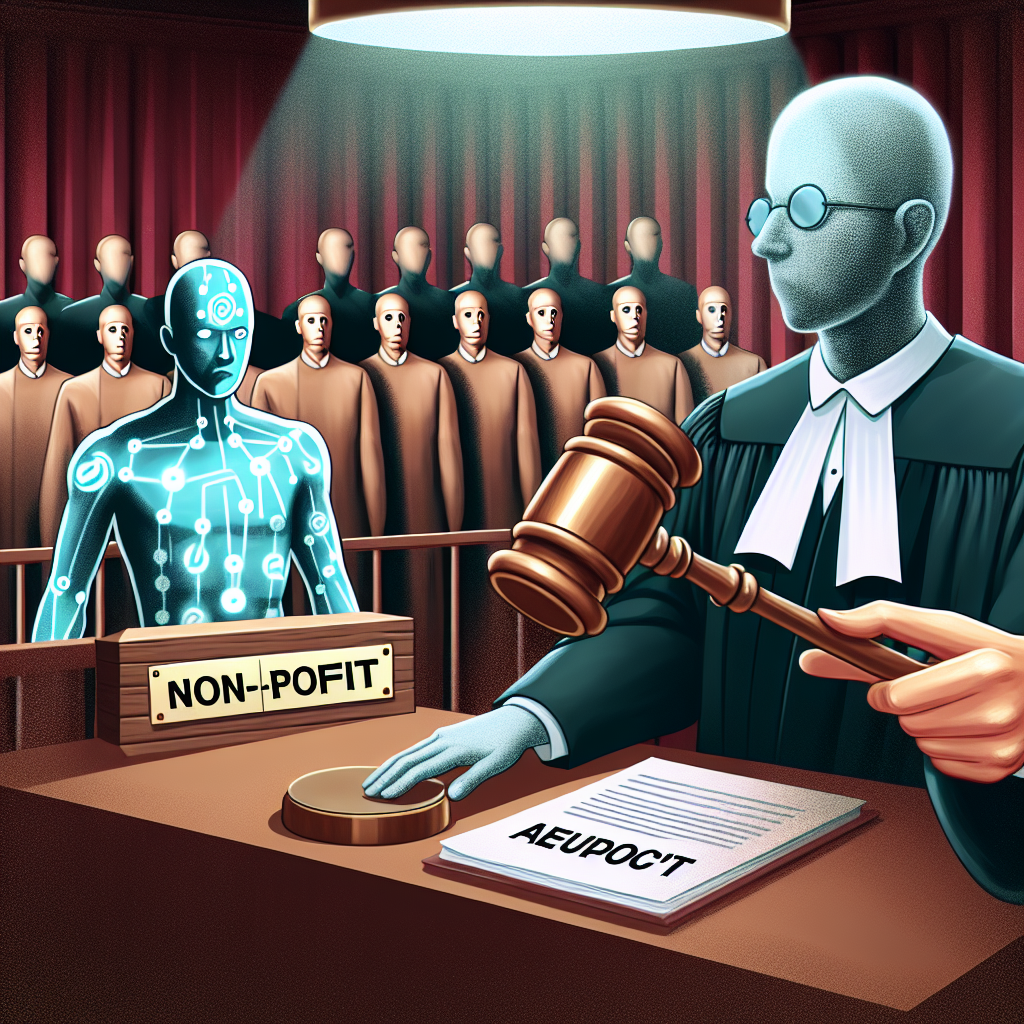
The Courtroom Drama: Musk’s Failed Bid to Halt OpenAI’s For-Profit Shift
In a landmark decision that has sent ripples through the tech world, a judge has rejected Elon Musk’s attempt to stop OpenAI from transitioning to a for-profit model. With the rise of artificial intelligence and the ethical concerns it brings, this legal battle has been closely watched by industry insiders and tech enthusiasts alike. In this article, we’ll delve into the intricacies of the court’s decision, the implications of OpenAI’s transition, and the broader context of AI ethics.
Understanding the Background: What is OpenAI?
A Brief History
OpenAI was founded in December 2015 by Elon Musk, alongside other notable figures like Sam Altman, with the mission of ensuring that artificial general intelligence (AGI) benefits all of humanity. Initially, OpenAI functioned as a non-profit organization, dedicated to pioneering research in AI safety and ethics.
The Shift to For-Profit
In 2019, OpenAI announced its decision to form a "capped-profit" entity known as OpenAI LP. This new structure was intended to attract investment while ensuring that profits were capped to fulfill its mission of widespread AI benefits. However, this move sparked controversy and led to criticism from various quarters, including Musk himself.
The Legal Battle: Musk’s Objection to OpenAI’s Transition
Musk’s Concerns
Elon Musk, who has been an outspoken critic of unchecked AI development, expressed apprehension about OpenAI’s shift to a for-profit model. His main concerns included:
- Profit Motives: Musk feared that the profit-driven motives could compromise the ethical considerations that OpenAI was founded upon.
- Reduced Transparency: With a profit orientation, the open sharing of research and advancements might diminish.
- Public Trust: Musk worried that public trust could erode if OpenAI aligns more with commercial interests.
The Court’s Decision
In 2023, Musk filed a legal motion to block OpenAI’s transition, arguing it violated the initial non-profit principles. However, the court disagreed, emphasizing that OpenAI’s new structure was legally compliant.
Key points from the court’s ruling:
- Adherence to Legal guidelines: The court noted that OpenAI’s capped-profit model adheres to established legal frameworks for investment and profit distribution.
- Fulfilling Mission Statements: It was determined that the new model still aligns with OpenAI’s mission of ensuring benefits for humanity, albeit through a different path.
- Investors’ Role: The involvement of investors does not inherently compromise ethical stances, provided oversight is maintained.
Implications for OpenAI and the Tech Industry
Positive Outcomes
The court ruling has opened the doors for OpenAI to seamlessly continue its operations under the new structure, allowing it to:
- Expand Research Capabilities: With increased investment, OpenAI can accelerate advancements in AI technologies.
- Attract Top Talent: A for-profit model gives OpenAI the leverage to offer competitive remuneration, attracting leading experts in the field.
- Enhance Infrastructure: The ability to invest further in infrastructure will bolster OpenAI’s technical capabilities.
Ethical Considerations
With power comes responsibility, and with this transition:
- AI Ethics: There is heightened pressure on OpenAI to maintain its ethical commitments, ensuring societal benefits from AI advancements.
- Transparency Promise: OpenAI must strive to uphold transparency in its operations, mitigating fears of secrecy or hidden motives.
Broader Context: The AI Ethics Debate
The Balance Between Profit and Purpose
The evolution of AI companies from non-profit to for-profit entities raises fundamental questions:
- Sustainability vs. Trade-offs: Can organizations sustain advancements in AI without shifting to profit models, or does the transition entail inevitable trade-offs?
- Resource Allocation: How should priorities be balanced between profit and adhering to ethical guidelines?
The Role of Regulations
Governments and regulatory bodies are increasingly tasked with:
- Setting Boundaries: Establishing clear guidelines for AI development and its applications.
- Monitoring Compliance: Ensuring that organizations adhere to ethical considerations and transparency requirements.
Conclusion: The Road Ahead for OpenAI
With the legal ruling now behind us, OpenAI is poised to forge ahead under its capped-profit model. While the court’s decision marks a victory for the organization, it also sets the stage for ongoing discussions about ethics in AI. The balance between profit motives and the ethical imperative to benefit society remains a delicate one, with AI companies like OpenAI at the forefront of finding sustainable solutions.
As we move into an AI-driven future, transparency, ethical vigilance, and a commitment to public good must remain at the heart of any technological advance—a challenge not just for OpenAI, but for the entire tech industry and beyond.