
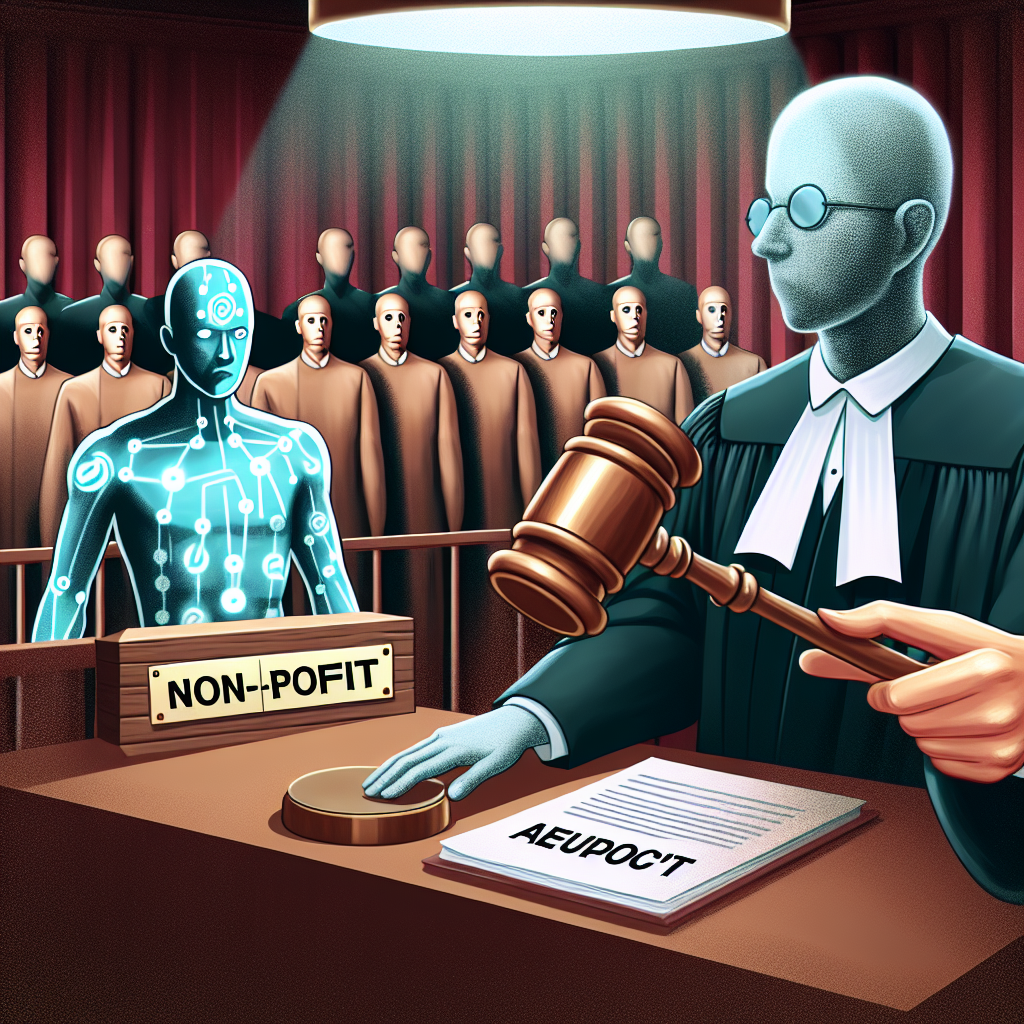
Musk’s Legal Challenge Thwarted: How OpenAI’s Transition to For-Profit Triumphs
In a riveting development at the intersection of technology and law, a court has recently turned down Elon Musk’s attempt to block OpenAI’s controversial transition from a non-profit to a for-profit organization. This decision marks a significant win for OpenAI and reflects the complex dynamics between business strategy and ethical AI development. In this article, we will delve into the roots of Musk’s challenge, the implications of the court’s decision, and what it means for the future of artificial intelligence.
The Genesis of the Conflict
Musk’s Vision vs. OpenAI’s Ambition
Elon Musk, co-founder of OpenAI and a crusader for responsible AI, has been a vocal critic of OpenAI’s shift to a for-profit model. Originally founded as a non-profit organization in 2015, OpenAI’s mission was clear: ensuring that artificial general intelligence (AGI) benefits all of humanity. Musk’s vision was anchored in transparency and wide accessibility. So when OpenAI announced its transition to a capped-profit model in 2019, Musk perceived it as a potential deviation from the original altruistic mission.
OpenAI’s Rationale for Transition
OpenAI, on the other hand, defended the move as a necessary evolution to acquire more funding and accelerate its ambitious AI projects. Such a transition would enable OpenAI to attract top-tier talent and access resources on par with tech giants like Google and Facebook. Sam Altman, CEO of OpenAI, stated:
"The capped-profit model strikes a balance between being able to raise capital and preserving the focus on delivering value to the world."
Court’s Decision: The Rejection of Musk’s Motion
Legal Battles and Their Turning Point
Musk’s legal team argued that the shift to a for-profit model compromised OpenAI’s foundational mission and could lead to prioritizing shareholder interests over ethical AI development. However, the court disagreed, citing insufficient evidence that the transition would inherently lead to negative outcomes.
Key Takeaways from the Court’s Judgement
- Balance of Interests: The court recognized OpenAI’s model as a hybrid structure that effectively balances profit with ethical oversight, thereby respecting both financial sustainability and core organizational values.
- Precedent for Tech Industry: This judgement may set a precedent for other tech organizations contemplating similar structural changes, showcasing a pragmatic approach to scaling operations without sacrificing ethical commitment.
- Implications for AI Governance: It underscores the importance of robust governance frameworks that can ensure AI technologies are developed and deployed in alignment with societal norms and regulations.
The Broader Context: AI Ethics and Corporate Governance
Navigating the Ethical Landscape
As AI technologies become more prevalent, their ethical implications have garnered increased scrutiny. Organizations like OpenAI are encouraged to adopt frameworks that include:
- Transparency in AI Development: Clear documentation and reporting of AI systems’ sources and methodologies.
- Inclusive AI: Creating systems that work equitably across diverse populations.
- Accountability Mechanisms: Establishing protocols to hold developers and organizations accountable for the impact of AI tools.
Corporate Strategy and AI Excellence
OpenAI’s transition reflects broader strategic trends in the tech industry, wherein:
- Attracting Capital is Key: Access to capital is critical for scaling AI research and development.
- Partnerships Enable Growth: Collaborations with technology giants can facilitate resource pooling and foster innovation.
- Talent Acquisition Drives Success: Competitive compensation helps in attracting top-tier talent essential for groundbreaking AI innovations.
Future Outlook: What’s Next for OpenAI?
Prospective Innovations
With the transition affirmed, OpenAI is poised to accelerate its groundbreaking projects. Anticipate advancements such as:
- State-of-the-art Language Models: Building on successes like the GPT series, new models promise more sophisticated natural language capabilities.
- Cross-disciplinary AI Applications: Applications that integrate AI with fields like healthcare, logistics, and environmental science hold transformative potential.
Challenges on the Horizon
Despite the court’s ruling, OpenAI faces challenges that must be navigated carefully:
- Maintaining Mission Integrity: Ensuring that profit motives do not overshadow ethical objectives.
- Regulatory Compliance: Adhering to evolving laws and standards, especially with increasing governmental oversight.
- Continued Stakeholder Engagement: Involving stakeholders in decision-making processes to ensure transparency and trust.
Conclusion: Defining an Era of Responsible AI Innovation
Elon Musk’s legal ski against OpenAI’s transition may be over, but it highlights ongoing discourse in AI ethics and corporate responsibility. As OpenAI moves forward within its for-profit model, it remains entrusted with guiding AI development harmoniously within societal frameworks. In doing so, OpenAI has the opportunity to redefine what it means to innovate responsibly, leaving a legacy of progress that bridges technology and humanity.
By understanding the breadth of this court case and its implications, stakeholders, policymakers, and citizens alike can participate more meaningfully in discussions about the future of AI, steering it toward a horizon where innovation and ethics coexist in balance.