
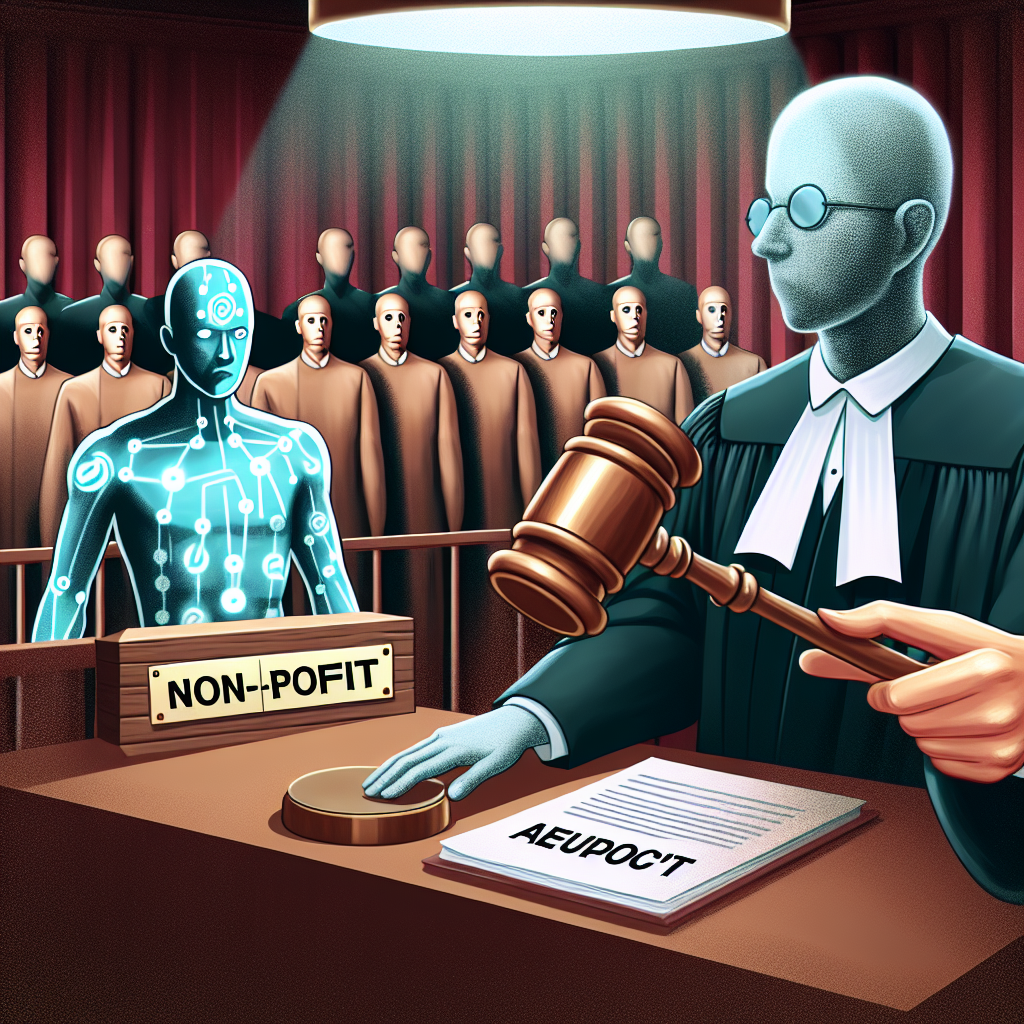
Elon Musk’s Legal Challenge Falls Short: OpenAI’s For-Profit Transition Gains Momentum
In a bold move, Elon Musk took to the courts in an attempt to halt OpenAI’s shift towards a for-profit model. As this legal battle unfolds, the implications for the tech industry and artificial intelligence (AI) research community are immense. This development raises questions about the ethical and economic considerations tied to AI, and challenges the dynamics of private influence in public domain technologies. This article delves into the nuances of the case, OpenAI’s transition strategies, and the broader impact on AI research and its ethics. Stay with us to uncover what this precedent-setting decision means for the future of AI.
The Background: Musk’s Concerns and OpenAI’s Transition
History of OpenAI
OpenAI was founded in December 2015 as a non-profit organization with a compelling mission: to ensure that artificial intelligence benefits all of humanity. Its founders included high-profile tech luminaries like Elon Musk, Sam Altman, and Greg Brockman. The core principle was to promote AI development in a safe and transparent manner, free from commercial pressures.
Musk’s Connection and Concerns
Elon Musk, a vocal advocate for AI safety, was integral to OpenAI’s founding. His initial multi-million dollar investments demonstrated a strong commitment to public welfare-driven AI research. However, as OpenAI inched towards a for-profit model in 2019, Musk publicly expressed apprehensions. Here are the primary concerns he voiced:
- Mission Drift: Fear that monetization might compromise OpenAI’s ethical principles and focus on promoting AI for universal good.
- Competition: Worries that the shift might foster a competitive stance with other tech giants like Tesla, which extensively uses AI.
- Existential Risks: Concerns that profit motives could accelerate uncontrolled AI advancements, vertically shifting priorities from safety measures.
OpenAI’s For-Profit Transition
Motivation for the Shift
In 2019, OpenAI announced a hybrid for-profit model, rightly titled "OpenAI LP," with a "capped profit" structure. The motivation behind this transition was based on a few pragmatic considerations:
- Scalability: The necessity of substantial funding to scale operations and undertake ambitious AI projects.
- Talent Acquisition: The increasing challenge of competing with tech giants for top-tier AI talent offered striking salary packages.
- Resource Optimization: Expanding computational resources required deeper financial backing, which profit-orientations could secure.
Structure – Understanding ‘Capped-Profit’
OpenAI’s shift to "OpenAI LP" is unique due to its "cap-profit" nature:
- Capped Returns: Investors can garner returns up to 100 times their original investment, after which the excess earnings revert into organizations focusing on public interests.
- Public Promise: OpenAI maintains a commitment to prioritizing safety and transparency, preserving its dedication to humanity’s welfare.
Legal Battle: Musk vs OpenAI
Musk’s Legal Stand
Elon Musk’s legal endeavor to impede OpenAI’s for-profit transition was driven by aforementioned concerns. His legal team argued that the transition contravened promises made to supporters and contributors at its inception. Key points included:
- Accountability: Claims of deviation from its founding mission of ensuring AI benefits all and maintaining transparency.
- Fiduciary Duties: Assertion that OpenAI’s transition disregarded fiduciary responsibilities towards donors and initial stakeholder agreements.
Court’s Counter-Arguments
The court’s decision to reject Musk’s attempt was anchored in legal grounding and strategic rationale:
- Structuring Legality: The hybridization into OpenAI LP was fundamentally legal and compliant with non-profit conversion norms.
- Stakeholder Consensus: Detailed documentation proved consensus among crucial stakeholders during the shift’s announcement, reflecting organically evolved strategic goals.
- Sustained Ethics: Reinforced commitment towards ethical AI advancement, propelling the community’s trust paradigm.
The Bigger Picture: Impact on AI Research and Ethics
Broader Implications
The court’s ruling and OpenAI’s transitioning journey bears potential transformations on several fronts:
- AI Accessibility: Potential increase in privately steered AI research, influencing the access versus innovation debate within AI technology sphere.
- Regulatory Narratives: Calls for updating or reevaluating legal frameworks governing AI, especially concerning ethical considerations in commoditizing AI advancements.
- Competitive Dynamics: Heightened competitive landscape leading to faster technological evolution, which might redefine AI project lifecycles and its proximity to commercial viability.
Ethical Dilemmas
With OpenAI transitioning towards profit-orientation, ethical dilemmas surface around:
- Transparency Loss: Concerns about openness in sharing AI research findings as commercial interests take precedence.
- Equity and Accessibility: Questions about maintaining global equitable access to advances powered by AI to ensure inclusive socioeconomic progress.
Conclusion: Future Trajectories
The court’s green light for OpenAI’s change raises pertinent conversations about the ethics of AI development, commercial opportunities, and public accountability. The decision to deny Musk’s attempt to block the transition marks a defining moment where pragmatic growth met ethical reflection. How OpenAI reconciles profit motivation with its benevolent roots remains to be seen, and it will be closely monitored by tech enthusiasts and industry peers alike.
Stay tuned as we actively track and discuss developments within the domain of artificial intelligence, offering timely insights and expert analysis.
Whether you’re an AI aficionado or a casual reader curious about tech’s latest trajectory, share your thoughts in the comments. Drop us a line, and engage with fellow like-minded enthusiasts in shaping tomorrow, today!