
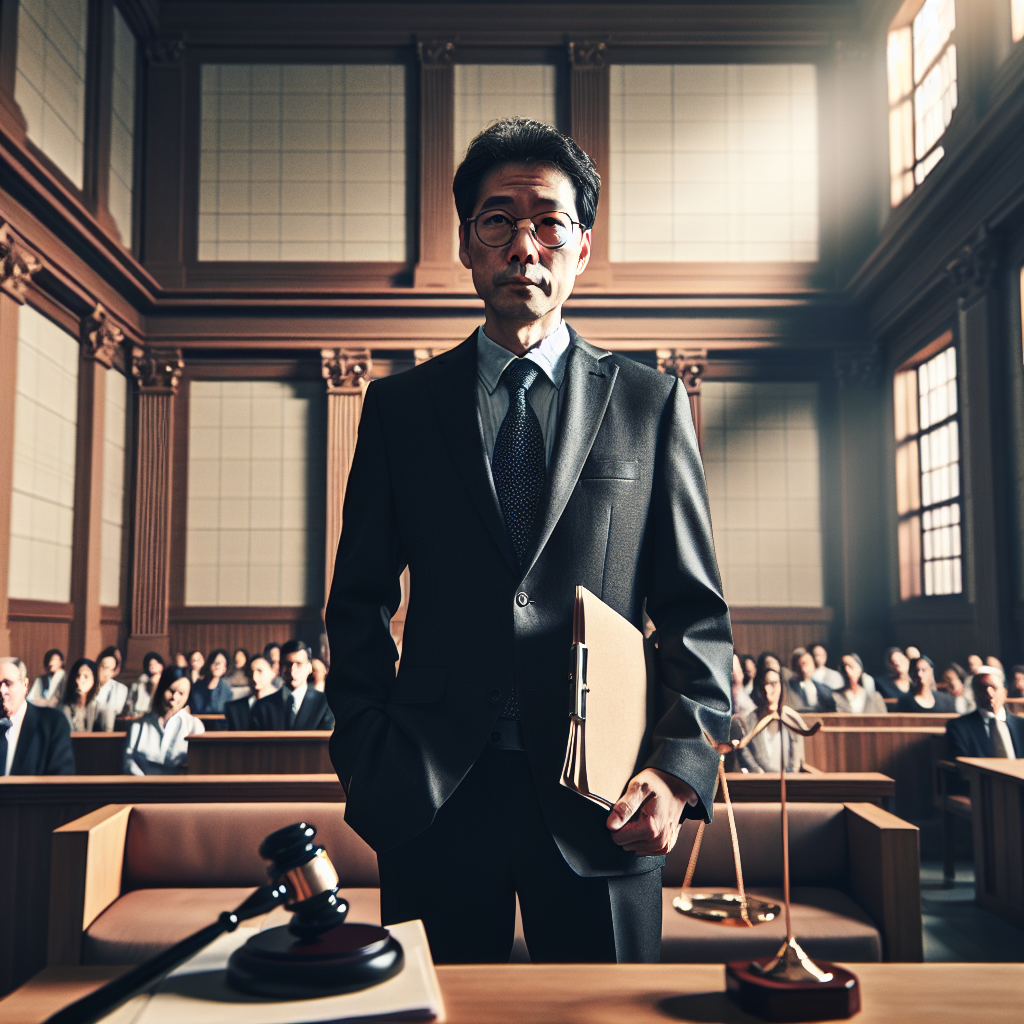
Former OpenAI Researcher Subpoenaed: Implications for AI and Copyright Laws
As artificial intelligence continues to advance at a breakneck pace, questions surrounding legalities and ethics have arisen, particularly concerning intellectual property rights. A recent legal battle has the AI community buzzing: a key ex-OpenAI researcher has been subpoenaed in a landmark AI copyright case. This incident is not just a legal spectacle but a meaningful event that could redefine how we view AI-created content under copyright law.
Introduction: The Intersection of AI and Copyright Law
Artificial intelligence systems like OpenAI’s GPT-3 have opened up an era of unprecedented creativity and innovation, automating tasks that once required a human touch. However, with such power comes significant responsibility—and legal challenges. Copyright law, which has stood the test of time in regulating human creativity, now faces scrutiny in the age of AI. How do we attribute ownership when a machine, not a human, produces creative work?
In this article, we delve into the recent subpoena of a former OpenAI researcher in a high-stakes copyright case. We examine the implications for the AI field and outline potential resolutions for future intellectual property rights debates.
The Landmark Case: An Overview
Background and Context
The case in question centers around an AI system that allegedly produced content strikingly similar to an existing copyrighted work. The court case has garnered attention due to its potential to set precedent. It poses the question:
- Who is the rightful owner of AI-generated content?
- Should credits go to the AI, its creators, or neither?
The subpoena of an ex-OpenAI researcher aims to uncover insights into the machine’s creation process—was it a mere algorithmic accident, or does it suggest a loophole in copyright protection?
The Ex-OpenAI Researcher’s Role
The subpoenaed researcher was instrumental in developing OpenAI’s machine learning models, which have been integrated into various applications. Their testimony could be crucial in understanding the intricacies of AI content generation.
- Insights may be drawn about how AI models are trained.
- Discussions around whether these models "learn" independently or follow the directives of their programming.
Implications for the AI Industry
Ethical Considerations
AI has the potential to revolutionize creative industries, but ethical concerns have been prevalent:
- Copyright Infringement: Can AI infringe on copyrights, or is it simply employing datasets it was trained on?
- Attribution: How can we ensure creators receive recognition, and how does this extend to AI?
Legal Outcomes and Possible Precedents
The legal community eagerly anticipates the outcome. Potential scenarios include:
- Affirmation of AI-generated content as copyrightable: This would necessitate a new category of copyright laws.
- Exclusion from traditional copyright protection: This would allow free use of AI-generated works and potentially stifle innovation.
Technical Underpinnings of AI and Copyright
How AI Generates Content
AI systems utilize deep learning algorithms that deconstruct existing material into data points, which allows them to produce new content:
- Natural Language Processing (NLP): Dominant in AI applications for text generation, analyzing human language, and structuring new compositions.
- Generative Adversarial Networks (GANs): Often used in visual and creative domains, allowing AI to generate art and other creative works from scratch.
The "Black Box" Problem
One challenge is the "black box" nature of AI decision-making, making it difficult to ascertain how outputs are derived:
- Understanding the reasoning behind AI’s decisions could be instrumental in establishing rightful ownership.
- The mystery surrounding these processes fuels the argument for or against AI content being uniquely "creative."
What’s Next? The Future of AI and Copyright
Policy and Regulation
Moving forward, policymakers may need to consider new regulations that:
- Define the rights of AI-generated work.
- Protect human creators from potential exploitation by AI systems.
The Role of Developers and Companies
Tech firms might need to:
- Implement transparent AI development practices.
- Ensure that AI systems are ethically and legally sound, aligning with existing copyright laws.
Conclusion: A Turning Point for AI and Copyright
The subpoena of the former OpenAI researcher highlights a pivotal moment in the evolution of AI and copyright jurisprudence. The consequences of this case extend beyond legal confines, potentially impacting creative professionals, tech companies, and the way society interacts with artificial intelligence. As AI continues to blur the lines between machine-generated content and human creativity, finding legal clarity becomes a priority for nurturing both innovation and respect for intellectual property.
The decision, expected to arrive later this year, is poised to be a keystone for future AI and copyright legislation. Whatever the outcome, it is a critical chapter in our digital age, shaping how AI will integrate into creative and commercial realms for years to come.