
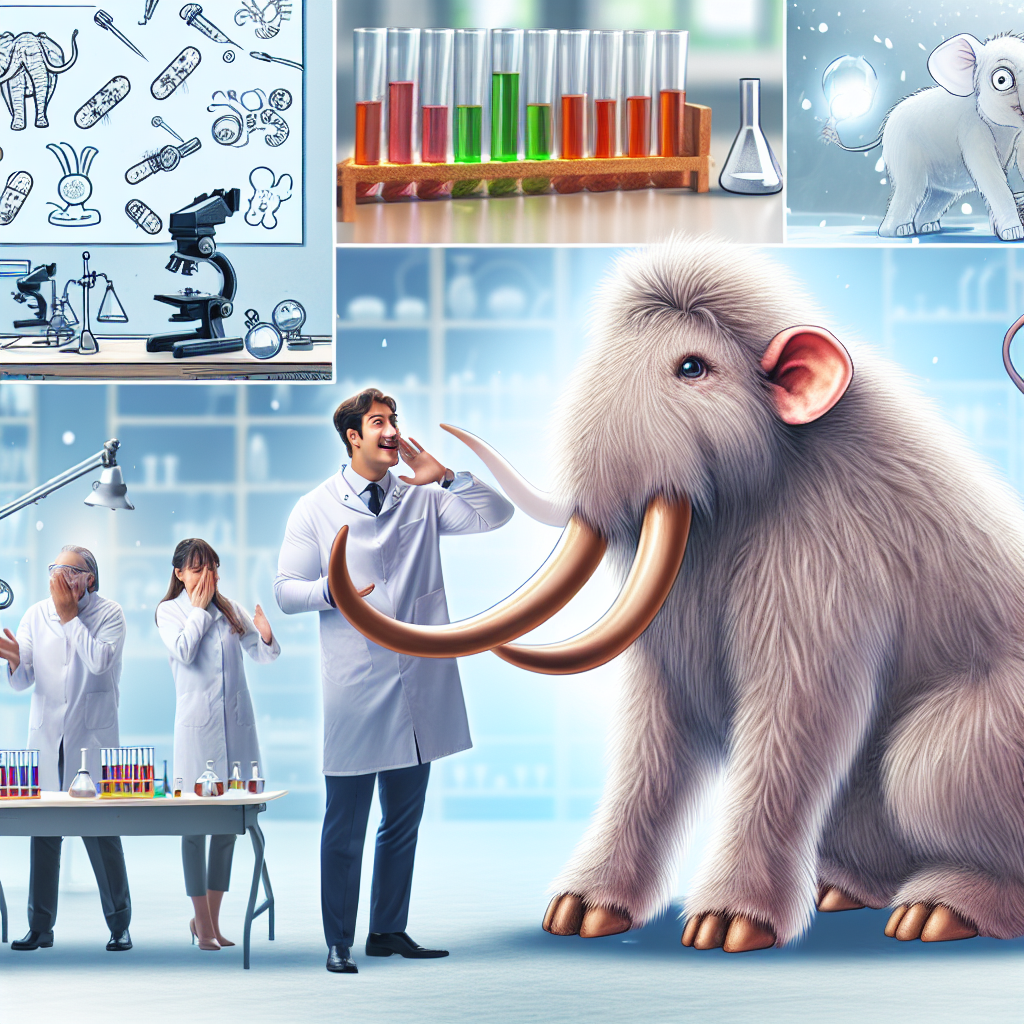
The Fascinating Breakthrough of Colossal Biosciences: From Woolly Mammoths to Woolly Mice
In recent years, the realms of science fiction seem to be creeping ever closer to reality. One of the most tantalizing scientific endeavors currently unfolding is the effort to revive extinct species, led notably by Colossal Biosciences. This groundbreaking company has set its sights on the majestic woolly mammoth, dreaming of a world where these majestic creatures once again roam the plains. But before that dream becomes a reality, they’ve taken an inventive step forward by successfully creating a "woolly mouse." This fascinating development opens a new chapter in the quest to bridge the past and present.
Understanding the Science Behind De-Extinction
The notion of de-extinction once belonged exclusively to the realm of fantastical tales. Today, it’s a thrilling, high-stakes field of study. But what makes the revival of an extinct species feasible? Here, we’ll break down the scientific elements powering this audacious venture.
The Concept of De-Extinction
At its core, de-extinction refers to the process of bringing back species that have been wiped off the face of the Earth. This doesn’t involve an exact resurrection but relies on genetic engineering and cloning technologies to recreate a close approximation.
- Genetic Recovery: Using preserved DNA from fossils or other remains, scientists reconstruct the genome of an extinct organism.
- Genome Editing: Employing technologies like CRISPR-Cas9, researchers edit the DNA of a closely related living species to approximate the extinct species.
- Cloning and Breeding: The edited genomes are introduced into living carriers, aiming for the birth of a new generation that mirrors the ancient species.
The Role of Woolly Mice
Given the enormous challenges involved in reviving a creature as large and complex as the woolly mammoth, why has Colossal Biosciences chosen to create a woolly mouse first?
- Proof of Concept: Creating a woolly mouse demonstrates the feasibility of implementing mammoth genes in living creatures.
- Technical Refinement: The process allows scientists to hone genetic engineering techniques on a smaller scale—essentially perfecting the approach before scaling up to larger species.
- Ethical and Practical Testing: Working with mice enables researchers to understand better the ethical concerns and physiological impacts involved in de-extinction.
The Journey of Colossal Biosciences
Colossal Biosciences stands at the forefront of the de-extinction movement. Co-founded by synthetic biologist George Church and entrepreneur Ben Lamm, this forward-thinking company embodies the fusion of cutting-edge science with daring visions for the future.
The Woolly Mammoth Project
The woolly mammoth stands as the crown jewel of Colossal Biosciences’ initiatives—a symbol of nature’s majesty and humanity’s potential to reconnect with lost wonders.
-
Why Mammoths?
- Conservation Efforts: Reviving mammoths may support the restoration of the Arctic tundra, helping regulate the Earth’s temperature.
- Scientific Curiosity: Understanding how to bring mammoths back can lead to breakthroughs in genetics, cellular biology, and ecology.
- Current Progress and Challenges:
- Genome Assembly: Over the years, researchers have successfully mapped the woolly mammoth’s genome.
- Hybrid Experiments: Asian elephants, close cousins to the mammoth, serve as the genetic starting point.
- Ethical Considerations: The project involves ethical questions around the ecological impact and the potential welfare of resurrected species.
The Woolly Mouse as a Milestone
The creation of a woolly mouse marks a pivotal experiment in this broader mission, highlighting both the methodical advancements and the broader aspirations of Colossal Biosciences.
The Science and Ethics of Genetic Resurrections
While the scientific community is captivated by the potential revival of mammoths, these endeavors raise significant ethical questions. Should we bring back extinct species merely because we can? Here are some crucial points to ponder:
Ecological Impact and Balance
Restoring extinct species could potentially disrupt existing ecosystems. Introducing mammoths requires careful consideration of how they fit into the current environment and their effects on other species.
- Rewilding: Can mammoths carve out a beneficial ecological niche, as intended in the Arctic?
- Biological Risks: The unforeseen consequences of introducing ancient creatures into modern ecosystems—are they manageable?
Conservation and Biodiversity
Does the focus on de-extinction shift attention and resources away from protecting endangered living species?
- Resource Allocation: Weighing the costs and benefits of reviving extinct species versus supporting existing wildlife.
- Biodiversity Mock-Ups: The attempt to restore a species’ role in ecosystems by alternative, non-genetic means.
Advancement of Genetic Technologies
Developing techniques for de-extinction has the potential to lead to groundbreaking advances in genetic engineering that benefit both conservation and medicine.
- Gene Therapy: Applying CRISPR can advance treatments for genetic diseases, potentially saving countless lives.
- Bioscience Innovations: New genetic techniques arising from these experiments can find applications across various scientific fields.
The Future of De-Extinction: Opportunities and Desirability
As we stand on the brink of possible mammoth resurrections and other naturo-technological marvels, it’s crucial to consider where this journey leads. The excursions into de-extinction present both powerful opportunities and challenging dilemmas.
Opportunities Await
- Ecological Restoration: Revived species may help restore balance in threatened ecosystems, providing ecological services that benefit biodiversity.
- Scientific Insights: The capability to reverse-engineer life offers unparalleled insights into genetics, evolution, and systems biology.
- Cultural and Educational Impacts: Spectacle and interest derived from these breakthroughs can drive public engagement with science and conservation efforts.
Gauging Desirability
While opportunity abounds, carefully gauging the desirability of de-extinction efforts is crucial. As stewards of the Earth, it’s humanity’s responsibility to assess the long-term effects, avoiding unintended consequences that could arise from tinkering with nature.
- Ethical Governance: Multidisciplinary discourse on the ethical implications, involving scientists, ethicists, and policymakers.
- Public Reasoning: Transparent public discussion on pros and cons, welcoming diverse perspectives in decision-making.
Closing Thoughts: Where Curiosity and Responsibility Converge
The journey of Colossal Biosciences from the woolly mammoth to the woolly mouse signifies a remarkable convergence of scientific curiosity and challenging responsibility. As the world watches with bated breath, it becomes increasingly clear that the roadmap to de-extinction is as much about discovering new worlds as it is about reshaping our own. As we blaze these new trails, the footprints we leave behind must be deliberate, informed, and in harmony with both nature and the future we aspire to create.