
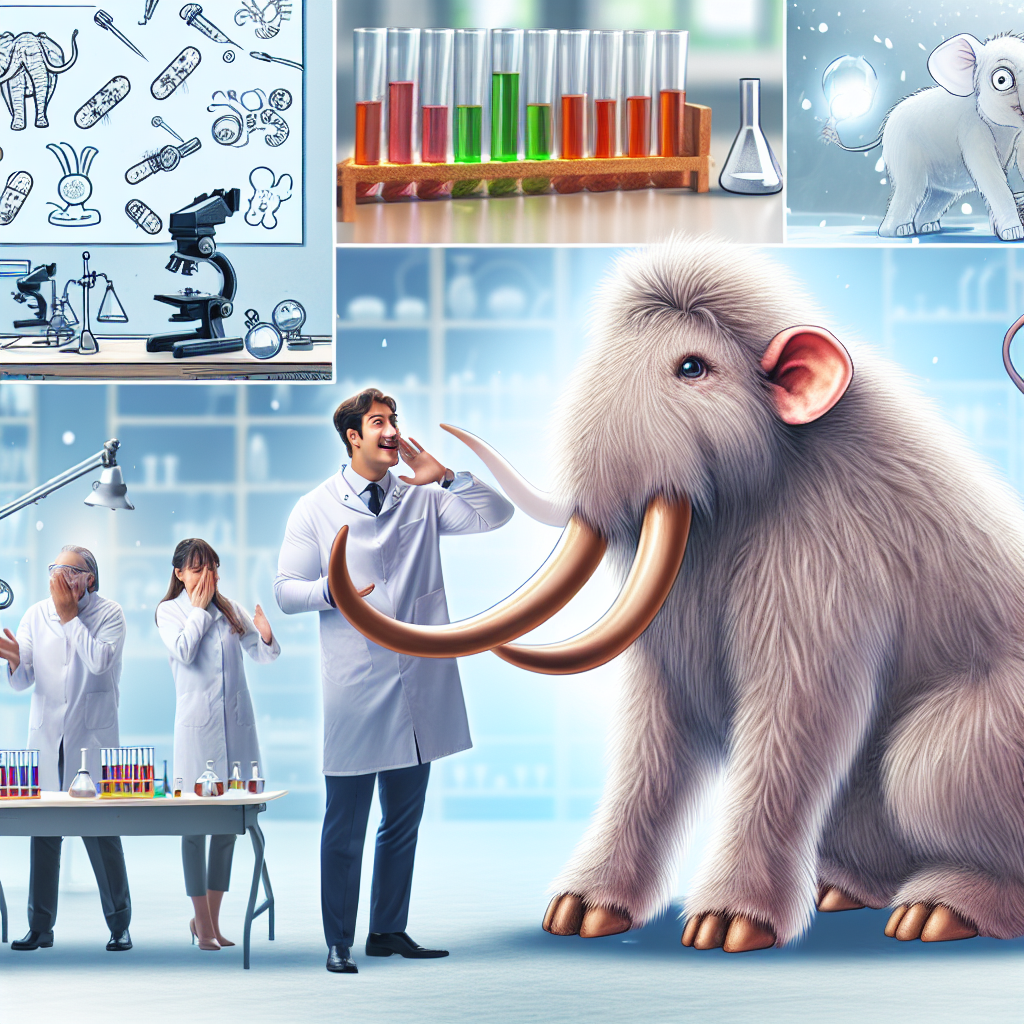
The Remarkable Journey of Colossal Biosciences: From Woolly Mammoths to Woolly Mice
In a world where technology and science continually push the boundaries of what seems possible, the ventures into genetic resurrection stand out as particularly fascinating. At the forefront of this cutting-edge exploration is Colossal Biosciences, a company that dares to dream big by attempting to bring the ancient woolly mammoth back to life. In this thrilling journey toward de-extinction, the groundbreaking creation of the "woolly mouse" serves as a pivotal milestone. This article delves deep into this journey, unraveling the scientific intricacies, ethical debates, and potential impacts on science and ecology.
The Vision: Breathing Life into Ancient Giants
Understanding De-Extinction
De-extinction, as a concept, involves bringing extinct species back to life through advanced genetic engineering techniques. The woolly mammoth, a creature that roamed the Earth thousands of years ago, has become an emblem of this bold quest. But why revive the woolly mammoth?
- Ecological Reasons: Potential role in combating climate change by restoring ancient ecosystems.
- Scientific Curiosity: Uncovering evolutionary mysteries and understanding prehistoric life.
- Technological Advancements: Pushing the limits of genetic technology and synthetic biology.
Meet Colossal Biosciences
Founded by visionary entrepreneurs, Colossal Biosciences has positioned itself as a leader in the de-extinction field. With a mission that intertwines technological prowess and ecological restoration, the company aspires to create significant scientific breakthroughs and foster a greater understanding of our planet’s deep history.
From Theory to Practice: The Birth of the Woolly Mouse
The Science Behind the Woolly Mouse
Creating a "woolly mouse" is both a scientific marvel and a stepping stone toward the ultimate goal of reviving the woolly mammoth. It involves several sophisticated techniques:
- CRISPR Technology: Utilizing the CRISPR-Cas9 system to modify and insert woolly mammoth genes into living mice DNA.
- Gene Sequencing and Editing: Analyzing the woolly mammoth genome and identifying key traits for cold resistance and physical characteristics.
- Synthetic Hybridization: Creating a genetic hybrid to study the expression of specific genes in a controlled environment.
Why a Woolly Mouse?
The creation of a woolly mouse serves several critical purposes:
- Proof of Concept: Demonstrating that mammoth DNA can be successfully integrated and expressed in a modern creature.
- Research Tool: Providing a model to study gene function and expression linked to cold adaptation.
- Ethical Testing Ground: Addressing potential ethical and ecological impacts in a controlled, scalable manner.
Breakthroughs and Challenges
This innovation does not come without its hurdles:
-
Technical Challenges:
- Perfecting gene-editing techniques and ensuring genetic stability.
- Ensuring the health and viability of genetically modified organisms.
- Ethical Debates:
- Discussing the moral implications of bringing extinct species back to life.
- Considering the welfare of modified creatures.
The Impact: Beyond Science Fiction
Ecological Implications
The introduction of organisms with ancient genetic traits, like the woolly mouse, could have significant ecological consequences. Some potential impacts include:
- Ecosystem Restoration: Reintroducing key species to restore balance to current ecosystems.
- Climate Change Mitigation: Potentially aiding in the restoration of tundra ecosystems that have been disrupted by climate change.
Ethical Considerations
With great power comes great responsibility. The ethical discourse surrounding de-extinction is complex and multifaceted:
- Animal Welfare: Ensuring ethics and welfare standards are met for genetically engineered animals.
- Environmental Risks: Assessing the potential environmental impact of introducing de-extinct species.
Philosophical Reflections
- Human Responsibility: Considering humanity’s role as caretakers or meddlers in nature.
- Evolutionary Impact: Exploring how reintroduced species may influence current evolutionary paths.
Embracing the Future: What Lies Ahead?
Colossal’s Future Endeavors
Moving forward, Colossal Biosciences has several ambitious plans:
- Scaling Genetic Research: Enhancing genomic editing techniques for application across diverse extinct and endangered species.
- Collaborative Efforts: Partnering with governments, researchers, and conservationists worldwide to maximize ecological benefits.
- Public Engagement: Increasing transparency and education to foster widespread understanding and support.
Broader Implications for Biotechnology
The success of projects like Colossal’s holds vast implications for the broader field of biotechnology:
- Medical Advances: Utilizing gene-editing breakthroughs for disease treatment and prevention.
- Conservation Strategies: Applying genetic interventions to aid endangered species conservation.
Conclusion: Toward a World with Ancient Echoes
The journey to revive the woolly mammoth and the creation of the woolly mouse reflect the incredible intersection of innovation, ambition, and caution that characterizes modern science. As Colossal Biosciences continues its ventures, it leaves a trail of questions and possibilities: What other ancient relics of our past can we bring back? How will these actions shape our future?
In this dance between past and future, science and ethics, technology, and nature, the mission to resurrect the woolly mammoth stands not just as a testament to scientific progress, but as a call to ponder the broader implications of our ever-evolving capabilities. The woolly mouse is more than just a scientific achievement; it’s a symbol of humanity’s enduring quest to reconnect with nature’s bygone giants.
As these initiatives unfold, one can only hope that each step taken is filled with humanity’s wisdom, curiosity, and respect for the intricate web of life that binds us all to our shared Earthly heritage.