
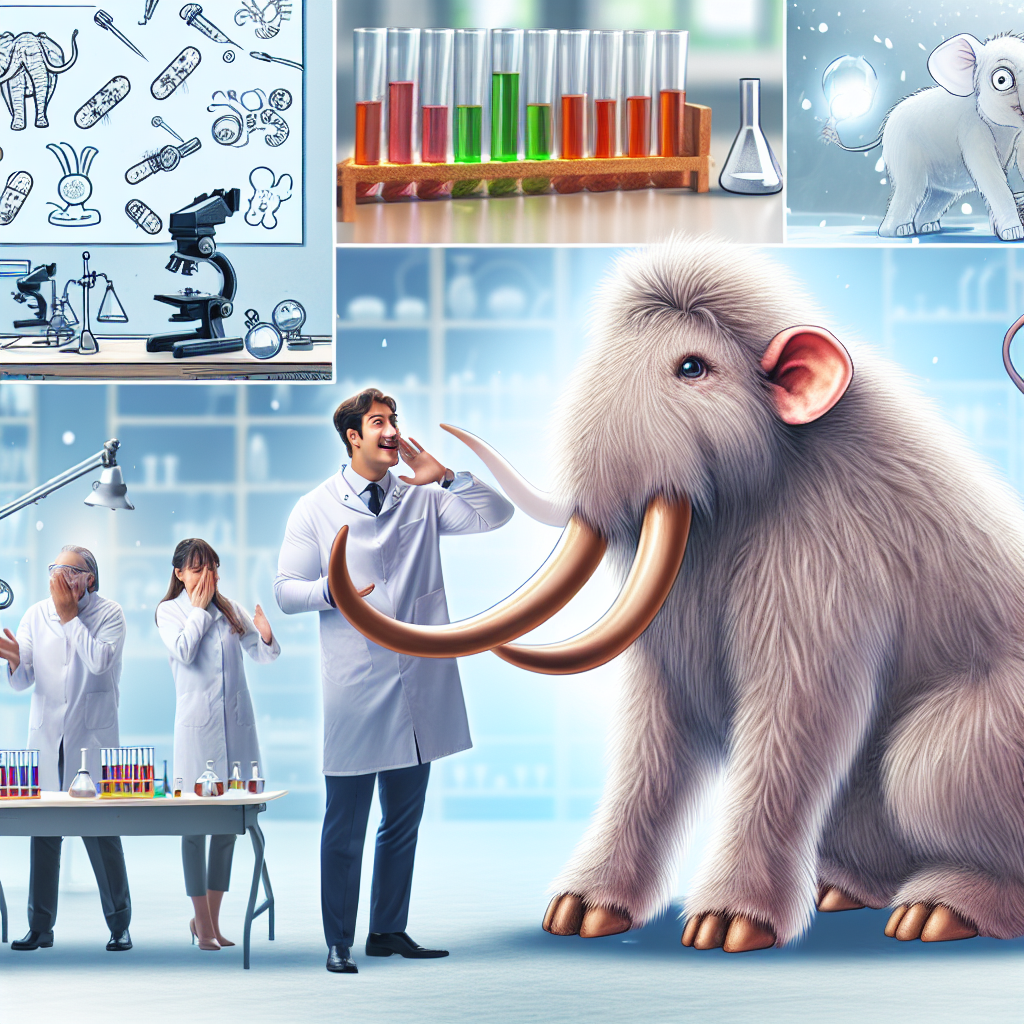
From Mammoths to Mice: Inside Colossal Biosciences’ Bold Experiment
Introduction: Breathing Life into Ancient Giants
Imagine standing in a tundra, the chill of the air biting at your skin, and hearing the distant trumpeting of a woolly mammoth – a creature not seen on this Earth for thousands of years. This scenario might sound like science fiction, but it could be closer to reality than you think, thanks to the audacious efforts of Colossal Biosciences. The company, on its groundbreaking mission to revive the woolly mammoth, has recently made headlines for creating a "woolly mouse." This intriguing milestone in the field of de-extinction raises questions and sparks wonder about the future of genetic engineering and its implications for biodiversity and climate change.
Let’s delve deeper into what this historic endeavor entails and what it could mean for science and the planet.
The Vision of Colossal Biosciences
Founded by visionary entrepreneur Ben Lamm and renowned geneticist George Church, Colossal Biosciences is an ambitious venture committed to a dual mission: the resurrection of extinct species and the rejuvenation of endangered or threatened animals. The company’s flagship project? The resurrection of the woolly mammoth, an animal believed to have roamed the Earth as recently as 4,000 years ago.
Objectives:
- Reviving Extinct Species: Using advanced genetic engineering to bring back animals lost to history.
- Ecosystem Restoration: Restoring habitats through the reintroduction of key species, believing that woolly mammoths can help rejuvenate the Arctic tundra.
The Breakthrough: Creation of a Woolly Mouse
Colossal Biosciences’ recent success in creating a "woolly mouse" marks a significant step towards their ultimate goal. But what exactly is a woolly mouse, and why is it notable?
What is a Woolly Mouse?
- Genetic Engineering: The "woolly mouse" is a genetically modified mouse carrying woolly mammoth genes.
- Purpose: It serves as a small-scale model to test the viability and safety of introducing woolly mammoth genes into living organisms.
How They Did It
Gene Editing Tools:
- CRISPR-Cas9 Technology: The same revolutionary technology used in human gene editing is applied here to splice woolly mammoth DNA sequences into a living mouse genome.
Gene Selection:
- The focus is on genes related to:
- Cold Adaptation: Creating physiological traits, such as fat storage and fur density, suitable for cold environments.
- Woolly Traits: Enhancing features typical of a woolly mammoth, aiming eventually for increased body size and cold tolerance.
Implications of Woolly Mouse Creation
Ethical Considerations
Reviving extinct species isn’t just a scientific challenge; it’s also an ethical one, prompting discussions around:
- Biodiversity Balance: Could reintroduced species disrupt current ecosystems?
- Animal Welfare: What are the rights and welfare considerations for newly engineered life forms?
Scientific and Environmental Benefits
- Biodiversity Enhancement: Potential to reintroduce crucial species dynamics to modern ecosystems.
- Climate Impact: Mammoths could theoretically combat climate change by:
- Flattening snow, allowing colder air to permeate the ground and maintaining permafrost.
- Encouraging growth of grasslands that reflect sunlight effectively.
Possible Technological Advancements
The project could:
- Spur advancements in genetic engineering techniques.
- Offer insights into gene therapy and approaches for overcoming species extinction, which may have applications in conserving current endangered species.
The Road Ahead: A Journey from Mice to Mammoths
While the creation of a woolly mouse is a remarkable stepping stone, there’s still a long road before we see revived woolly mammoths traversing tundra landscapes.
Challenges:
- Scaling Up: Moving from a mouse to a mammoth involves complex biological hurdles.
- Embryo Creation: Developing a viable woolly mammoth embryo that can be successfully implanted and gestated in a surrogate.
Future Prospects:
- Live Births: Projected timelines for the birth of live mammoths continue to be the subject of intense research and development within Colossal Biosciences.
Conclusion: Mammoth Beginnings
Colossal Biosciences’ endeavor is more than a quest to clone extinct species; it’s about using modern science to reshape the past and potentially rebalance our future. As the woolly mouse sets the stage, we stand on the precipice of monumental advancements in genetics, environmental preservation, and ethical science.
The journey from mice to mammoths isn’t just about understanding what once was, but about fostering what could be – where lost giants roam once more and our ecosystems thrive anew. Stay tuned, as this is just the beginning of an incredible mammoth quest!
In the ever-evolving field of de-extinction and biological innovation, the woolly mouse stands as a symbol of hope and the incredible potential of science to change our world. What are your thoughts on this revolution? Could we truly see mammoths return, and if so, what will it mean for our planet? The conversation continues.