
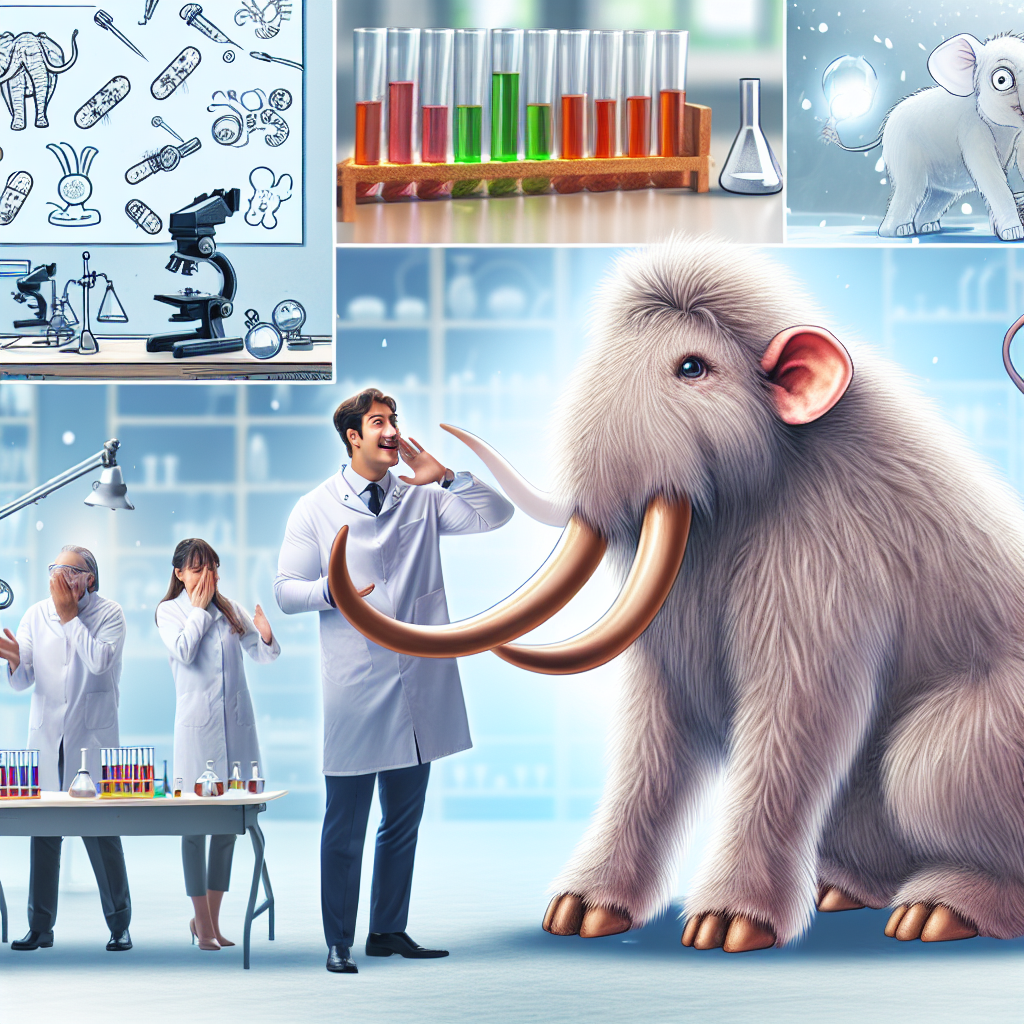
Bringing Back the Beast: How Colossal Biosciences Is Using the Woolly Mouse to Pave the Way for Woolly Mammoths
In an era where technology meets biology, Colossal Biosciences is steering the future towards a revolutionary path by resurrecting prehistoric species. The Dallas-based company has garnered significant attention for its ambitious goal to bring back the woolly mammoth. However, a pivotal stride in this journey involves an unexpected creature—the woolly mouse. This fascinating development is as much a scientific breakthrough as it is a statement of intent for the future of genetic engineering and conservation.
The Dream of Reviving the Woolly Mammoth
The majestic woolly mammoth roamed our planet thousands of years ago. Its extinction, primarily caused by climate change and human activity, left an indelible mark in the history of biodiversity. Today, Colossal Biosciences is not just dreaming of a mammoth comeback but actively engineering this possibility.
Why Woolly Mammoths?
Ecosystem Restoration
Bringing back the woolly mammoth isn’t merely about resurrecting a species for thrill or curiosity. One of the driving factors behind this ambition is the potential ecological benefits.
- Permafrost Preservation: Mammoths played a crucial role in maintaining the Arctic permafrost. Their return could slow down permafrost melting, which contributes significantly to climate change.
- Ecosystem Engineers: These giant herbivores could help restore grasslands by trampling and consuming large amounts of vegetation, fostering biodiversity.
The Role of CRISPR Technology
Colossal Biosciences leans heavily on CRISPR-Cas9 gene-editing technology to accomplish what once seemed impossible. The crux of resurrecting an ancient species lies in the DNA, which the company intends to reconstruct using CRISPR, coupled with the genome of the closest living relative—the Asian elephant.
Creating the Woolly Mouse: A Milestone
Before jumping to the mammoth, scientists needed a model closer to reality—hence the creation of the woolly mouse. Here’s why this is a monumental step:
Understanding the Woolly Mouse
The woolly mouse is essentially a laboratory mouse embedded with woolly mammoth genes. This smaller, more manageable experiment serves as a proof-of-concept that mammoth genes can produce viable and living offspring.
Steps in the Creation of a Woolly Mouse:
- Gene Identification: Scientists first identified genes responsible for the mammoth’s unique features such as cold-resistant fur and thick fat layers.
- Gene Editing: Using CRISPR, these genes were meticulously spliced into the genome of a lab mouse.
- Breeding and Observation: The outcome was a modified mouse that exhibits mammoth traits, critical for understanding how these genes express and function.
Implications of the Woolly Mouse
- Validation of Genetic Constructs: The successful birth of woolly mice validates genetic constructs, increasing confidence in using the same technology for larger species like elephants.
- Ethical and Safety Assessment: Observations of these mice help researchers anticipate potential problems in larger animals, including health impacts and longevity.
- Public Engagement and Transparency: Sharing the woolly mouse’s progress with the public aids in gathering community support and mitigating ethical controversies.
The Road Ahead: Challenges and Opportunities
Creating a woolly mammoth involves myriad challenges beyond genetics. Critical examination reveals both avenues to traverse and hurdles to overcome.
Primary Challenges
- Biological Limitations: Scaling from a mouse to an elephant involves complex biological systems whose interactions aren’t entirely understood.
- Ethics and Legality: The ethical implications of de-extinction are under scrutiny. Regulations governing genetic modification of such a scale are still evolving.
- Environmental Concerns: Potential unintended consequences of reintroducing a prehistoric species into modern ecosystems need thorough analysis.
Opportunities for Innovation
- Conservation Technology: Techniques developed here can elevate wildlife conservation strategies for endangered species.
- Climate Change Mitigation: Success could herald a new era in utilizing genetic technology to combat global climate challenges.
- Scientific Advancements: Pioneering methods in genetics, biology, and ecology set a foundation for future biotechnological innovations.
Conclusion: A Step Toward a Prehistoric Renaissance
Colossal Biosciences’ project, punctuated by the creation of the woolly mouse, marks a pivotal leap in the field of genetic science. While we are still far from the Tundra-resurrected landscape populated by mammoths, the progress made with model organisms like the woolly mouse hints at what the future may hold—an era where extinct species once again tread the Earth, balancing ecosystems and inspiring awe.
As this field continues to evolve, one can only imagine the scope of what’s possible. Whether it’s about correcting past mistakes or driving humanity toward a new scientific frontier, projects like these fine-tune the harmony between innovation and tradition—reassessing our role in nature’s grand tapestry.
Stay tuned as the journey of genetics and bioengineering advances further, holding the potential to redefine life as we know it.