
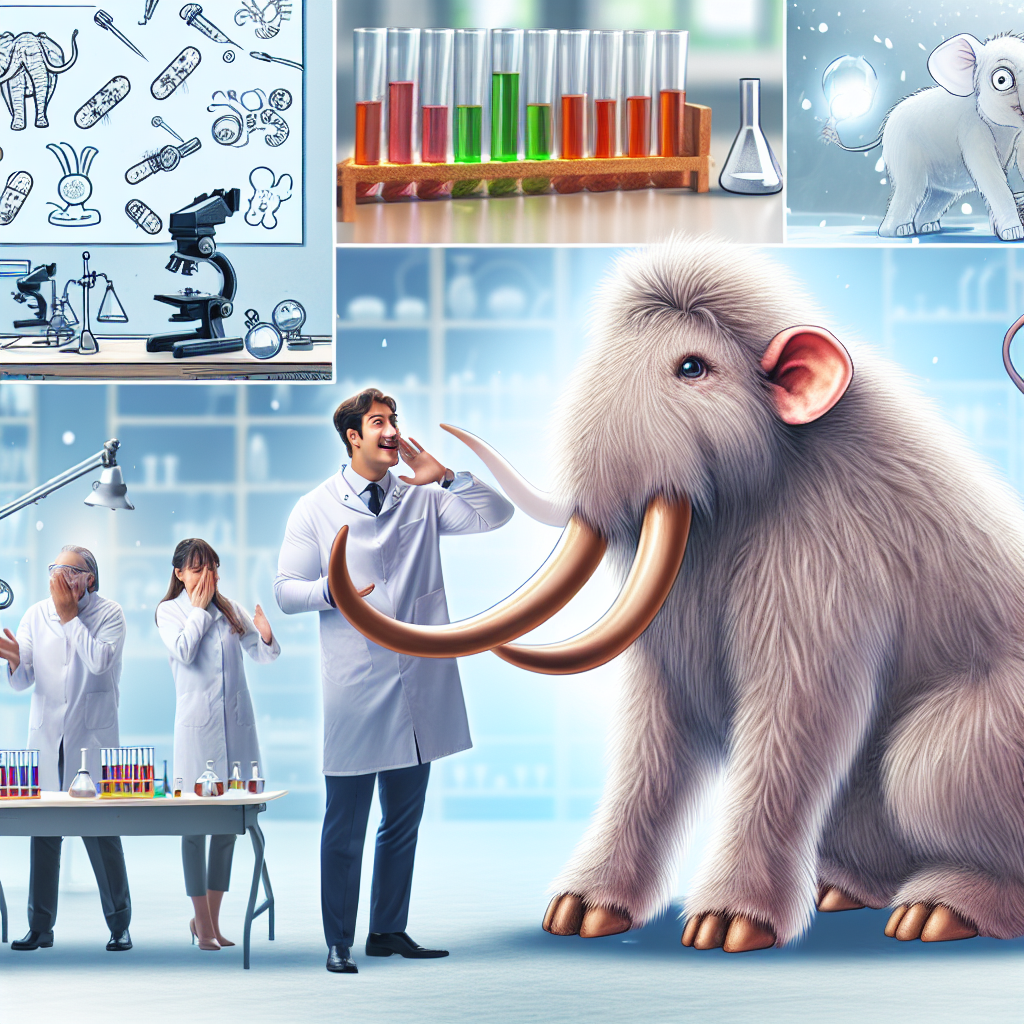
The Marvel of Science: Colossal Biosciences’ Journey to Resurrect the Woolly Mammoth Begins with a Woolly Mouse
In an age where technology and science have broken countless boundaries, one company is pushing the limits of what’s possible by reaching back in time. Colossal Biosciences, a team of pioneering scientists and technologists, has embarked on an ambitious mission to bring the extinct Woolly Mammoth back to life. But before these giants can roam the Earth once more, the journey begins with a humble creature—the Woolly Mouse. This tale is a fascinating blend of genetic engineering, paleontology, and ethical questions, wrapped around a company with an audacious vision.
Colossal Biosciences: The Innovators on the Frontier of De-Extinction
Founded with the vision to advance the field of synthetic biology, Colossal Biosciences aims to genetically re-engineer the DNA of extinct species. Their main goal? To combat climate change by restoring depleted ecosystems and biodiversity. Here’s how Colossal Biosciences plans to achieve such a Herculean task:
- Gene Editing Technology: Utilizing CRISPR-Cas9, a modern gene-editing tool, scientists can modify specific genes within the DNA structure.
- Preserved DNA Samples: Ancient DNA from well-preserved woolly mammoth carcasses provides the genetic blueprint needed for the revival.
- Elephant Surrogates: The Asian elephant, being the closest living relative, serves as the surrogate species to birth hybrid creatures.
The Creation of the Woolly Mouse: A First Success
Why Start with a Mouse?
Embarking on such a novel scientific journey demands a smaller, manageable test subject, and that subject is the Woolly Mouse. Here’s why the mouse was chosen:
- Short Reproductive Cycles: Mice have quicker generational turnover, allowing for rapid observation of effects across generations.
- Genetic Compatibility: Mice also serve as common models in genetic experiments due to their manageable genome and similarity to mammalian biology, making them suitable for testing gene-editing techniques.
How Was the Woolly Mouse Created?
The creation of the Woolly Mouse involved intricate processes in genetic science:
- Extraction of Mammoth DNA: Scientists first had to sort usable DNA from woolly mammoth remains.
- CRISPR Editing: Precise gene-editing techniques were employed, replacing sections of a regular mouse’s DNA with mammoth DNA.
- Selective Breeding: These engineered mice were then bred, selecting for ‘woolliness’ and other mammoth traits over successive generations.
The result is a mouse with phenotypic characteristics reminiscent of its long-lost ancestor, signifying a small, yet profound, step towards the return of the mammoth.
The Larger Picture: Why Revive the Woolly Mammoth?
Resurrecting the woolly mammoth goes beyond the bounds of scientific curiosity—it presents ecological and ethical implications.
Ecosystem Benefits
- Permafrost Preservation: Woolly mammoths contribute to the upkeep of grasslands and boreal forests, which in turn help to maintain permafrost and prevent greenhouse gas release.
- Biodiversity Enhancement: Restored populations can help maintain and balance ecosystems, encouraging growth and health of various species.
Ethical Considerations
- Genetic Manipulation and Welfare: Concerns linger on the welfare of created beings and their capacity to thrive in current ecosystems.
- Environmental Impact: Introducing a genetically engineered species needs careful study to prevent unwanted ecological consequences.
What Lies Ahead for Colossal Biosciences
Potential Challenges
- Technical Hurdles: Despite current advancements, overcoming the complexity of extinct species’ DNA remains daunting.
- Public Perception: Addressing public concerns and forming ethical norms for de-extinction efforts is crucial for societal support.
Future Plans
- Further Genetic Advances: Continued improvement in genetic tools will pave the way for better engineering outcomes.
- Field Testing and Ecological Trials: Assessments will be undertaken in controlled environments before introducing the species into wild habitats.
- Building Collaborative Missions: Garnering support from global institutions to reinforce the ethical framework around de-extinction.
Conclusion
The journey from a Woolly Mouse to a Woolly Mammoth encapsulates a story of resilience, innovation, and hope against the backdrop of scientific ingenuity. While the path is strewn with challenges—both ethical and technical—the potential benefits are equally remarkable. With Colossal Biosciences steering this ambitious quest, the world stands poised at the brink of reviving lost natural riches. The Woolly Mouse may just be a small stride, yet it heralds an era where science might closely knit the frail tapestry of Earth’s biodiversity back together.
Join us in this journey! Stay tuned to see if and how Colossal Biosciences will turn this dream into a vivid reality—or challenge what we perceive as possible.