
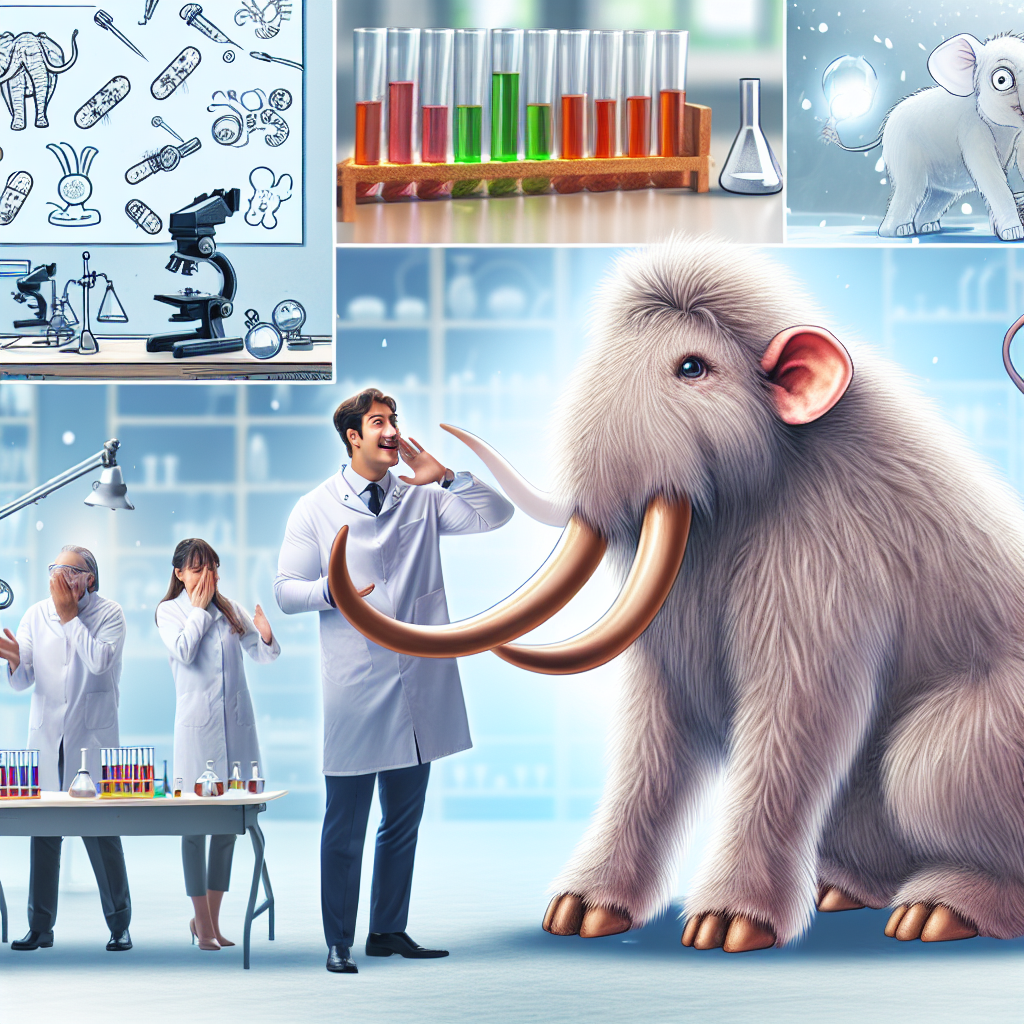
Unearthing the Past: How Colossal Biosciences is Resurrecting the Woolly Mammoth with a ‘Woolly Mouse’
Imagine a world where extinct creatures like the woolly mammoth once again roam the Earth, their colossal figures gracing the landscapes that were once their homes. This seemingly fantastical vision is inching towards reality thanks to the pioneering efforts of Colossal Biosciences. At the heart of this scientific adventure is a unique creation – the ‘woolly mouse.’ But what exactly is a woolly mouse, and how does it tie into the grand quest of reviving the woolly mammoth? Let’s dive in to explore this fascinating journey of de-extinction and cutting-edge genetic engineering.
The Ambitious Quest to Revive the Woolly Mammoth
Colossal Biosciences, an innovative company dedicated to de-extinction, has embarked upon a mission that intertwines genetics and conservation in a radical manner. The organization aims to resurrect the woolly mammoth, a majestic creature lost to extinction thousands of years ago, with bold plans to achieve this monumental feat using state-of-the-art genetic technologies.
Who are Colossal Biosciences?
Colossal Biosciences is a biotech company founded by visionary entrepreneurs and scientists, including George Church, a renowned geneticist. The company is at the forefront of de-extinction technology, utilizing advanced techniques in genetic engineering to bring back extinct species, starting with the woolly mammoth.
- Visionary Leadership: Helmed by experts in genetics and biotechnology.
- Cutting-edge Technology: Pioneering CRISPR and other gene-editing tools.
- Environmental and Cultural Goals: Hopes to restore ancient habitats and promote scientific curiosity.
Why Revive the Woolly Mammoth?
Bringing back the woolly mammoth is not just about turning back time; it’s a strategic endeavor with profound implications for biodiversity and environmental conservation.
- Ecosystem Restoration: These giant herbivores can transform landscapes, promoting the growth of grasslands over forests, which can help combat climate change.
- Scientific Discovery: Provides breakthroughs in genetic technologies that could be applied to conservation efforts for endangered species.
- Public Engagement: Inspiring interest and awareness about biodiversity and conservation issues.
What is a ‘Woolly Mouse’?
In the journey to the woolly mammoth resurrection, the ‘woolly mouse’ plays a crucial role. Essentially, the woolly mouse is an intermediate step and a proof of concept that validates the genetic techniques necessary for the de-extinction process.
The Genetic Engineering Marvel
The woolly mouse isn’t your typical rodent. It’s a genetically modified mouse that has been engineered to express certain genes of the woolly mammoth, particularly those responsible for cold adaptation.
Features of the Woolly Mouse:
- Cold Adaptation Genes: Includes genes that control humptial fat, thick fur and other adaptations.
- Feasibility Study: Demonstrates successful integration of extinct genes into a living organism.
- Scientific Benchmark: Provides a testing ground for further genetic engineering endeavors.
Why Start with a Mouse?
Mice are ideal for genetic experiments because they reproduce quickly and have a well-mapped genome similar to other mammals. Starting with a mouse allows scientists to test and refine their genetic engineering techniques in a controlled, scalable way.
- Ethical Considerations: Lower ethical concerns compared to larger species.
- Research Efficiency: Short generation times and ease of handling.
- Predictive Model: Informs how mammoth genes might react in a mammalian body.
The Science Behind De-Extinction
Colossal Biosciences relies heavily on groundbreaking genetic engineering techniques to breathe life back into extinct species. Let’s delve into the science that makes de-extinction possible.
CRISPR and Gene Editing
CRISPR (Clustered Regularly Interspaced Short Palindromic Repeats) is a revolutionary tool that enables precise editing of DNA, which is crucial for de-extinction projects.
Role of CRISPR:
- Precision: Allows specific editing of target mammoth genes into the elephant genome.
- Efficiency: Speeds up the process of genetic modification significantly.
- Versatility: Can be applied to a wide range of species and genetic challenges.
Creating Living Genetic Tapestries
Through extensive study and comparison of woolly mammoth and Asian elephant genomes, scientists identify key genes responsible for distinct mammoth traits. These traits are then introduced into the genome of a living relative, like the Asian elephant, using CRISPR.
Key Genetic Traits:
- Cold Resistance: Thick fur, subcutaneous fat and adaptations for arctic environments.
- Size and Strength: Modifications for the large, robust structure of mammoths.
- Social Structure: Genetic traits that dictate herd behavior and social dynamics.
Ethical Implications and Environmental Impact
The effort to revive the woolly mammoth is not without ethical and environmental considerations. It’s crucial to discuss the broader implications of de-extinction efforts.
Ethical Concerns
- Genetic Integrity: Ensuring that the genetic modifications do not compromise the health of the resulting creatures.
- Animal Welfare: Prioritizing the well-being of all animals used in research.
- Scientific Boundaries: Balancing innovation with ethical responsibilities in genetic engineering.
Environmental Impact
- Ecosystem Balance: Understanding the long-term effects on existing ecosystems and biodiversity.
- Climate Mitigation: Contributions to combating climate change through altered grazing patterns.
- Conservation Synergy: Complementing traditional conservation methods with groundbreaking technologies.
The Future: Reviving More Extinct Species
Colossal Biosciences has grand plans beyond the woolly mammoth. Their sights are set on bringing back other species that have vanished, using the same technologies refined through their woolly mammoth project.
Potential Species for De-Extinction
- Passenger Pigeon
- Tasmanian Tiger
- Great Auk
Conclusion
As we stand on the cusp of a new era in genetic science, the story of Colossal Biosciences and the woolly mouse serves as a riveting testament to human ingenuity and ambition. Reviving the woolly mammoth is not just about marveling at the past but a significant stride towards environmental and scientific advancements. Whether this dream is fully realized remains to be seen, but the journey is certainly setting the stage for unprecedented breakthroughs in conservation and understanding of life itself.
Join us as we watch science fiction edge closer to becoming reality, as the realms of possibility expand beyond our wildest imagination.