
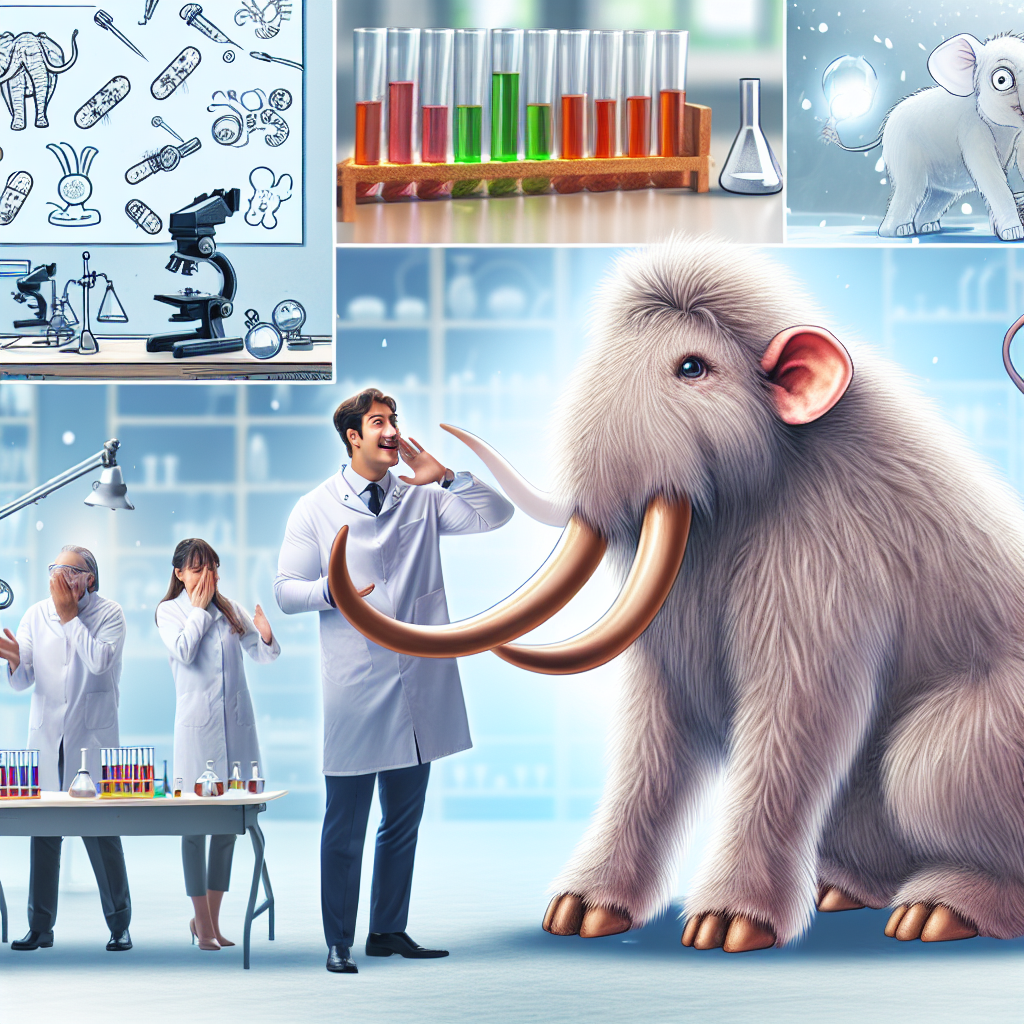
Reviving the Ice Age: Colossal Biosciences’ Ambitious Journey from Woolly Mammoth to Woolly Mouse
In a scientific gamble of Jurassic proportions, Colossal Biosciences is pushing the boundaries of genetic engineering with an audacious goal: reviving the extinct woolly mammoth. But what’s grabbing headlines today is not a mammoth, but its mini counterpart—the woolly mouse. This article will take you on an enlightening journey through the fascinating landscape of genomic science, exploring how and why Colossal Biosciences is undertaking this colossal task.
The Intriguing World of De-Extinction: Why the Woolly Mammoth?
Rewind to the Ice Age
The woolly mammoth once roamed across the vast, frozen tundras of the northern hemisphere, a colossal beast symbolizing the peak of nature’s majesty. Their extinction around 4,000 years ago marked the end of an era. Today, organizations like Colossal Biosciences see potential in reviving these ancient titans, but why the interest in the woolly mammoth?
-
Ecological Restoration: Bringing mammoths back could help restore ancient ecosystems known as the mammoth steppe, which might aid in combating climate change by mitigating permafrost melting.
-
Biodiversity Enrichment: Reintroducing the mammoth to the wild could increase biodiversity and balance the ecosystem, filling roles lost with their extinction.
- Scientific Curiosity: Beyond ecological benefits, this project satisfies scientific curiosity about cloning, genetic evolution, and species adaptation.
Enter Colossal Biosciences: Pioneers of a ‘Mammoth’ Task
The Visionaries
Colossal Biosciences is spearheaded by entrepreneurs and scientists like Ben Lamm and George Church, a Harvard University geneticist and renowned expert in synthetic biology. Their collective vision is not only to revive extinct species but also to develop groundbreaking conservation tools and methods.
The Technology: CRISPR and Beyond
At the core of Colossal’s mission is CRISPR-Cas9 technology, a revolutionary gene-editing tool that acts as molecular scissors, allowing scientists to alter DNA with high precision. The company is modifying Asian elephant DNA to include woolly mammoth traits like thick fur and dense fat layers.
-
DNA Splicing Techniques: Utilizing CRISPR for gene splicing opens doors to accelerate the integration of mammoth DNA into the Asian elephant genome.
- Art and Science of Cloning: Moving beyond traditional cloning, advanced techniques allow for hybrid DNA creation, blending genes from living relatives with those preserved in fossils.
A Woolly Mouse? The Surprising Development
The Significance of the Woolly Mouse Project
Creating a woolly mouse is not merely a sideline project; it plays a pivotal role in the development and testing of methodologies crucial for broader de-extinction objectives.
Purpose and Process
-
Tech Validation: By engineering woolly mice, researchers can validate CRISPR methods and assess the physiological viability of introducing mammoth-like traits.
-
Trial and Error: Mice serve as ideal subjects owing to their rapid reproduction cycles, allowing scientists to observe genetic changes across generations.
- Biological Insights: Study how biologically equivalent traits function in a controlled, miniature environment before scaling up to more significant, complex organisms.
Ethical Considerations and Environmental Impact
Bioethics of De-Extinction
Even with cutting-edge technology at their disposal, Colossal must navigate a myriad of ethical considerations:
-
Species Revivification vs. Natural Order: Should humans interfere with natural extinction processes by reviving species?
- Conservation Resources: Balancing funding between de-extinction projects and traditional conservation efforts poses a fiscal and ethical conundrum.
Environmental Prospects
-
Tundra Revitalization: Mammoths may help convert forests back into grasslands, promoting carbon storage and inhibiting greenhouse gas emissions.
- Ecosystem Repercussions: Introducing a new (or revived) species can disrupt existing ecosystems, a risk that requires extensive study and strategic planning.
Future of De-Extinction: Beyond the Mammoth
Broader Applications of CRISPR
CRISPR isn’t confined to de-extinction; it has a multitude of applications across various scientific realms:
-
Medical Breakthroughs: Potential to edit out genetic diseases, ushering in a new era of personalized medicine.
- Agricultural Advancements: Revolutionizing crop resistance to diseases and enhancing yield.
Expanding the Mission
-
Conservation Connectivity: Techniques developed could augment the genomics efforts for endangered species, stretching beyond the woolly mammoth to play roles in biodiversity restoration worldwide.
- Learning from the Past: By understanding the genetic makeup of extinct species, scientists might glean insights into resilience against climate variability and habitat change.
Conclusion: A Woolly Promise?
Colossal Biosciences’ quest to morph the narrative of extinction blends science with imagination, promising a future where biology can rewrite history. As initiatives like the creation of the woolly mouse propel science forward, they also ground it in a reality check of ethical and ecological responsibilities. Whether or not we see mammoths roaming the tundra once more, their attempted revival will surely fuel scientific debate and discovery for generations to come.