
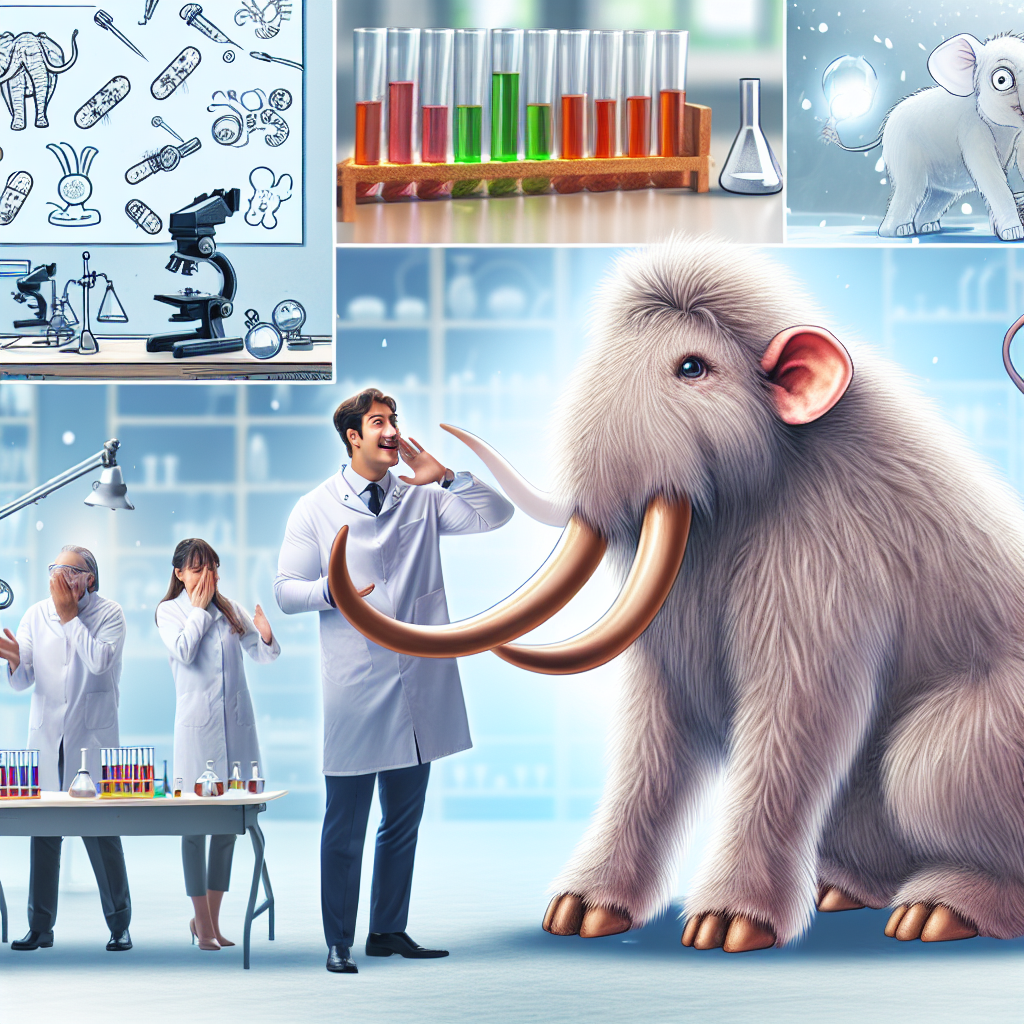
Unlocking the Ice Age: How Colossal Biosciences is Using a Woolly Mouse to Revive the Woolly Mammoth
Imagine a world where woolly mammoths once again roam the frozen tundras—a spectacle that seems straight out of a science fiction movie. Yet, this vision is on the verge of reality thanks to Colossal Biosciences, a company spearheading innovative strides in de-extinction. Recently, their creation of a "woolly mouse" has propelled them further towards resurrecting the woolly mammoth. In this captivating article, we explore the latest developments in de-extinction science, focusing on how a woolly mouse might just be the first step in bringing back these iconic giants.
The Visionary Goal: Understanding Colossal Biosciences’ Mission
Colossal Biosciences aims to leverage de-extinction technologies for ecological restoration. Here’s what motivates their scientific endeavors:
- Ecological Restoration: Reintroducing the woolly mammoth could help restore the Arctic tundra ecosystems.
- Scientific Innovation: Challenges in de-extinction spur advancements in genetics and biotechnology.
- Climate Change Mitigation: Woolly mammoths could potentially reduce carbon emissions by maintaining specific vegetative balances that are currently disrupted.
A Peek into De-extinction
De-extinction is a fascinating and complex process. It combines genetics and conservation biology to recreate organisms that have been extinct for thousands of years. Here’s a basic breakdown of how it works:
- Extracting DNA: Scientists mine DNA from preserved specimens found in permafrost or ice.
- Genomic Mapping: Extracted DNA is sequenced and mapped to understand the creature’s genetic makeup.
- Gene Editing: Techniques such as CRISPR are employed to insert key genes into the DNA of a living species.
- Hybrid Creation: The goal is to develop a hybrid species that exhibits the physical traits of the extinct creature.
Colossal Biosciences has embarked on an ambitious plan using these steps, employing advanced technology to animate a woolly mammoth once again.
Meet the Woolly Mouse: A Scientific Milestone
The woolly mouse is a groundbreaking achievement for Colossal Biosciences, marking a significant leap towards their de-extinction goals. But what exactly is a woolly mouse, and why is it significant?
What is a Woolly Mouse?
- Hybrid Ancestry: The woolly mouse is genetically engineered to carry specific traits of the woolly mammoth.
- Characteristics: It inherits a dense fur coat and adapted thermo-regulation genes, reminiscent of what scientists believe the mammoth had.
- Purpose: Serving as a proof of concept, the woolly mouse demonstrates the viability of transferring woolly mammoth traits to living mammals.
The Science of Creating a Woolly Mouse
The creation process of the woolly mouse involves highly intricate and cutting-edge scientific procedures:
- Gene Identification: Scientists first identified the genes responsible for the woolly mammoth’s distinctive features.
- CRISPR Technology: These genes are then edited and inserted into the genome of a lab mouse.
- Observation and Analysis: The woolly mouse is observed for physical and genetic traits, proving the concept’s success.
Technological Marvel: CRISPR Gene Editing
CRISPR-Cas9 presents a revolutionary tool in modern genetic engineering. Here’s how it’s shaping the path to de-extinction:
- Precision Targeting: CRISPR allows for highly accurate targeting and editing of specific DNA sequences.
- Efficient Gene Activation: It enables the activation of dormant genes, crucial for reviving prehistoric traits.
- Cost-Effectiveness: Compared to other gene-editing methods, CRISPR is reasonably affordable, enhancing access for extensive experimentation.
Ethical and Environmental Considerations
As incredible as de-extinction sounds, it comes with its own set of challenges and ethical questions:
Ethical Quandaries
- Playing God: Concerns revolve around human intervention in natural evolutionary processes.
- Animal Welfare: How should we treat and protect created hybrids in terms of rights and care?
- Biological Balance: The potential risks to modern ecosystems by introducing historical species need careful assessment.
Environmental Impacts
De-extinction promises exciting ecological potentials, but also raises questions:
- Positive Contributions: Restoring certain species might stabilize ecosystems and boost biodiversity.
- Unforeseen Consequences: The introduction of an extinct species could lead to unforeseen ecological shifts, affecting current wildlife.
The Road Ahead: From Woolly Mouse to Woolly Mammoth
Colossal Biosciences’ creation of the woolly mouse is a stepping stone toward their ultimate goal: the rebirth of the woolly mammoth. Here’s what the journey from a woolly mouse to a woolly mammoth might involve:
Intermediate Developments
- Scaling Up: Transitioning gene-editing success from a small mammal to larger ones like elephants.
- Research Expansion: Conducting parallel studies with existing elephant herds to understand gene compatibility.
- Funding and Collaboration: Securing financial and collaborative backing from the global scientific community.
Final Stretch: Woolly Mammoth Revival
- Birth of Mammoth Hybrids: Using surrogate Asian elephants to birth the first woolly mammoth hybrids.
- Habitat Integration: Gradually introducing hybrids into controlled, then natural habitats.
- Conservation Impact Analysis: Studying the mammoths’ effects on Arctic ecosystems over extended periods.
Conclusion: A Mammoth Future
Colossal Biosciences’ endeavor to resurrect the woolly mammoth encapsulates a unique crossroads of science, ethics, and innovation. The woolly mouse is more than just a scientific curiosity—it’s a beacon guiding us to a future where the ice age’s giants might once again shape our world. As technology progresses, these incredible creatures could rejoin Earth’s biosphere, offering us invaluable insights into evolution, climate stabilization, and ecological preservation. Stay tuned as we follow this mammoth journey—a blend of the ancient past and cutting-edge future.
For more updates on this and other groundbreaking research, keep visiting our website. Subscribe to our newsletter to stay informed on how science is reshaping our understanding of life and its possibilities.