
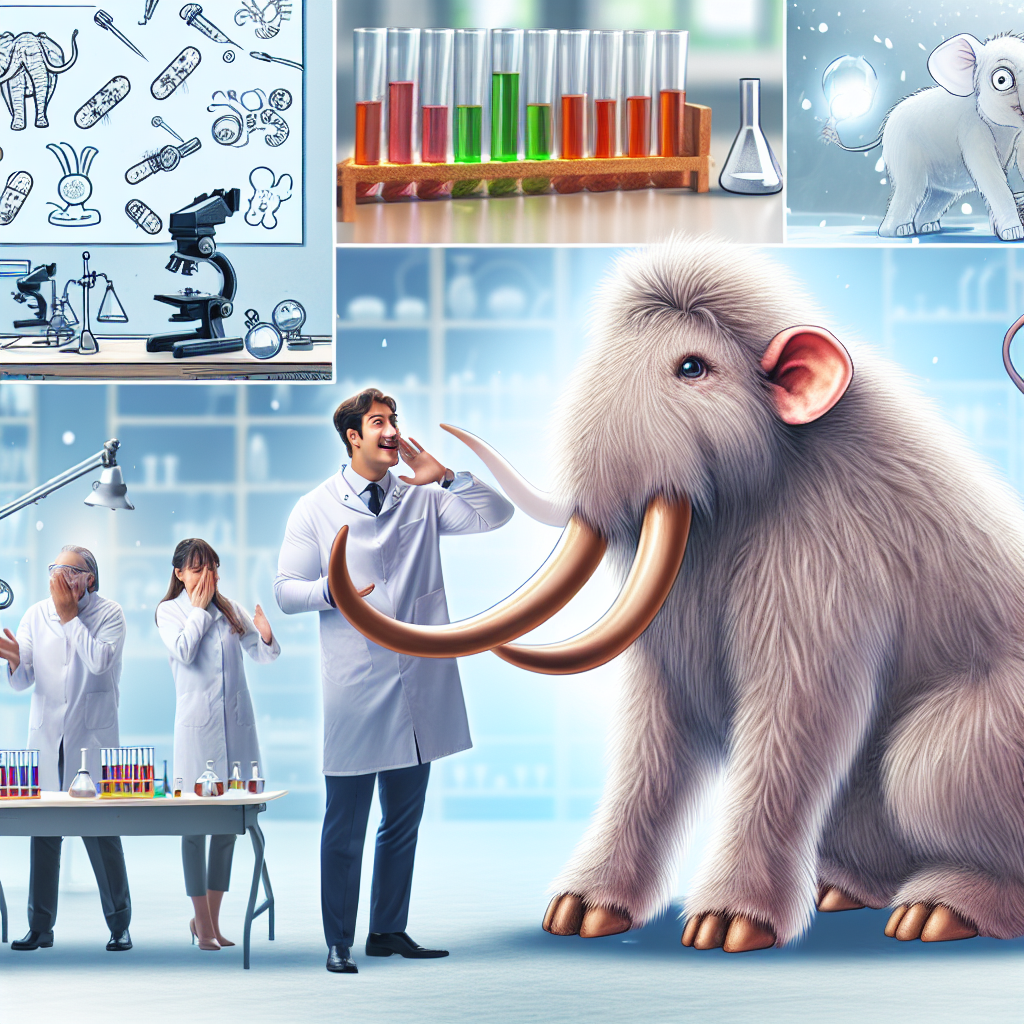
The Woolly Mouse Revolution: Colossal Biosciences’ Bold Step Towards Reviving the Woolly Mammoth
In a groundbreaking scientific endeavor, Colossal Biosciences is daring to tread where no modern corporation has ventured before: bringing back the woolly mammoth. But before resurrecting these massive, wool-clad creatures from the past, Colossal Biosciences has made headlines with an intriguing intermediate creation – the woolly mouse. This fascinating creature represents not just a step in biotechnology but a leap towards understanding our world’s evolutionary and environmental intricacies.
Understanding Colossal Biosciences’ Ambitious Vision
Colossal Biosciences, a Dallas-based company, is pioneering de-extinction initiatives, aiming to revolutionize conservation by blending genetic engineering and ecological restoration. The company’s audacious plans to revive the woolly mammoth focus on ecological goals rather than just a quest for scientific glory. But how has this mission led them to create a woolly mouse?
Towards a New Era of Conservation
Colossal’s primary ambition isn’t merely bringing ancient species back to life but using these revived creatures to tackle today’s environmental challenges. By reintroducing woolly mammoths, they hope to:
- Combat climate change: These giants may help transform tundra regions into grasslands, which can sequester more carbon than forests.
- Enhance biodiversity: Recreating ecosystems that have been lost with the extinction of certain species.
- Inspire new conservation strategies: Promoting awareness and understanding about the importance of genetic diversity.
The Creation of the Woolly Mouse: Bridging Past and Future
So, why did Colossal start with a mouse instead of jumping directly to the mammoth? The answer lies in the substantiated methodology and scientific exploration that forms the bedrock of de-extinction tech.
The Science Behind the Woolly Mouse
Leveraging CRISPR-Cas9 gene-editing technology, scientists at Colossal Biosciences have engineered a mouse with specific biological traits reminiscent of the woolly mammoth. Here’s how they did it:
- Gene Identification: By analyzing preserved woolly mammoth DNA, researchers identified crucial genes responsible for cold adaptation.
- Gene Editing: These genes were then synthesized and introduced into the DNA of a modern mouse embryo.
- Outcome Observation: The resulting mice were assessed for their biological responses to cold, offering valuable insights.
Why Start with a Mouse?
Mice are an ideal organism for initial genetic trials due to their:
- Quick reproduction rates, allowing for rapid observation of genetic impacts.
- Well-understood genetics, making them a preferred choice for research.
- Ethical considerations, as working with mice poses fewer ethical dilemmas compared to larger mammals.
Creating the woolly mouse is a proof-of-concept — a necessary step to validate the methodologies before applying them on a grander scale with mammoths.
Ethical Questions and Conservation Challenges
The advent of de-extinction raises pivotal ethical debates about humanity’s role in facilitating such dramatic changes to the ecosystem.
Reviving the Moral Dilemma
Several ethical considerations swirl around this scientific undertaking:
- Playing God?: Is it morally justifiable to revive a species that natural selection chose to eliminate?
- Ecosystem Imbalance: Could the reintroduction of such creatures disrupt existing ecosystems beyond repair?
- Resource Allocation: Should funds be directed towards these projects instead of urgent contemporary conservation issues?
Dialogue and Responsibility
With great innovation comes profound responsibility. Open dialogue between scientists, ethicists, and the public is crucial to navigating the ethical landscape of de-extinction.
- Public engagement in decision-making processes.
- Transparency in research intentions and progress.
- Prioritizing ecological balance over technological prowess.
Paving the Path to the Mammoth Revival
As Colossal Biosciences continues its quest, the woolly mouse stands as a symbol of progress and possibility. By successfully integrating ancient traits into modern animals, the road to reviving the woolly mammoth seems ever more navigable.
Next Steps in the Journey
- Enhanced Genetic Simulation: Fine-tuning the genetic mapping of mammoths to achieve greater fidelity in replication.
- Crossbreeding Experiments: Developing hybrid animals that exhibit desired traits in increasingly complex organisms.
- Collaborative Research: Working with international ecological and conservation bodies to ensure sustainable reintroduction strategies.
Conclusion: An Unfolding Story of Science and Sustainability
The woolly mouse heralds the beginning of a new chapter in scientific exploration, one enveloped in both excitement and introspection. Colossal Biosciences’ work not only showcases the incredible potential of genetic engineering but also underscores a pressing imperative for thoughtful ecological stewardship. As the journey from the woolly mouse to the woolly mammoth continues, the world watches — hopeful, cautious, and infinitely curious.
This incredible interplay between ancient DNA and modern technology invites us to rethink our relationship with nature, technology, and what it means to wield the power of life itself. As the narrative unfolds, the woolly mouse serves as both a remarkable achievement and a stark reminder of the complexity underlying the concept of de-extinction.
Let’s embrace curiosity, inspire innovation, and champion ethical scientific endeavors as we witness history being rewritten, one gene at a time. Keep following our blog for the latest updates on this captivating venture into the realms of genetics and conservation!