
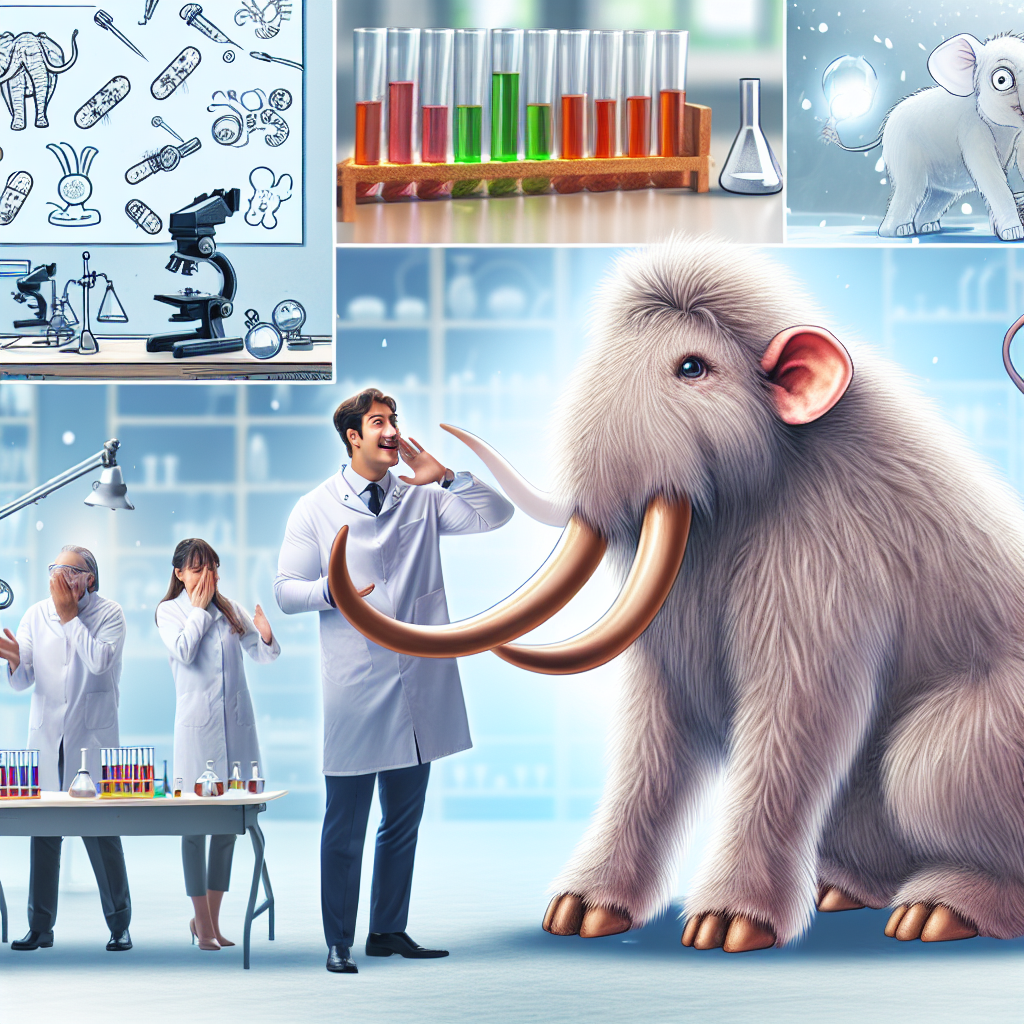
The Return of the Woolly Mammoth: Colossal Biosciences’ Groundbreaking Journey with the Woolly Mouse
In the heart of the scientific revolution, few endeavors have captured global curiosity like Colossal Biosciences’ audacious mission to revive the woolly mammoth. Their daring quest combines state-of-the-art genetic engineering with ancient DNA, promising to bridge the chasm between extinct creatures and modern biodiversity. But amidst their efforts to resurrect what was lost to the annals of history, a surprising development has emerged—the creation of a "woolly mouse."
The woolly mouse isn’t just a scientific triumph; it’s a stepping stone in a long and complex journey involving genetic engineering, biodiversity, and ethical contemplation. This article uncovers fascinating insights into how Colossal Biosciences is carving a path towards de-extinction and what their work means for the future of conservation.
Who is Colossal Biosciences?
Founded by the dynamic duo of entrepreneur Ben Lamm and renowned geneticist George Church, Colossal Biosciences has taken the scientific community by storm. They have set the audacious goal of resurrecting keystone extinct species, with the woolly mammoth serving as the poster child for their ambitions. Leveraging cutting-edge genetic technology, Colossal envisions a future where reintroduced extinct species can rejuvenate ecosystems and mitigate climate change.
Vision and Mission
- Vision: To leap beyond conventional conservation and leverage biotechnology for ecological restoration.
- Mission: To use genetic resurrection as a tool to restore balance to ecosystems disrupted by the extinction of key species.
Through their ambitious projects, Colossal aims to drive biodiversity-centric biological solutions for some of humanity’s most pressing environmental challenges.
The Woolly Mouse: A Surprising Spark of Innovation
In an unexpected turn of events, the journey towards reviving the woolly mammoth has brought forth a tiny innovation—a woolly mouse. Although infinitesimal compared to a mammoth, this genetically engineered rodent serves a pivotal role, allowing scientists to perfect techniques crucial for de-extinction.
What is a Woolly Mouse?
The "woolly mouse" is a genetically modified laboratory mouse that exhibits certain traits akin to those of the woolly mammoth, such as increased body temperature control and fur density, mimicking the adaptations seen in animals of the Pleistocene epoch.
Applications of the Woolly Mouse
- Genetic Testing: Functions as a testing ground for safe genetic modifications and experiments.
- Proof of Concept: Demonstrates the feasibility of introducing extinct-species DNA into living organisms.
- Model Organism: Provides vital data on the efficacy of genomic edits intended for larger-scale de-extinction efforts.
The Science Behind Genetic Resurrection
Genetic resurrection, or de-extinction, utilizes advanced genetic technologies such as CRISPR (Clustered Regularly Interspaced Short Palindromic Repeats) to edit the genomes of living organisms, infusing them with ancient DNA.
CRISPR: The Game Changer
CRISPR has revolutionized genetic engineering. By allowing precise cuts and additions in the genetic code, it acts as molecular scissors, enabling scientists to:
- Introduce desired extinct traits into existing species.
- Correct or modify genes to mimic ancient DNA.
- Enhance traits for better adaptation to modern ecosystems.
Challenges in Genetic Resurrection
- DNA Degradation: Ancient DNA is often fragmented, requiring significant reconstruction.
- Epigenetic Factors: Understanding and implementing the environmental influences on gene expression.
- Ethical Concerns: The reintroduction of species raises ecological and moral questions.
Ethical and Ecological Implications
While the woolly mouse and the prospect of resurrected mammoths captivate imaginations, serious ethical and ecological contemplations loom large.
Ethical Considerations
- Animal Welfare: Ensuring the welfare of genetically modified organisms.
- Playing God: The philosophical dilemma of mankind altering life’s course.
- Biodiversity Balance: Potential consequences on modern ecosystems and susceptible species.
Ecological Considerations
- Restoration vs. Restoration Disruption: Balancing ecological restoration efforts with potential invasive species disruptions.
- Climate Change Mitigation: Potential for revived species to aid in carbon sequestration and habitat restoration.
The Road Ahead: What’s Next for Colossal Biosciences?
Colossal Biosciences stands at the forefront of a groundbreaking era, paving pathways to the future with innovations and novel paradigms in conservation.
Future Projects
- Woolly Mammoth Revival: Ongoing efforts to incorporate woolly mammoth traits into Asian elephants.
- Other Species: Expansion of de-extinction projects to other megafaunas like the Thylacine.
Expanding Science Education
In addition to their de-extinction projects, Colossal aims to:
- Promote greater scientific literacy through public engagement.
- Inspire the next generation of geneticists and conservationists.
Final Thoughts
As Colossal Biosciences forges ahead in its quest to bring back the woolly mammoth, the creation of the woolly mouse marks a significant milestone. While challenges and debates remain, the potential insights gained from these endeavors could redefine our relationship with nature, conservation, and biotechnology.
In a rapidly changing world, blending innovation with ethical stewardship will be key to ensuring that such groundbreaking work serves both humanity and the planet. Through precise scientific advancements and a commitment to ecological balance, the saga of the woolly mouse and its mammoth brethren unfolds, laying tracks into an extraordinary future where the past comes alive once more.