
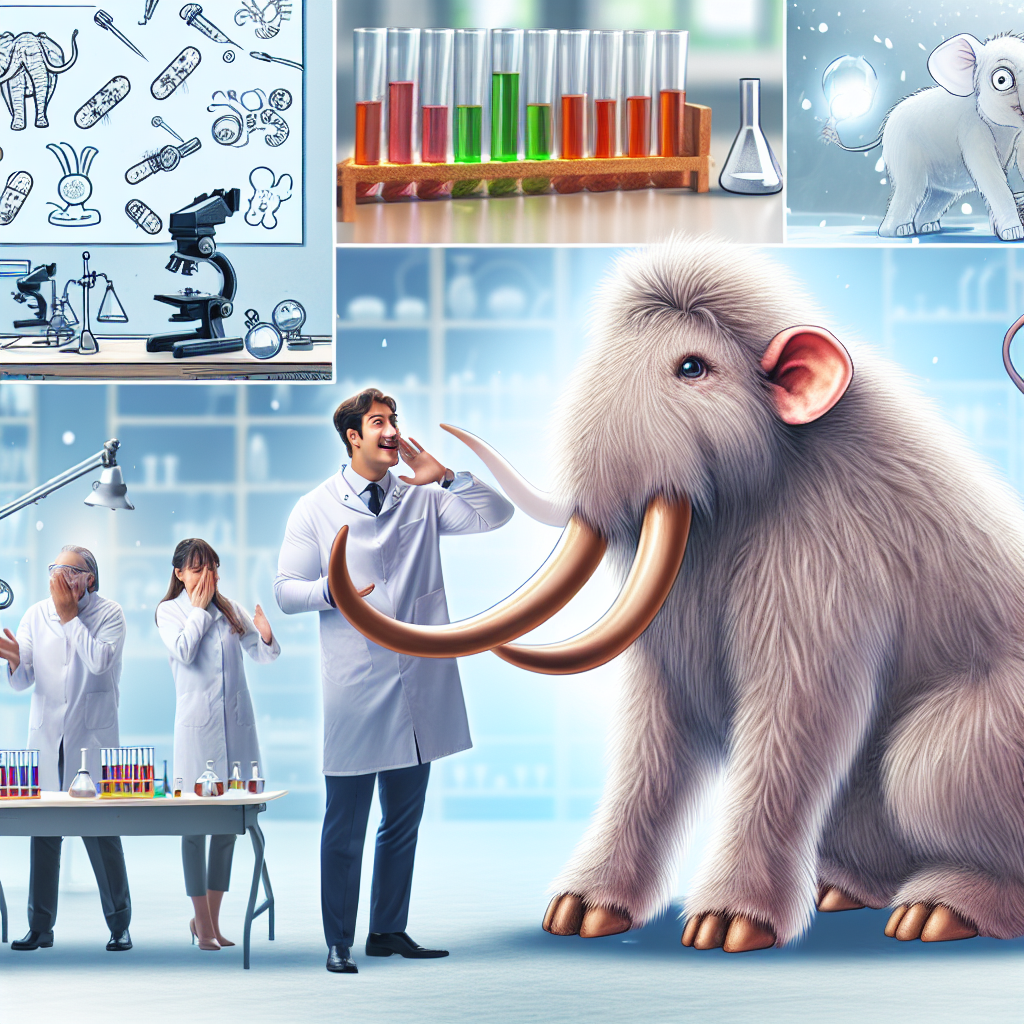
From Dream to Reality: Colossal Biosciences and the Woolly Mammoth Revival Project
In an era where scientific breakthroughs redefine the realm of possibilities, the notion of bringing extinct species back to life invokes equal parts wonder and skepticism. One company, Colossal Biosciences, has captivated attention with their ambitious pursuit to clone a creature that last roamed the Earth approximately 4,000 years ago — the woolly mammoth. Following a groundbreaking milestone, they have now created a woolly mouse, igniting global intrigue and debates about the implications of de-extinction technology.
Welcome to our captivating exploration into Colossal Biosciences’ groundbreaking journey towards reviving the woolly mammoth. This article aims to provide you with insight into the processes involved in such a feat, the significance of the woolly mouse, and the broader implications of de-extinction technology.
Understanding Colossal Biosciences’ Mission
Colossal Biosciences is a biotechnology company that shot to fame with its intriguing mission: "Bringing the past back to life." Their venture into de-extinction aims to restore lost ecosystems and combat climate change, taking the audacious step of bringing back the woolly mammoth. But how exactly do they plan to achieve this, and where does the creation of a woolly mouse fit into this grand vision?
The Science Behind De-Extinction
Before delving into the specifics of the woolly mouse, it’s essential to understand the broader scientific processes involved in de-extinction:
-
Genome Sequencing: The journey begins with extracting DNA from well-preserved woolly mammoth remains found in icy terrains. This DNA serves as the blueprint for understanding the ancient species down to their very genes.
-
CRISPR Technology: The revolutionary gene-editing tool, CRISPR-Cas9, allows scientists at Colossal Biosciences to make precise edits to the mammoth’s DNA and insert these sequences into the genome of a closely related species — the Asian elephant.
- Hybridization: The edited Asian elephant genome is implanted into elephant embryos, aiming to create a hybrid that closely resembles the woolly mammoth in physical and genetic attributes.
Significance of the Woolly Mouse
Why is the creation of a woolly mouse pivotal in this narrative? The woolly mouse is a monumental proof-of-concept research conducted by Colossal Biosciences. By successfully editing the genes of a mouse to exhibit distinct mammoth-like traits:
-
Gene Editing Feasibility: This achievement demonstrates the feasibility of manipulating mammoth genes in a living organism — a critical step before applying these methods to larger, more complex animals like elephants.
- Gene-Environment Interaction: Observing how the woolly genes express themselves in a mouse provides invaluable data on gene-environment interaction, vital for future applications in larger mammals.
Implications of Mammoth Revival
Undertaking a project of this magnitude naturally raises several questions about its broader implications for science, ethics, and the environment.
Potential Ecological Impact
Colossal Biosciences believes that the woolly mammoth could play a crucial role in combating climate change. Here’s how:
-
Albedo Effect: By reintroducing species like the woolly mammoth, it’s hoped that they would knock down insulating snow and expose frozen soil to cold air. This increases the albedo effect (reflection of sunlight), aiding in the prevention of soil thawing.
- Plant Growth Regulation: These mammals would also help maintain grasslands, reducing tundra’s overgrowth and encouraging a balanced ecosystem.
Ethical Considerations
The endeavor to de-extinct species inevitably leads to numerous ethical debates:
-
Moral Responsibility: Do we have a moral obligation to revive species that human activity contributed to extinction? Is it right to bring back species without considering their well-being in the modern ecosystem?
- Biodiversity Impact: Introducing a species that nature has phased out could inadvertently disrupt current ecosystems, leading to unforeseen consequences.
The Road Ahead: Challenges and Hopes
As with any pioneering scientific endeavor, the path leading to the potential revival of the woolly mammoth is fraught with challenges and uncertainties.
Current Limitations
Several hurdles remain before a complete revival is realized:
-
Elephant Surrogacy: The Asian elephant’s declining population poses an ethical and logistical challenge for using them as surrogates.
- Genetic Accuracy: Ensuring that a revived mammoth truly resembles its ancient counterpart in behavior and physiology is another complex challenge.
Reasons for Optimism
Despite these challenges, there are compelling reasons to remain hopeful:
-
Technological Advancements: As technology in synthetic biology and gene editing advances, methods are expected to evolve, offering improved precision and success rates.
- Collaborative Efforts: Collaboration between geneticists, zoologists, ecologists, and ethicists can guide the project towards responsible and informed outcomes.
Engaging with the Future of Science
The conversation surrounding the revival of the woolly mammoth is an inexhaustible source of fascination and debate. As Colossal Biosciences continues its journey to recreate an ancient world, we find ourselves on the brink of potentially revolutionary discoveries that could redefine our relationship with nature and the past.
Be sure to follow our blog for more updates as we chronicle these scientific advancements. Your thoughts matter to us! Feel free to share your perspectives and engage with this groundbreaking journey.
Note: This article is intended for informational purposes only and reflects the author’s understanding of the advancements surrounding Colossal Biosciences’ efforts as of the time of writing.