
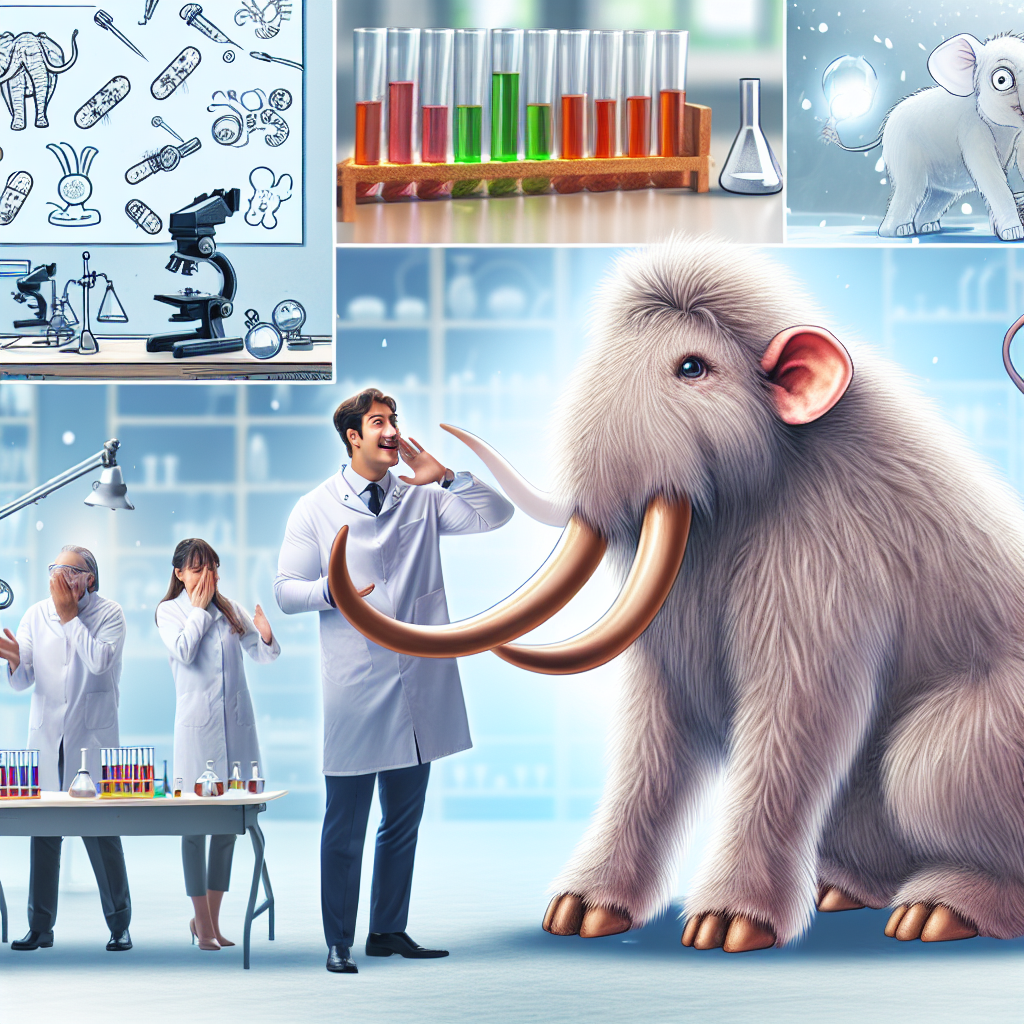
Reviving Extinct Giants: How Colossal Biosciences’ Woolly Mouse Signals a New Era in De-extinction
In the fast-evolving world of biotechnology, the concept of de-extincting species that trod the Earth thousands, even millions, of years ago is no longer just the realm of science fiction. One company, Colossal Biosciences, is at the forefront of this audacious venture, striving not only to bring back the extinct woolly mammoth but also making astonishing strides with the creation of a "woolly mouse."
This captivating project has stirred a mix of wonder and ethical deliberation, raising questions about the future of genetic research and wildlife conservation. Dive in with us as we explore how Colossal Biosciences is embarking on this exhilarating quest to revive the woolly mammoth, and the innovative thought process behind the woolly mouse experiment.
The Visionary Goals of Colossal Biosciences
Colossal Biosciences has set its sights on more than just scientific accolades; the company’s grand vision encompasses environmental restoration and the completion of an unfinished narrative spanning across eons. Why the woolly mammoth? Here are some compelling reasons:
-
Restoration of the Arctic Tundra: Woolly mammoths played a crucial role in maintaining grasslands in the Arctic, which are potent carbon sinks. By reviving the mammoth, Colossal aims to re-establish these ecosystems, assisting in climate change mitigation.
-
Biological Research: De-extinction provides insights into genetic engineering techniques that can have spinoffs in disease resistance, genetic disorders, and biodiversity conservation.
- Ethical Endeavors: This project raises ethical considerations on human responsibility towards species driven to extinction by anthropogenic activities.
Unfolding the Woolly Mouse Experiment
The transformation of a humble mouse into a woolly version is an exciting precursor in the monumental goal of reviving the mammoth. Let’s examine what this process entails:
Utilizing Advanced CRISPR Technology
The woolly mouse isn’t an animal that nature produced; it is the result of sophisticated genetic engineering:
-
CRISPR-Cas9 Editing: This powerful technology is employed to make precise edits to the mouse’s DNA, incorporating genes that are common between woolly mammoths and modern elephants. These genes are linked to traits like fat storage and hair growth, imparting mammoth-like characteristics to the mouse.
- Phenotypic Expression: The goal here is to see if the engineered mouse would exhibit traits typically associated with the woolly mammoth, such as increased insulation – a crucial adaptation for survival in cold environments.
The Woolly Mouse as a Research Model
The "woolly mouse" serves not merely as a spectacle, but a vibrant model to understand deeper scientific questions:
-
Test Bed for Genetic Traits: Before applying contentious techniques on elephants—to create mammoth hybrids—the woolly mouse will act as a proving ground for genetic expressions.
- Understanding Adaptations: Observing how mammoth genes manifest within the mouse’s physiology informs both evolutionary biology and the developmental potential of extant elephants.
The Path Towards De-extinction of Mammoths
From Mouse to Mammoth: A Giant Leap
Transitioning from creating a woolly mouse to an actual woolly mammoth involves several intricate steps, bridged by extensive research and innovation:
-
Gene Synthesis: Synthesizing longer DNA strands involving thousands of genes versus the smaller introns and exons carried by mice.
-
Elephant Surrogates: Asian elephants, close relatives of woolly mammoths, may serve as genetic surrogates in birthing and nurturing the hybrid offspring.
- Artificial Wombs: To avoid ethical issues and health risks to surrogate mothers, Colossal Biosciences is exploring the potential of artificial wombs for gestation.
Ethical and Ecological Considerations
Alongside technological challenges, reviving the woolly mammoth raises pertinent ethical and ecological queries:
-
Conservation Priorities: Critics pose the question if resources should instead go toward conserving endangered species.
- Reintroduction Risks: Determining if reintroduced mammoths will integrate harmoniously with today’s ecosystems, or if unforeseen impacts on biodiversity could occur.
The Road Ahead: Challenges and Opportunities
As the woolly mouse opens pathways leading towards actual mammoth revival, the broader scope is both thrilling and daunting. Here is what lies ahead:
Scientific Milestones and Barriers
-
DNA Recovery and Stability: Reliable methods for extracting and stabilizing ancient DNA need continuous refinement.
- Cross-Species Gestation Issues: Maintaining genetic integrity when gestating hybrids remains a critical challenge.
Policy and Public Perception
-
Regulatory Frameworks: Navigating the legal landscapes surrounding genetically engineered organisms is tricky but necessary.
- Public Involvement: Engaging communities and ethical forums in discussions about de-extinction ensures balanced decisions encapsulating public interest.
Conclusion: A Stewardship of Innovation
Colossal Biosciences stands as a beacon illustrating human curiosity and scientific prowess put into action. The journey from woolly mouse to mammoth embodies a dedication to explore, learn, and potentially rewrite the ecological tapestry of our planet. Whether we see a woolly mammoth step forth from icy arcs remains a question, but the attempts rekindle our imagination of what is possible in the lattice of life.
Embarking on such de-extinct ambitions is not devoid of responsibility. They offer us not only lessons in genetic mastery but perhaps more importantly, reflections on what it means to alter or restore life on Earth. As we proceed, we should remember that at its core, this scientific saga is one of interconnectedness and our enduring quest to honor and safeguard the vibrant diversity of life that graces our world.