
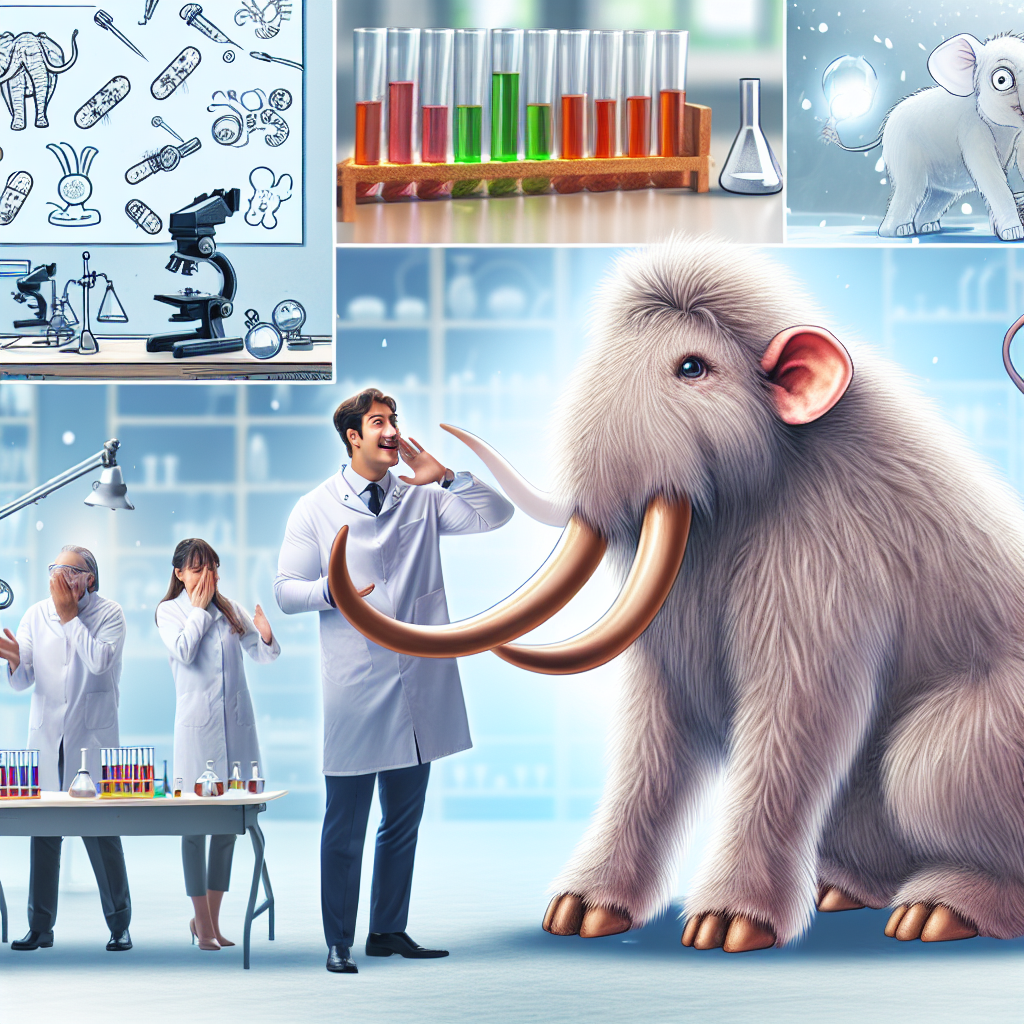
Reviving the Past: The Woolly Mammoth Quest Sparked by Colossal Biosciences’ Woolly Mouse
In the vast expanse of scientific exploration, few endeavors captivate the imagination quite like the quest to resurrect the woolly mammoth, a colossal symbol of the Ice Age. At the forefront of this audacious mission is Colossal Biosciences, a pioneering company bent on defying the boundaries of time and biology. With headlines now buzzing about their latest creation—a "woolly mouse"—this enterprise might just be edging closer to resurrecting one of history’s most legendary creatures.
In this article, we’ll delve into the ambitious journey of Colossal Biosciences, explore the science behind the woolly mouse, and ponder the environmental and ethical implications intertwined with this remarkable pursuit. Every step brings us closer to answering a fundamental question: Can science truly bring back the lost giants of the past?
The Science Behind Colossal Biosciences’ Ambitions
Colossal Biosciences has embarked on an extraordinary mission that blends cutting-edge biotechnology with age-old curiosity. But what exactly does it entail to bring the woolly mammoth back from the pages of history?
Understanding De-extinction
The concept of de-extinction revolves around the possibility of reviving species that have long vanished from the earth. This encompasses:
- Leveraging genetic engineering and synthetic biology.
- Using DNA samples from preserved specimens.
- Reviving species that could restore lost ecosystems and biodiversity.
The Role of CRISPR Technology
Central to this effort is CRISPR technology, a groundbreaking tool for genome editing. Here’s how it plays a pivotal role:
- CRISPR-Cas9: Allows for precise editing of DNA sequences.
- Gene Splicing: Inserting woolly mammoth genes into the genome of a close relative, like the Asian elephant.
By meticulously editing genes, scientists aim to craft an organism possessing the traits of a woolly mammoth, starting with the creation of intermediary species like the woolly mouse.
The Creation of the Woolly Mouse
The birth of the woolly mouse marks a key milestone in Colossal Biosciences’ journey.
Development Stages of the Woolly Mouse
- Sample Collection: Gathering specimens of woolly mammoth DNA from preserved remains.
- Genetic Sequencing: Mapping the deoxyribonucleic acid to understand distinct traits of woolly mammoths.
- Gene Editing:
- Introducing woolly mammoth genes into a mouse genome.
- Achieving traits such as dense fur and specific fat storage.
Significance of the Woolly Mouse
The woolly mouse is more than a scientific curiosity. It serves several pivotal functions:
- Experimental Platform: Allows researchers to test the viability of edited genes.
- Proof of Concept: Validates the methodologies for future mammalian genomes.
- Ethical Benchmark: Helps address potential ethical concerns with a smaller organism.
Ethical Considerations in the De-extinction Quest
Reviving extinct species poses not just scientific challenges but also significant ethical dilemmas.
Environmental Implications
- Ecosystem Impact: Could reintroducing woolly mammoths alter current ecosystems, or restore prehistoric environments?
- Biodiversity Restoration: Potential to restore biological roles that these species once played.
Bioethical Concerns
The de-extinction process beckons us to consider:
- Animal Welfare: Rigorous standards must ensure humane genetic manipulations.
- Natural Order: Should humans intervene in nature’s evolutionary path?
- Genetic Modifications: The risk of unforeseen genetic flaws.
Societal Reactions
The broader society is likely to react in diverse ways:
- Public Fascination: Enormous curiosity and interest.
- Conservation Debates: Potential diversion of resources from living endangered species.
The Future of De-extinction and Colossal’s Role
As Colossal Biosciences progresses on its journey, the future of de-extinction teeters between aspiration and reality.
Scaling the Experiment
- Larger Mammals: Next steps may involve editing genes in elephants.
- Technological Innovations: Continued advancements in genetic engineering tools.
The Broader Implications
Whether successful or not, Colossal’s efforts pave the way for broader implications:
- Educational Impact: A deeper understanding of genetic sciences.
- Innovative Techniques: Ushering innovation in conservation biology and medicine.
Conclusion
The woolly mouse is a testament to what modern science can achieve when driven by a bold vision. As Colossal Biosciences sets its sights on the grander ambition of resurrecting the woolly mammoth, we stand on the brink of a new epoch in biotechnological breakthroughs. The road ahead promises to be as complex as it is thrilling, with ethical considerations, ecological impacts, and technical challenges all playing pivotal roles.
While the dream of witnessing woolly mammoths roam the Arctic tundra once more is tantalizing, the quest raises profound questions about our role in nature’s tapestry. Colossal Biosciences and initiatives like theirs challenge us to balance human ingenuity with responsibility, forging a future where the past is resurrected yet harmonized with the present.
As we watch with bated breath, one thing is certain—the journey will be nothing short of epic!