
Unraveling the Starship Setback: SpaceX Reveals Self-Destruction Details
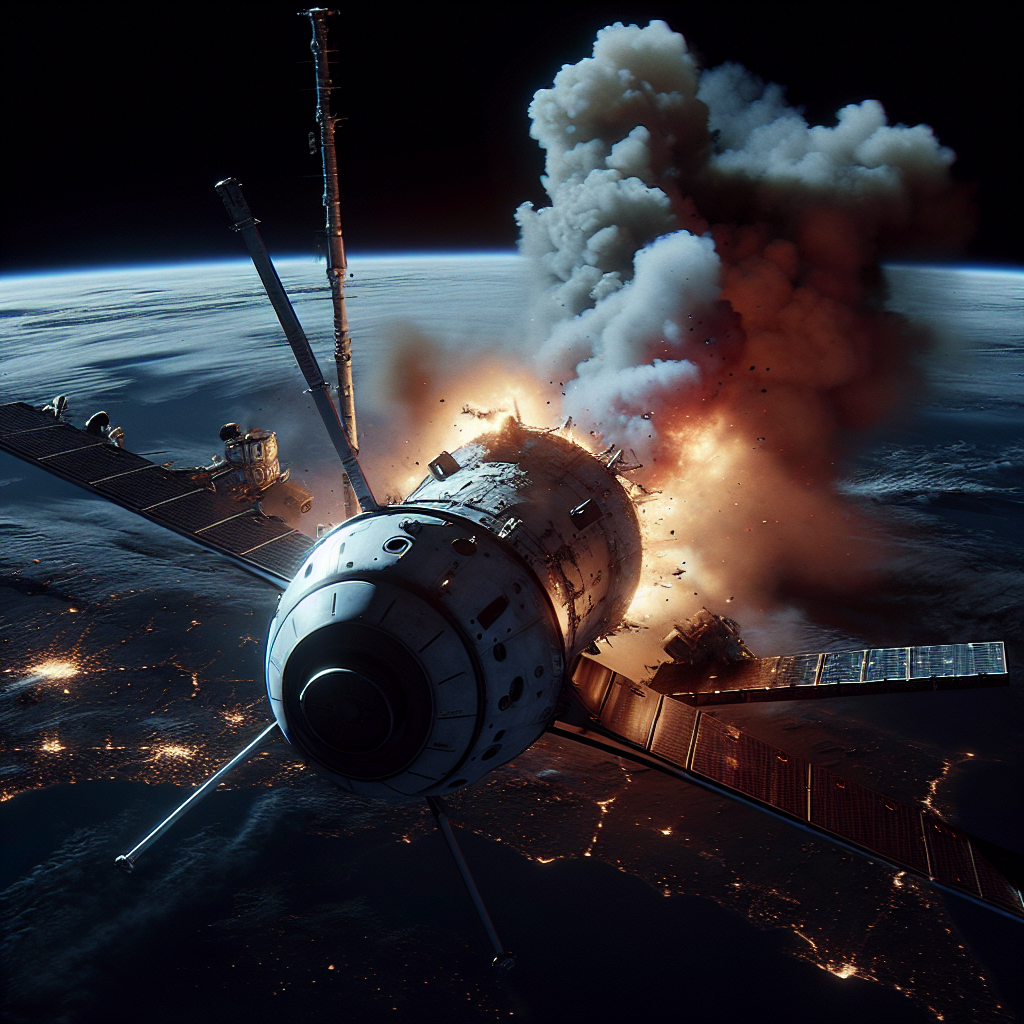
In a fresh turn of events, SpaceX has shared crucial insights into the unexpected self-destruction of its trailblazing Starship. As with any ambitious venture in the realm of space exploration, hurdles are not entirely unforeseen. Yet, the recent propellant leaks leading to catastrophic fires and communication blackouts have thrust this incident into the spotlight. Join us as we dive into the intricate reasons behind the Starship’s self-sabotage and the implications for future missions.
Understanding the Starship Mission
The Vision Behind Starship
Elon Musk’s SpaceX has consistently been on the cutting edge of aerospace innovation, and the Starship vehicle stands as a testament to that legacy. The purpose behind this massive spacecraft is not just to achieve low Earth orbit (LEO) but to facilitate interplanetary travel, ushering in a new era of cosmic exploration.
- Journeying Beyond Earth: Starship is designed with the ambitious goal of ferrying humans to Mars and beyond.
- Reusable Technology: A key objective is the creation of a fully reusable spacecraft, reducing the cost and increasing the frequency of launches.
- Capacity and Versatility: With an ability to carry large payloads and numerous passengers, it seeks to transform how we think about cargo and human transport to space.
A Brief Sojourn on Past Flights
Before the recent mishap, the Starship had already undertaken several test flights, each providing invaluable data and lessons. However, as any space enthusiast knows, each flight is a learning curve filled with both triumphs and challenges.
- Initial Tests: Early tests aimed at perfecting basic launch and landing mechanisms.
- Subsequent Objectives: Later tests focused increasingly on performance under stress and achieving orbital velocity.
Inside the Misstep: What Happened?
The Propellant Leak Catastrophe
The technical details revealed by SpaceX indicate that the root cause of the recent incident was propellant leaks. These leaks, infinitesimal as they may seem, can have disproportionately large effects.
- Leak Dynamics: A small breach, if unchecked, can lead to disastrous pressure differences, igniting fires.
- Fires and Damage: The fires consequentially not only damaged key components but also led to a communications blackout.
Communication Blackout: A Chain Reaction
The fire-induced blackout was not merely a technical failure but a cascade that eventually made self-destruction inevitable.
- Loss of Contact: Critical communication lines were severed, leading to a loss of control over the spacecraft.
- Safety First Protocol: In events of substantial malfunction, SpaceX’s protocols prioritize safety, triggering a self-destruct sequence to prevent the spacecraft from causing unintended harm on Earth.
Learning from Failure: The Road Ahead for SpaceX
Immediate Steps and Investigations
In the complex domain of space travel, failure is often the stepping stone to improvement. SpaceX is leveraging this incident as a learning opportunity.
- Data Analysis: Comprehensive post-failure analysis is underway to isolate the exact conditions leading to the leaks.
- Enhancing Resilience: Engineers are revisiting the design to bolster the resilience of the spacecraft against similar future failures.
Long-term Vision Adjustments
While setbacks are disheartening, they offer pivotal insights that strengthen long-term strategic objectives.
- Refinement of Starship Design: Continuous iterations and enhancements are standard practice.
- Strengthening Communication Systems: Additional layers of redundancy may be integrated to prevent total communication blackouts.
The Ripple Effect: Industry Implications
Repercussions on Space Travel Enthusiasm
While the Starship is a singular entity, its progress and challenges resonate across the space exploration community.
- Public Perception: Every failure offers a dual narrative—a step back in progress and a giant leap in learning.
- Investor Outlook: While cautious, investors commonly view thorough crisis management positively, signaling robust systems in place for handling adversity.
Collaboration and Competition in the Space Race
SpaceX’s development journey is closely watched by both collaborators and competitors. Incidents like this fuel both competitive drive and collaborative opportunities.
- Constructive Rivalry: Companies now have the chance to leverage their insights and avoid repeated mistakes.
- Opportunities for Partnership: Collaborations can further research into propellant safety and communication technologies.
Conclusion: A Setback Today, A Launchpad for Tomorrow
In the fiercely competitive and ever-evolving space exploration industry, no journey is linear. SpaceX’s setback with Starship, while notable, is already paving the way for future resilience and success. As SpaceX iterates and refines, the community watches with bated breath, hopeful that humanity’s shared dream of interplanetary travel is closer than it appears. We stand on the brink not just of a new understanding of how challenges are tackled, but how they are fundamentally transformed into stepping stones for future innovations. Stay tuned, as the Starship sails again to redefine possibilities beyond Earth’s horizon.
This article is designed to provide a comprehensive overview of the SpaceX Starship incident through an engaging narrative, ensuring it not only informs but inspires readers interested in the future of space exploration.