
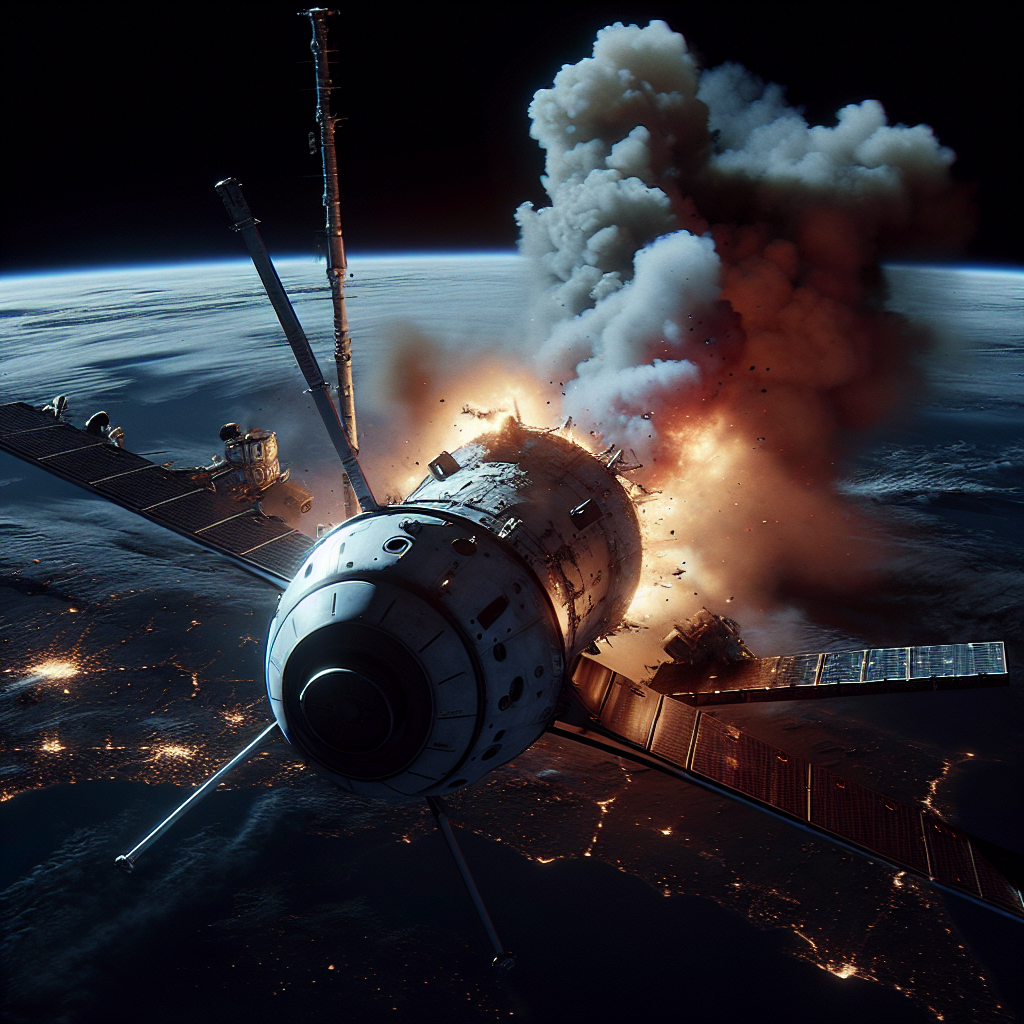
SpaceX’s Starship Self-Destructs: Understanding Propellant Leaks, Fires, and Communication Blackouts
The ambitious dream of reaching Mars stumbled once again as SpaceX faced another setback. On a recent test flight, SpaceX’s Starship experienced a dramatic self-destruction following complications linked to propellant leaks, fire outbreaks, and communication blackouts. This incident draws attention to the myriad challenges of space exploration, the technological marvel that is Starship, and the future of human space travel. Below, we delve into the details and implications of this significant event.
Introduction: A Glimpse into the Starship Program
SpaceX, founded by the visionary Elon Musk, is no stranger to ambitious goals. Among its most daring projects is the Starship program, designed to transport humans to Mars and beyond. This colossal spacecraft is the backbone of Musk’s plan to create a multiplanetary civilization. Despite past successes with rockets like the Falcon 9, the path for Starship has been turbulent.
- Ambitious Goals: Starship is intended to be a fully reusable spacecraft capable of carrying humans and supplies to Mars.
- Engineering Challenges: The scale and complexity of Starship are unprecedented in aerospace history.
- Trial and Error: The iterative design process involves numerous test flights, learning from failures to achieve success.
With the most recent incident, SpaceX once again enters the spotlight, facing questions and curiosities about how and why this happened.
The Incident Explained: What Went Wrong?
Understanding the specifics of why the Starship self-destructed involves dissecting each issue it encountered: propellant leaks, fire outbreaks, and the subsequent communication blackout.
Propellant Leaks: An Achilles’ Heel
Propellant leaks represent one of the most menacing risks in rocket engineering. These leaks lead to powerful fuel escaping systems and potentially causing catastrophic failures within the spacecraft’s engine and body.
- Risk Factors:
- Pressure Build-Up: Any leak can cause massive pressure imbalances.
- Cryogenic Temperatures: Working with extremely cold propellants increases the complexity.
- Material Fatigue: Ongoing stress and wear on containment materials can facilitate leakage.
Fire Outbreaks: A Deadly Consequence
The leaked propellant combined with the ignition source results in fire, a major destructive force onboard spacecraft, causing rapid and uncontrollable damage.
- Fire’s Source: Often arises when fuel leaks interact with hot parts of the spacecraft.
- Rapid Destruction: Fires can quickly escalate, damaging crucial systems irreparably.
- Preventative Measures: Enhanced sensors and rapid extinguishing systems are vital.
Communication Blackout: The Silent Saboteur
As critical as the spacecraft’s physical components is uninterrupted communication with control centers. Losing comms in a moment of crisis is both dangerous and disastrous.
-
Potential Causes:
- Electronic Interference: Fires or power surges might disrupt electronic systems.
- Damage to Antennas: Physical damage sustained could impair transmission equipment.
- Consequences:
- Loss of Control: Inability to send or receive mission-critical commands.
- Data Loss: Phenomena go unrecorded without proper telemetry.
Learning from Failure: The Path Forward
SpaceX embodies a philosophy of failing forward—learning from each setback and continuing to drive technological enhancements. While this incident was a setback, it is also a moment ripe for gathering invaluable insights.
Engineering Innovations
Every failure underlines what can be improved and opens the door for technological advancements.
- Material Testing: Evaluating and improving materials used in fuel containment.
- Sensor Technology: Developing superior detection systems for early warning.
- Communication Enhancements: Refining redundancy in communication to prevent blackouts.
Safety Protocols
Ensuring spacecraft safety involves setting a framework of established protocols reinforced by real-world incident analysis.
- Emergency Plans: Continuous updates and drills for handling onboard emergencies.
- System Redundancy: Multiple backup systems mitigate failures.
- Risk Assessment: Real-time evaluation tools to predict and manage potential risks.
Broader Implications for Space Exploration
The Starship incident resonates beyond SpaceX, touching on themes significant to the entire space industry.
- International Collaboration: Sharing data across nations accelerates problem-solving.
- Regulatory Oversight: Incidents lead to stricter regulations and standards.
- Public Perception: Balancing optimism about space travel with the understanding of risks required.
Conclusion: Looking Towards Mars
Elon Musk’s Starship remains an incredibly bold and aspirational project. Despite setbacks, SpaceX’s iterative process embodies the adventurous spirit that fuels the future of space exploration. Each failure provides a platform to build better, safer, and more reliable spacecraft.
SpaceX’s Starship holds the potential to transform our reality, enabling human habitation on other planets and sparking a new era of interplanetary exploration. With each test flight, successful or otherwise, Musk and his team are steadily charting the formidable terrain of becoming a true multiplanetary species.
Stay tuned as we follow this journey, bringing you the latest insights from SpaceX’s interstellar ambitions.
By understanding the failures and tribulations such as propellant leaks and fires leading to the recent self-destruction of Starship, we glimpse not only the potential pitfalls but also the enormous achievements waiting on the horizon.